
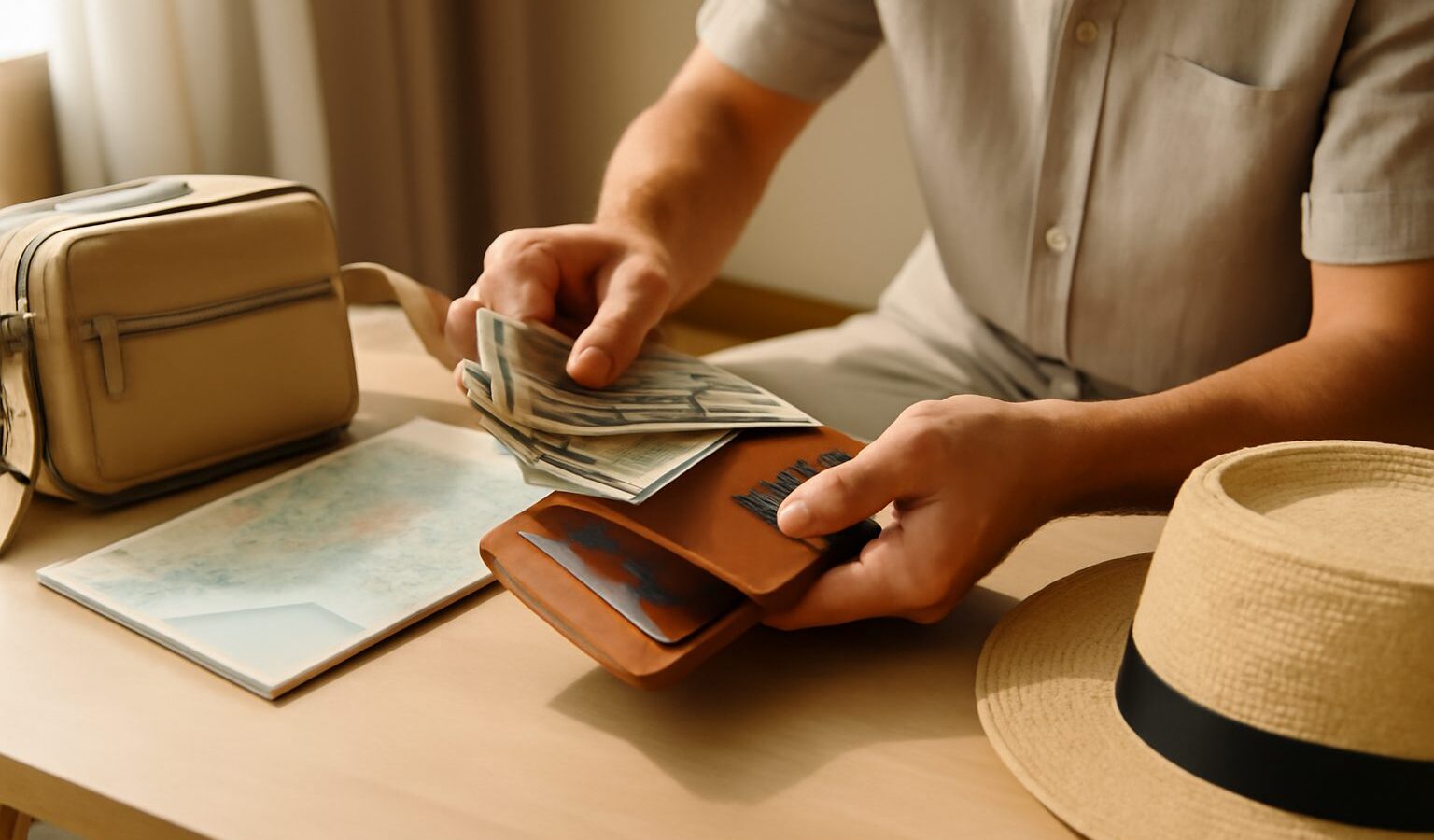
Handling money while travelling is one of those skills that quietly makes or breaks a trip. Get it right and you barely think about it: you tap, you pay, you move on. Get it wrong and you lose a morning hunting for a working ATM, or you come home to a card statement full of fees you did not expect. The good news is that managing your money while travelling is a repeatable system, not a matter of luck. Set it up once from Singapore, carry a sensible mix of payment methods, and you can travel through most of the region and beyond without stress. This guide gives you a method you can reuse on every trip.
Set up your payment mix before you fly
The core idea is redundancy. Never rely on a single card or a single source of cash, because the day one thing fails is the day you need it most. A good default mix for a Singapore traveller is a multi-currency or travel card for everyday spending, one backup credit or debit card kept separately, and a modest amount of local currency for the first day.
Before you leave, do a short setup pass:
- Tell your bank you are travelling, or check whether your card auto-detects overseas use, so a foreign transaction is not blocked as suspicious.
- Check the foreign transaction and currency conversion fees on each card. These vary a lot and are the main hidden cost of spending abroad.
- Make sure you know your PIN for every card, including credit cards you rarely use for cash. Some overseas machines and terminals still ask for it.
- Save your bank’s overseas hotline and card-block number somewhere you can reach without the card itself, such as a note in your phone and a written copy.
- Enable your mobile wallet (the tap-to-pay on your phone or watch) and add your cards, since contactless is widely accepted across much of Asia and further afield.
Doing this from home, with Singapore banking hours and full internet, is far easier than sorting it out in a hotel lobby abroad.
Cards, cash and mobile wallets: what to use where
No single method wins everywhere, so the trick is matching the tool to the situation. Cards and phone wallets are ideal for hotels, malls, chain restaurants and transport in developed cities. Cash still rules at hawker-style stalls, small family shops, markets, rural areas and for tips or small transport fares. Multi-currency travel cards sit in between, letting you lock in a rate and spend like a local card while capping your exposure if it is lost.
| Payment method | Best for | Watch out for |
|---|---|---|
| Multi-currency / travel card | Everyday spend, locking a rate in advance | Top-up limits, inactivity or withdrawal fees |
| Credit card | Hotels, big-ticket buys, deposits, some insurance perks | Foreign transaction fees, cash-advance charges on ATM use |
| Debit card | ATM withdrawals of local cash | Withdrawal fees, daily limits, holds on deposits |
| Local cash | Markets, small stalls, tips, rural transport | Theft risk, leftover currency, poor change |
| Mobile wallet (phone/watch) | Fast contactless in cities | Not accepted everywhere, needs battery and signal |
A practical habit is to carry two cards from different networks, since a shop that rejects one network may accept another. Keep them in separate places so a single lost wallet does not leave you stranded.
Getting good value on exchange and withdrawals
You do not need to chase the perfect rate, but a few habits stop you from quietly overpaying. Rates and fees move constantly, so treat any figure here as a rough example rather than a promise, and compare on the day.
Watch for these common traps:
- Dynamic currency conversion. At overseas terminals and ATMs you may be asked whether to pay in Singapore dollars or the local currency. Choosing the local currency almost always gives a better rate, because paying in SGD lets the machine set its own markup.
- Airport and hotel money changers. These are convenient but usually offer weaker rates. Change only a small amount on arrival for immediate needs, then use cards or better-value options later.
- Frequent small withdrawals. If your card charges a flat fee per ATM withdrawal, several small pulls cost far more than one sensible larger one. Balance this against carrying too much cash at once.
- Weekend and holiday spreads. Conversion spreads can widen when markets are closed, so a top-up or exchange on a weekday can be marginally better.
For the Singapore side, changing some cash before you fly, whether in town or near Changi, is fine for peace of mind, but you rarely need a large sum. Aim for enough to cover transport, a meal and a tip on your first day.
Budgeting on the road without ruining the trip
A travel budget should guide you, not police you. The aim is to spend on what matters to you and avoid the drift where small untracked purchases add up. A simple approach is to set a rough daily allowance for food, local transport and small spending, and treat big pre-booked items like flights and hotels as separate and already paid.
To keep it light:
- Decide a rough daily number before you go, based on how pricey your destination is and your own style.
- Split spending into “fixed” (booked ahead) and “daily” (spent as you go), and only actively track the daily part.
- Glance at your card app every day or two rather than logging every coffee, so you catch problems early without obsessing.
- Keep a small buffer for the trip, because good travel involves saying yes to the unplanned dinner or day tour.
If you are travelling with others, agree early on how you split shared costs. A shared note or a bill-splitting app avoids the awkward reckoning at the end, and paying one person back in one transfer beats a dozen tiny ones.
Keep your money safe abroad
Most trips pass without incident, but a few sensible precautions cost nothing. Spread your cash and cards across more than one bag or pocket so a single loss is survivable. Use the hotel safe for the bulk of your cash, your backup card and documents you are not carrying that day. Be extra aware at crowded markets, transport hubs and tourist queues, where opportunistic theft is most common.
Set up the safety net before you need it:
- Note your bank’s card-block hotline separately from your cards, and know how to freeze a card instantly in your banking app.
- Keep a digital and paper record of your card numbers’ last few digits and your bank contacts, so you can report a loss quickly.
- Enable transaction alerts so you spot any unauthorised charge fast.
- For any wider safety concern at your destination, check the Ministry of Foreign Affairs travel notices before and during your trip, and know the local emergency number.
If a card is lost or stolen, block it immediately through the app or hotline, then rely on your backup card and cash while a replacement is arranged. This is exactly why the redundancy you set up at home matters.
Explore more
Money is only one part of a smooth trip, so it helps to plan the rest with the same care. Start with saving and budgeting for travel to build the pot before you go, and read travel insurance explained so a lost card or cancelled flight does not become a financial hole. If you are keeping costs tight, travelling on a budget from Singapore pairs naturally with a daily-allowance approach.