

The art galleries in Singapore make up one of the most rewarding and welcoming scenes in the city, and a surprising amount of it is free. On a small island you can move from grand national collections of Southeast Asian masterpieces to a warehouse row of edgy commercial galleries, then to a tiny artist-run space above a shophouse, all in an afternoon. Whether you are a first-timer who feels unsure about walking into a white-walled room, or a regular chasing the next opening, there is a gallery here that fits your mood, your budget and your curiosity. This guide walks you through the main types of spaces, the key precincts, and how to plan a relaxed, confident visit.
A quick note before you go: exhibitions rotate constantly and opening hours, closures and ticket prices change often. Treat any figure here as a rough, illustrative guide and always check the gallery’s own website or social pages for what is showing and when.
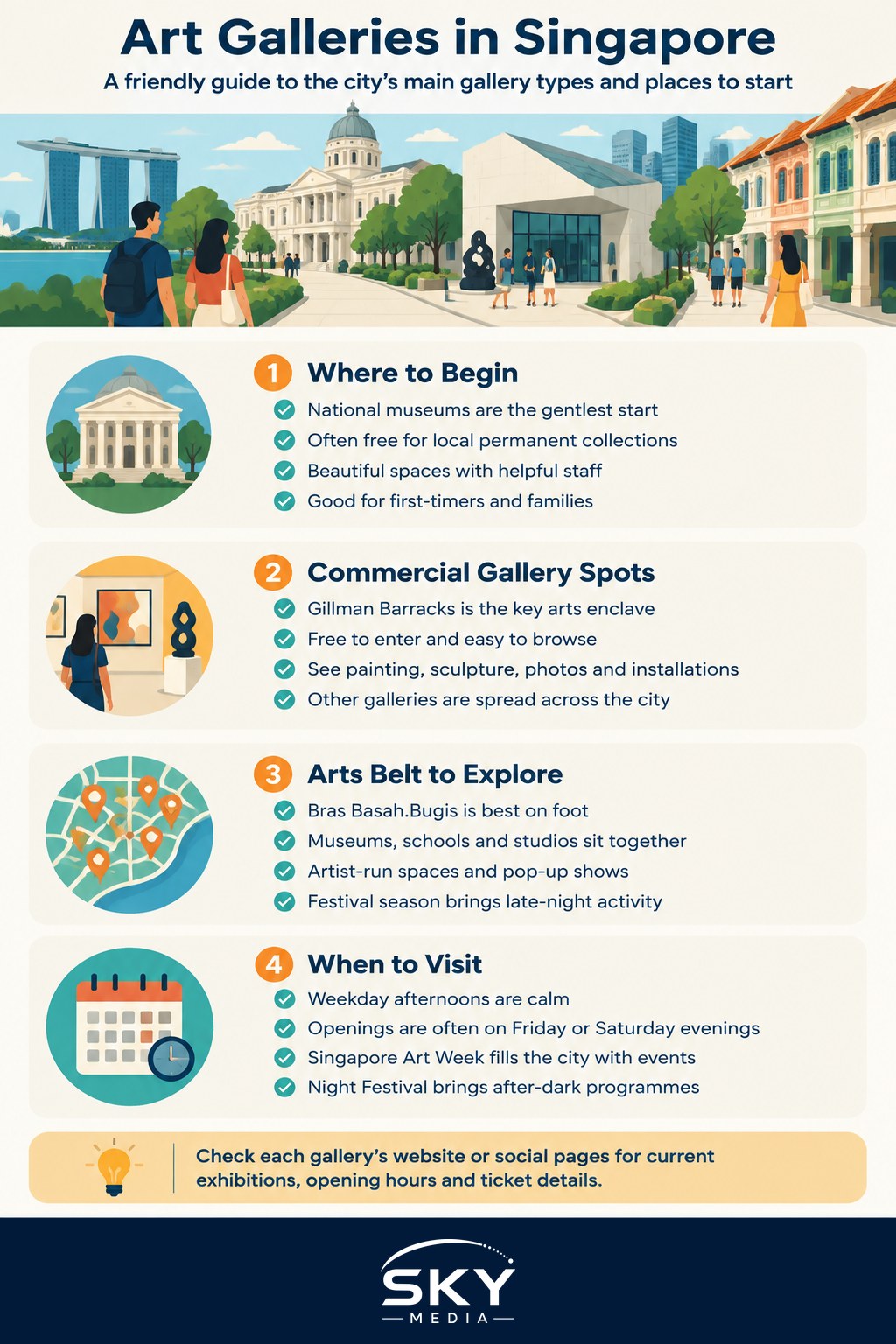
The National Institutions Worth Starting With
If you are new to looking at art, the big public museums are the gentlest and often the cheapest way in. They are beautifully presented, air-conditioned, and staffed by people who are happy to help.
- National Gallery Singapore. Housed in the former Supreme Court and City Hall, this is the anchor of the local art world, with the largest public collection of modern Southeast Asian art. Expect grand architecture, changing special exhibitions and a lovely rooftop.
- Singapore Art Museum (SAM). The country’s dedicated contemporary art museum, focused on new, often experimental work by artists from the region. It runs shows across several venues, so check where the current exhibition is being held.
- ArtScience Museum. The lotus-shaped building at Marina Bay Sands blends art, science and technology, with immersive, family-friendly blockbuster shows.
- National Museum of Singapore. Better known for history, it also stages art and design exhibitions and often has striking installations in its galleries.
Singapore residents and citizens enjoy free entry to the permanent collections at several national museums, and there are periodic free-admission days and passes for special shows, so it is always worth checking before you buy a ticket.
The National Gallery as the anchor
The National Gallery Singapore is the natural starting point, and not only because of its size. It occupies two restored civic landmarks in the heart of the city, linked and reworked into one of the region’s largest art museums. The building is part of the experience: look up at the layered metal and glass roof, and walk out onto rooftop terraces with views over the Padang and the bay.
The collection focuses on modern art from Singapore and the wider region, placing Southeast Asian art at the centre rather than treating it as a footnote to Western movements. You can trace how artists here responded to colonialism, independence, migration and rapid modern change, through early oil paintings, social realist works, sculpture, prints and photography. Because the holdings are broad, most visitors dip into a few sections rather than trying to see it all at once.
- The permanent galleries and rotating special exhibitions are usually ticketed separately, so check what is included before you buy.
- Ticketing often differs for Singapore residents and overseas visitors, and there are sometimes free-entry windows, so verify the current details on the official channels.
- Cafes, restaurants and a rooftop bar make it easy to split a long visit into two halves with a meal in between.
Gillman Barracks and the Commercial Gallery Scene
For contemporary art with a sharper, more international edge, Singapore’s commercial galleries are where artists are represented and works are sold, though you are entirely free to browse without buying anything.
The heart of this world is Gillman Barracks, a cluster of restored colonial army buildings turned into a leafy arts enclave. A single visit lets you walk between a dozen or so galleries showing painting, sculpture, photography and installation from Asia and beyond. It is quiet, green and refreshingly unintimidating, and entry to the galleries is free. Openings, usually on selected evenings, are a friendly way to see new shows and soak up the atmosphere.
Beyond Gillman, commercial and independent galleries are scattered across the city, from Tanjong Pagar Distripark, another warehouse-style arts hub, to standalone spaces in the central districts. Do not be shy about stepping inside; galleries want visitors, and the staff are usually glad to tell you about the work.
The Bras Basah Bugis Arts Belt
The Bras Basah.Bugis precinct is Singapore’s historic arts and heritage quarter, dense with museums, art schools, independent spaces and design studios all within easy walking distance. It rewards wandering on foot.
Here you will find institutional museums sitting alongside artist-run project spaces, campus galleries attached to art colleges, and pop-up shows in heritage buildings. During festival season the whole area comes alive with late-night programming. Because so much is packed together, it is the ideal district for a self-guided gallery crawl: pick a starting point, follow your interest, and duck into whatever catches your eye.
Comparing the Main Gallery Types
Different spaces suit different visits. This table gives a rough sense of what to expect, though details vary by venue and show.
| Gallery type | What you will see | Typical cost | Best for |
|---|---|---|---|
| National museums | Major collections, blockbuster shows | Often free for locals; paid special exhibitions | First-timers and families |
| Commercial galleries | Contemporary work for sale | Free to browse | Discovering new artists |
| Artist-run and independent | Experimental, emerging art | Usually free | Curious, off-the-beaten-track visits |
| Festival and pop-up spaces | Site-specific, one-off shows | Free to ticketed | Seasonal, event-driven outings |
When to Go: Festivals and Free Days
Singapore’s art calendar has a few reliable high points that are perfect for gallery-hopping. Singapore Art Week, usually in the earlier part of the year, floods the city with exhibitions, tours, fairs and late openings, much of it free. The Night Festival in the Bras Basah.Bugis area turns museums and streets into an after-dark playground of light works and performances. Art fairs bring international galleries to town for a few intense days.
Outside the big events, weekday afternoons are the calmest time to see art in peace, while gallery openings, often on Friday or Saturday evenings, are more social. Confirm the actual dates and programmes on the organisers’ websites each year, as they shift.
Tips for a Confident First Visit
- Wear comfortable shoes. Precincts like Gillman Barracks and Bras Basah.Bugis are best explored on foot.
- You do not need to know anything. Read the wall text, take your time, and let yourself simply like or dislike a work.
- Ask questions. Front-desk and gallery staff genuinely enjoy talking about the shows.
- Check opening hours. Many commercial galleries close on Mondays and public holidays, and some shows are up for only a couple of weeks.
- Photography rules vary. Some spaces welcome photos, others do not, so look for signs or just ask.
Take it slowly, follow your curiosity, and you will quickly find the corners of the scene that feel like yours.
Planning a visit that actually works
The most common mistake is trying to see everything. The National Gallery alone can fill several hours, so pairing it with one nearby museum is plenty for a single outing. If your interest runs to the contemporary and commercial side, give a separate day to the gallery cluster and a shophouse district, where the pleasure is as much in the walking as the looking.
Wear comfortable shoes, since gallery floors are hard and you will cover more ground than you expect. Singapore’s heat and sudden showers make air-conditioned galleries an easy refuge, so slot them into the hottest hours of the day. Photography rules vary between permanent collections and loaned special exhibitions, so watch for signs and ask if unsure. Many galleries run free tours, talks and family programmes, which can turn a passive walk-through into something you actually remember.
Explore more
If you want to go deeper on the flagship institutions, our guide to exploring National Gallery Singapore is a great next step, and the National Museum of Singapore guide covers its art and history galleries. For the broader creative picture, read up on contemporary art in Singapore to understand the artists and ideas shaping the scene today.
Related across Sky Media: Art Galleries and the National Gallery in Singapore · Art Galleries in Singapore: A Guide
Frequently Asked Questions
Do I have to buy something when I walk into a commercial gallery? No, there is no obligation to buy. Commercial galleries are happy to have browsers, and staff usually enjoy explaining the work. Looking, asking questions and leaving politely is completely normal, and many people visit for months before ever buying anything.
Which type of gallery is best for a complete beginner? The big national museums are the gentlest start. They have wall texts, tours and cafes, so you are never left guessing. Once you feel comfortable, move on to commercial and artist-run spaces, where the work is edgier and the atmosphere more casual.
Is there a good way to spend a whole day gallery-hopping? Pick one district and walk it rather than crossing the island. The Bras Basah.Bugis belt packs museums and independent spaces close together, so you can chain several visits on foot. Add a lunch break and a cool indoor stop during the hottest hours.
What is the difference between a museum and a commercial gallery? A museum collects and displays art for the public, often with permanent collections and paid special shows. A commercial gallery represents artists and sells their work, though entry is free to browse. Museums give context, while galleries show you what is current.
Further reading: Where to See Photography Exhibitions in Singapore · Where to Frame Art, Prints and Posters in Singapore