
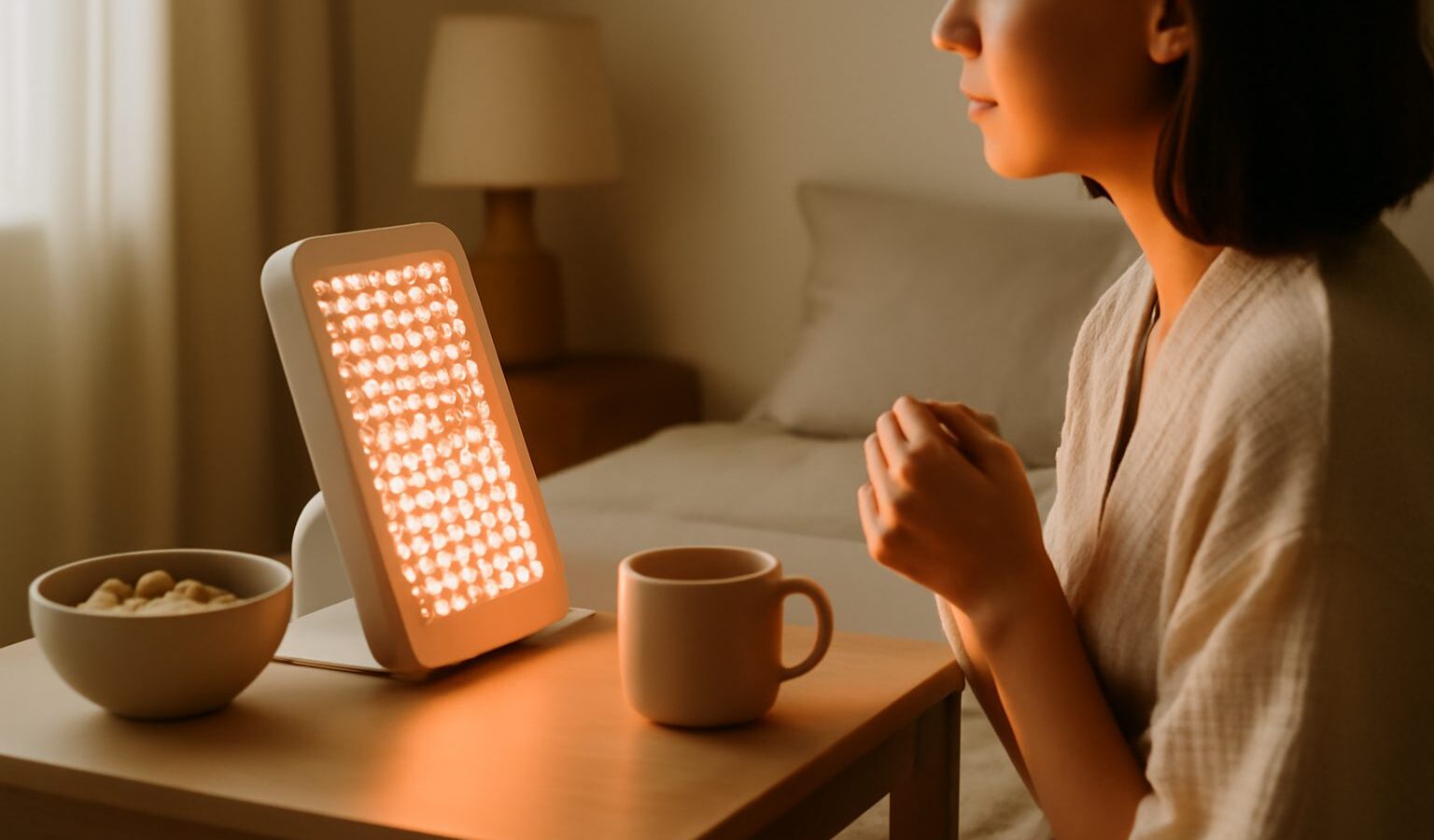
LED light therapy has moved from the treatment room to the bathroom shelf, with masks, panels and handheld wands now easy to buy in Singapore. The idea is appealing: sit back for ten minutes, let coloured light do something good for your skin, no needles or downtime. This guide explains what at-home LED light therapy can realistically do in our climate, how to use it safely, and where a professional still matters.
First, the honest framing. This is general information, not medical or dermatological advice. Home LED devices are gentler and lower-powered than the equipment used in clinics, so they work slowly and modestly. For any skin condition, persistent problem or before starting something new, see a doctor or a dermatologist, and always patch-test.
How LED Light Therapy Works
LED stands for light-emitting diode. In skincare, different colours of light sit at different wavelengths, and each is studied for different uses. The light is not the same as ultraviolet (UV) from the sun; a proper LED device does not tan or burn you, and it should not emit meaningful UV.
The two colours you will see most often are:
- Red (and near-infrared) light. The most commonly discussed for general skin appearance, comfort and supporting the skin’s natural repair processes. This is the “anti-ageing” and soothing category people usually mean.
- Blue light. Often marketed for blemish-prone skin, as it is studied for the bacteria involved in breakouts.
You may also see amber, green or combination settings. Claims for these vary and evidence is thinner, so keep expectations grounded. Across the board, light therapy is a slow, cumulative habit, closer to flossing than to a facial. Results, if they come, build over weeks of consistent use, and they are subtle rather than dramatic.
At-Home Devices vs In-Clinic Treatments
This is the most important thing to understand before spending money. Home devices are deliberately gentler so they are safe for unsupervised use, which also means they are weaker than clinical machines.
| Feature | At-Home LED Device | In-Clinic LED or Laser |
|---|---|---|
| Strength | Low, safe for daily home use | Higher powered, professionally set |
| Supervision | You, following the manual | Trained, licensed practitioner |
| Pace of results | Slow, subtle, needs consistency | Often faster, but varies |
| Cost pattern | One-off purchase, ongoing use | Per session, adds up over time |
| Best for | Maintenance, mild concerns | Assessed concerns, stronger goals |
Treat an at-home LED as a maintenance tool, not a replacement for professional care. If you want to treat a specific concern such as stubborn acne, pigmentation, scarring or signs of ageing, a consultation with an MOH-registered doctor or a qualified, licensed practitioner will tell you what actually suits your skin. Lasers and stronger light-based treatments are regulated procedures and should only be done at a proper clinic, never from a cheap or unregulated provider.
Using an LED Device Safely at Home
Safety with LED is mostly common sense, but a few points are non-negotiable.
- Protect your eyes. Bright light close to the face can strain or dazzle you. Use the goggles or eye shields provided, keep your eyes closed, and follow the manual. This matters more if you have any eye condition; ask your doctor if unsure.
- Follow the timing exactly. More is not better. Stick to the recommended session length and frequency printed by the manufacturer. Overusing it will not speed results and may irritate your skin.
- Patch-test first. Try a short session on a small area and wait a day to check for redness, itching or discomfort before doing your whole face.
- Start clean and bare. Use it on cleansed skin, usually before heavier products, unless the instructions say otherwise. Serums or masks that react to light are best kept for a different step.
- Stop if irritated. Redness that settles quickly can be normal, but if you get lasting redness, stinging, swelling, a rash or a headache, stop and let your skin recover. See a doctor if it does not settle.
Certain situations call for medical advice first: if you are pregnant or breastfeeding, take medication that increases light sensitivity (some acne, antibiotic or other prescriptions do), have a condition triggered by light, or have a history of certain skin conditions. When in doubt, ask a professional before buying.
Making It Work in Singapore’s Climate
LED itself is climate-neutral, but how you fit it into a tropical routine matters.
- It is not sun protection. Nothing about LED reduces your need for daily sunscreen. In our strong, year-round sun and haze, keep reapplying a lightweight SPF, especially if you are outdoors or sweating.
- Keep skin cool and clean. In heat and humidity we sweat and shine, so cleanse before a session and avoid using the device on freshly sunburnt, broken or heavily sweating skin.
- Consistency beats intensity. A calm, short session a few times a week, done regularly, will serve you better than long, sporadic blasts. Slot it into a fixed time, such as after an evening shower.
- Mind the pairing. If you already use strong actives such as exfoliating acids or retinoids, introduce LED gently and do not pile everything on at once. Over-doing multiple treatments is a common route to irritation.
What to Realistically Expect
Set your hopes at the right level and you will be far happier. A home LED device is a gentle, low-effort add-on that may, with steady use over weeks, support a more comfortable, even-looking complexion or help maintain results from professional care. It will not remake your skin overnight, erase deep scarring or pigmentation, or match a clinical machine.
Choose a device from an established seller with clear instructions and safety information, rather than the cheapest unbranded option with big promises and no guidance. If a product claims to cure acne, remove scars or reverse ageing, treat that as marketing, not fact.
Above all, keep a professional in the loop for anything beyond gentle upkeep. Persistent acne, changing moles, pigmentation, hair loss or any skin condition deserves a proper look from a dermatologist or doctor. Used as a calm, consistent habit with realistic expectations, at-home LED light therapy can be a pleasant part of caring for your skin, as long as you let the professionals handle the heavy lifting.