

Cold showers have gone from a Scandinavian curiosity to a wellness talking point, and in a country as warm as Singapore, the idea of turning the tap to cold has obvious appeal. Alongside them, contrast therapy, the practice of alternating hot and cold, has picked up a keen following among gym goers and anyone chasing a fresher start to the day. Before you commit, it is worth separating the sensible from the overhyped, because the honest answer is that some benefits are plausible and modest while others are far less certain.
This is general wellbeing information, not medical advice, and nothing here is a treatment for any condition. If you have a heart condition, high or low blood pressure, are pregnant, or have any health concern, please check with your doctor before starting cold exposure of any kind.
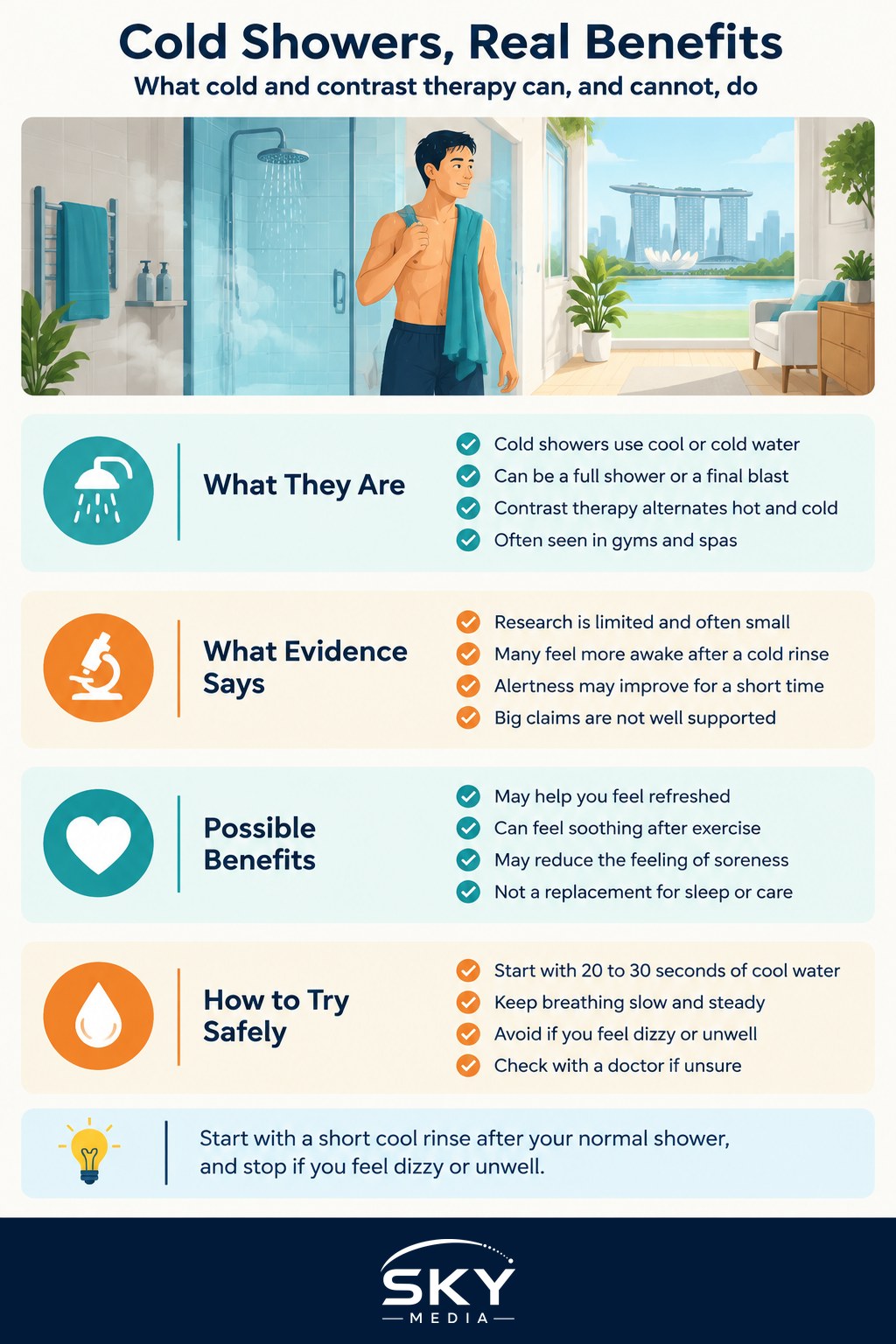
What Cold Showers and Contrast Therapy Are
A cold shower is simply what it sounds like, rinsing under cool or cold water rather than warm, either for a whole shower or as a short blast at the end. People do it for a variety of reasons, from feeling more awake to cooling down after being out in the heat.
Contrast therapy takes the idea a step further by alternating between hot and cold, for example a warm shower followed by a cold rinse, repeated a few times, or the sauna and cold plunge pairing you may have seen at gyms and spas. The thinking is that heat encourages blood vessels to widen and cold encourages them to narrow, and that switching between the two creates a pumping effect. It is a long standing practice in sports recovery settings, though even there the evidence is mixed rather than settled.
Neither practice is a miracle, and neither is new. What has changed is the volume of online claims attached to them, so it pays to keep expectations grounded.
What the Evidence Does and Does Not Support
It is fair to say the research here is limited, and much of it is small or short term, so strong promises are out of place. With that caution front and centre, a few things are reasonable to say.
Many people find a cold rinse genuinely wakes them up and lifts their mood for a while, and that immediate, subjective boost is one of the more consistent reports. Some studies suggest cold exposure may help with the feeling of alertness. Claims about dramatically boosting metabolism, burning fat, curing illness or overhauling your immune system are not well supported and should be treated with healthy scepticism.
For recovery after exercise, cold and contrast approaches are popular and some athletes swear by them for feeling less sore, though the science on whether they meaningfully speed up recovery is genuinely mixed. Interestingly, for those trying to build muscle, regularly icing straight after strength training may even blunt some of the gains, so timing matters.
The sensible framing is this. If cold showers or contrast routines make you feel better, more awake, or more refreshed, that subjective benefit is real and worth something. Just do not expect them to replace sleep, good food, movement or medical care.
Hot Water vs Cold Water at a Glance
If you are deciding when to reach for warm and when for cold, this quick comparison helps.
| Situation | Warm or hot water | Cold water |
|---|---|---|
| First thing in the morning | Relaxing but can feel sluggish | Often more alerting and energising |
| After a sweaty commute | Can feel stifling in the heat | Cools you down quickly |
| Sore, tired muscles | Eases stiffness, feels soothing | May reduce the feeling of soreness |
| Winding down at night | Warm helps many people relax | Cold may be too stimulating for sleep |
| Sensitive or dry skin | Very hot water can dry skin out | Gentler, less stripping |
| If you feel unwell or dizzy | Avoid extremes | Avoid, and rest instead |
Notice that neither column wins outright. The best choice depends on the moment, your goal, and how your body responds, which is exactly why a flexible approach beats a rigid rule.
How to Try It Sensibly in Singapore
Our climate gives cold showers a natural advantage, since tap water is rarely truly cold and a cool rinse after commuting in the heat feels wonderful rather than punishing. That makes Singapore an easy place to experiment gently. A few practical pointers:
- Start gradually. Finish an ordinary shower with twenty to thirty seconds of cooler water rather than plunging into full cold on day one.
- Keep breathing slow and steady. If you find yourself gasping or holding your breath, the water is too cold or the shock is too much.
- For a simple contrast routine, try a few rounds of a comfortable warm rinse followed by a cooler one, ending on cold if you want the alerting effect.
- Listen to your body and stop if you feel dizzy, faint, numb, or unwell in any way.
- Do not combine cold exposure with alcohol, and never do a cold plunge alone in deep water.
There is also a skin angle. Very hot, long showers can strip the skin and worsen dryness, which matters when air conditioning is already drying you out indoors. A cooler, shorter shower is gentler on the skin barrier, so this is one wellness trend that happens to sit comfortably with sensible skincare. Follow up with a moisturiser while skin is still slightly damp to lock in hydration.
Keep it enjoyable rather than a test of willpower. The goal is a small daily lift, not an ordeal you dread, and consistency with something pleasant beats heroics you quietly abandon.
When to Check With a Doctor First
Cold exposure places a brief demand on your heart and circulation. The sudden cold can raise heart rate and blood pressure momentarily, which is harmless for most healthy people but not something to take lightly if your health is more delicate.
Please speak to your doctor before trying cold showers, cold plunges or contrast therapy if you have a heart condition, high or low blood pressure, circulation problems, Raynaud’s, diabetes, or any other ongoing condition, or if you are pregnant. The same goes if you take medication that affects your heart rate or blood pressure, or if you simply are not sure whether it is right for you. Older adults and anyone recovering from illness should also err on the side of caution.
None of this is meant to alarm you. For most people a cool rinse is perfectly safe and pleasant. The point is that cold showers are a wellbeing habit, not a medical treatment, and a quick check with a professional when there is any doubt is the sensible way to enjoy them.
Explore more
Cold water is one small piece of a wider wellbeing routine. If you are building calmer daily habits, our guide to journaling for wellbeing pairs well with a mindful morning rinse, and if you have been running on empty, recognising and recovering from burnout is worth an honest read. For the practical side of feeling fresh in the heat, see our take on deodorant vs antiperspirant.
Frequently Asked Questions
Do cold showers boost the immune system? The evidence does not support strong claims here. Cold showers may leave you feeling more alert, but claims about overhauling your immune system, curing illness or burning fat are not well supported. Treat them as a refreshing habit, not a treatment.
How cold should the water be to start? Start gradually rather than diving into full cold. Finishing an ordinary shower with twenty to thirty seconds of cooler water is enough, and tap water in Singapore is rarely truly cold anyway. If you are gasping or holding your breath, it is too much.
Should I take a cold shower after exercise? It may reduce the feeling of soreness and cool you down, but the science on faster recovery is mixed. If you are building muscle, regularly icing straight after strength training may even blunt some gains. A cool rinse after cardio is a sensible low-risk option.
Is a cold shower before bed a good idea? For many people it is not, because cold can be too stimulating for sleep. A warm shower helps most people wind down at night. Save cold rinses for the morning or after being out in the heat.
Can contrast therapy help with sore muscles? Some athletes feel less sore after it, but the evidence is mixed rather than settled. Alternating warm and cool water is a low-risk way to try it if you are healthy. Check with a doctor first if you have heart, blood pressure or circulation problems.
Further reading: Cupping Therapy Explained