

There is something quietly joyful about looking up from your morning kopi to find a sunbird hovering at a flower on your HDB balcony. Attracting birds to your balcony in Singapore is one of the simplest ways to bring a little wild wonder into flat life, and you do not need a garden or even much space to do it. The trick is to work with our tropical climate and native species, and to offer the things birds actually need, which almost never means human food.
Singapore is remarkably rich in birdlife for such a dense city, from olive-backed sunbirds and yellow-vented bulbuls to the occasional oriole flashing gold through the trees. Many of these birds are already flying past your block. Your job is simply to give them a reason to pause.
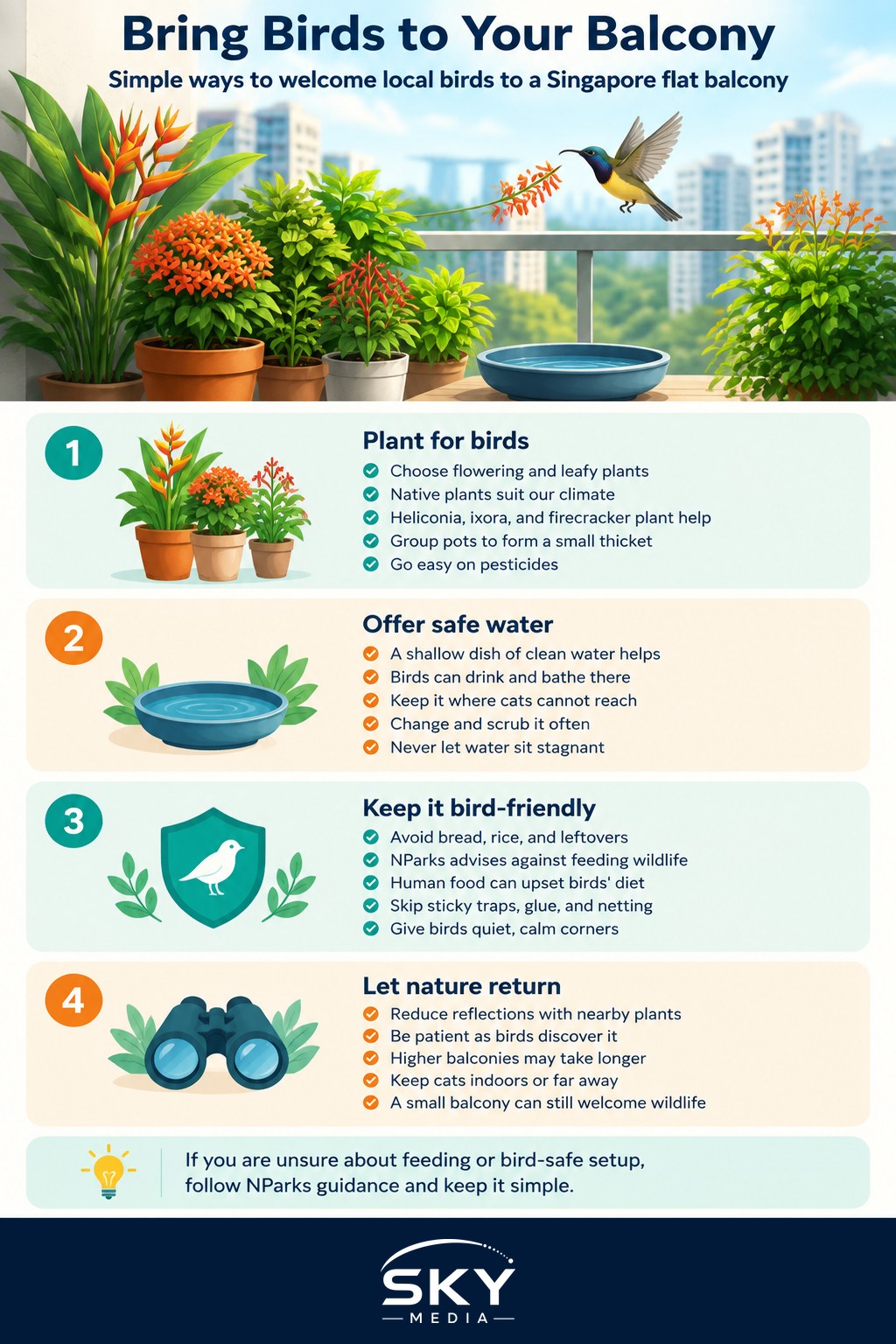
Grow the plants that pull birds in
The single most effective thing you can do is plant. Birds follow food and shelter, and native and nectar-rich plants deliver both. Flowering plants such as heliconia, ixora, and firecracker plant draw nectar feeders like sunbirds, while fruiting plants can tempt bulbuls. Dense, leafy pots also give small birds somewhere to perch and feel safe from the open sky.
A few pointers for balcony growers:
- Choose a mix of flowering and leafy plants so there is nectar as well as cover.
- Favour native species where you can, as they suit our climate and local wildlife best.
- Group pots together to create a small thicket rather than scattering single plants.
- Go easy on pesticides, since insects are food for many birds and a healthy balcony is a living one.
If you want to go further with this approach, our guide to gardening with native plants is a good next step, and a flowering balcony often doubles as a home for other visitors too, which you can encourage with our piece on creating a pollinator garden.
Offer water, not human food
This is the part that matters most, so please read it carefully. NParks advises against feeding wildlife, and that guidance applies to birds too. It feels kind to scatter bread, rice, or leftovers, but human food can harm birds, unbalance their diet, and make them dependent on people instead of foraging naturally. Feeding can also draw pigeons, crows, and rats in numbers that create hygiene problems for your whole block, and inappropriate feeding of wildlife can carry penalties. The kind thing is to let birds find their own food.
What you can safely offer is water. A shallow, stable dish of clean water gives birds somewhere to drink and bathe, which is genuinely valuable in our heat. Keep it shallow so small birds can use it safely, place it where a cat cannot lurk nearby, and rinse and refill it often. Standing water is a mosquito risk in Singapore, so change it every day or two and scrub the dish, and never let it sit stagnant. If you cannot commit to regular cleaning, it is better to skip the water dish than to breed mosquitoes.
Make your balcony safe and welcoming
Once you have plants and water, a few small habits make the difference between a balcony birds pass by and one they return to:
- Keep things calm and predictable. Birds are wary, so give them quiet corners and avoid sudden movement near the glass.
- Reduce reflections. Large mirror-like surfaces can confuse birds, so plants near the railing help break up the reflection.
- Skip the chemicals. Avoid sticky traps, glue, or netting that can injure birds or trap them.
- Be patient. It can take weeks for birds to notice and trust a new spot, especially higher up.
If you keep a cat, keep it indoors or well away from the birds you are inviting, which is also part of being a responsible owner, a theme we cover in sustainable pet ownership in Singapore.
Enjoy it lightly
Attracting birds to your balcony is not about turning your flat into a feeding station. It is about making a small green space that fits into the wider web of city nature, then stepping back and letting the birds do the rest. Grow a few good plants, keep clean water when you can manage it, hold off on the human food, and follow NParks guidance if you are ever unsure. Do that, and the sunbirds will find you in their own time. When they do, it is a lovely reminder that even high above the void deck, we share this island with plenty of wild neighbours.
Frequently Asked Questions
Is it okay to put out birdseed or fruit on my balcony? NParks advises against feeding wildlife, so it is better not to. Human food can harm birds and attract pigeons, crows and rats, causing hygiene problems for your block. Plants and clean water are a better way to welcome them.
How do I keep a bird bath from becoming a mosquito breeding spot? Use a shallow dish, scrub it and change the water every day or two, and never let it sit stagnant. If you cannot keep up the routine, skip the water dish altogether.
Why do birds keep flying into my balcony glass? Large mirror-like surfaces and reflections can confuse birds. Placing plants near the railing helps break up reflections. Avoid sticky traps, glue or netting that can injure or trap birds. Keeping the area calm and avoiding sudden movement near the glass also helps.
Will keeping a cat stop birds from visiting? Probably, if the cat can reach the balcony. Keep it indoors or well away from the birds you are inviting. It is part of being a responsible pet owner. A cat lurking near water dishes or plants will quickly put small birds off.
Which common garden birds might visit a Singapore balcony? Sunbirds and bulbuls are common visitors, and an oriole may pass through. Which species stop by depends on your plants, height and location, so be patient and observe over several weeks.
Official sources: National Parks Board (NParks)