
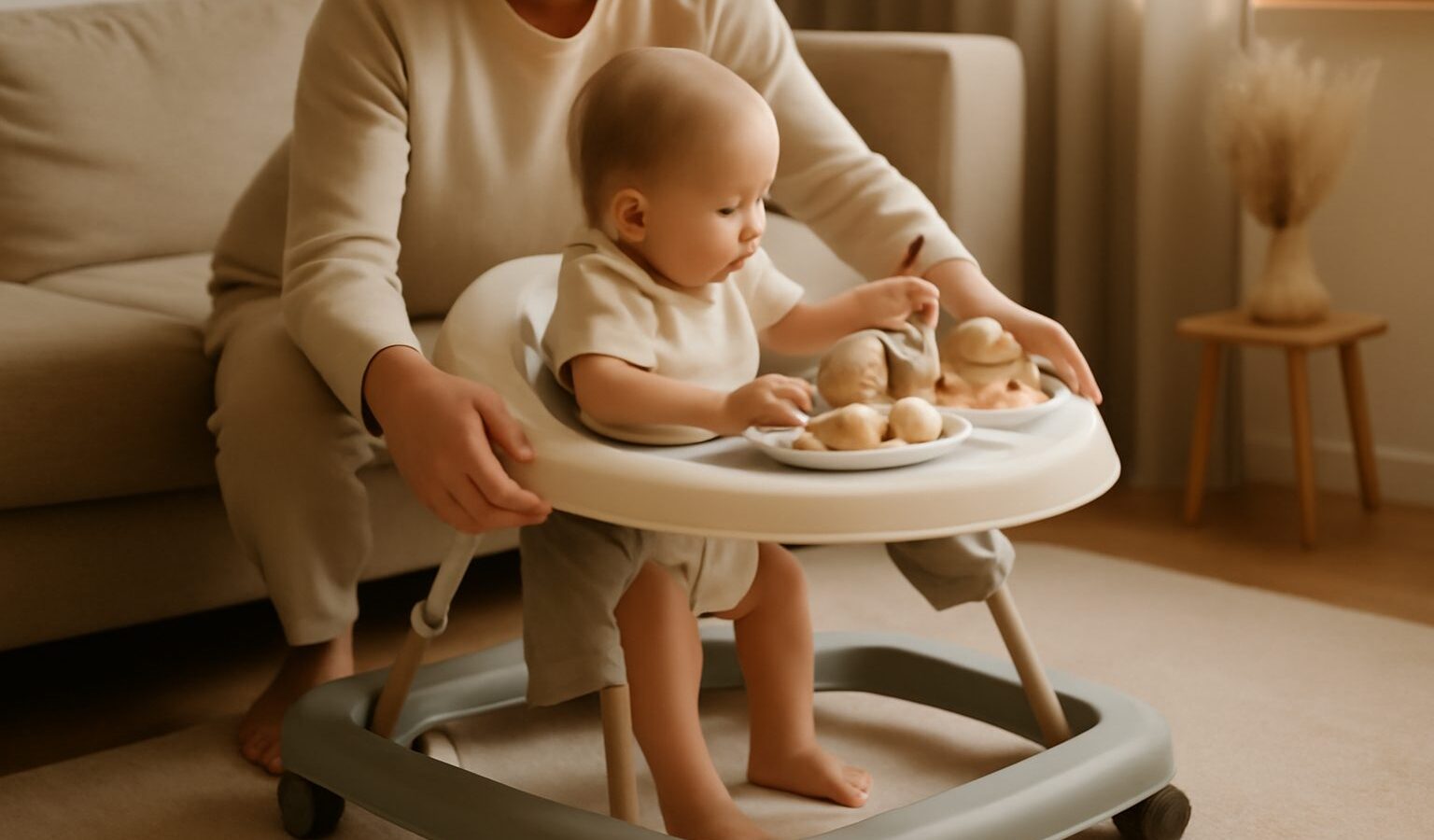
Wheeled baby walkers are a familiar sight in many homes, and plenty of grandparents remember using one for their own children. So it is natural to ask: are baby walkers safe? The short answer from many child health experts is that wheeled walkers carry real injury risks and offer no developmental benefit, while stationary activity centres are a lower-risk alternative if used sparingly.
This article weighs those two options side by side so you can make an informed choice. It is general information, not medical advice. If you have concerns about your baby’s development or an injury, speak to your paediatrician, family doctor or polyclinic.
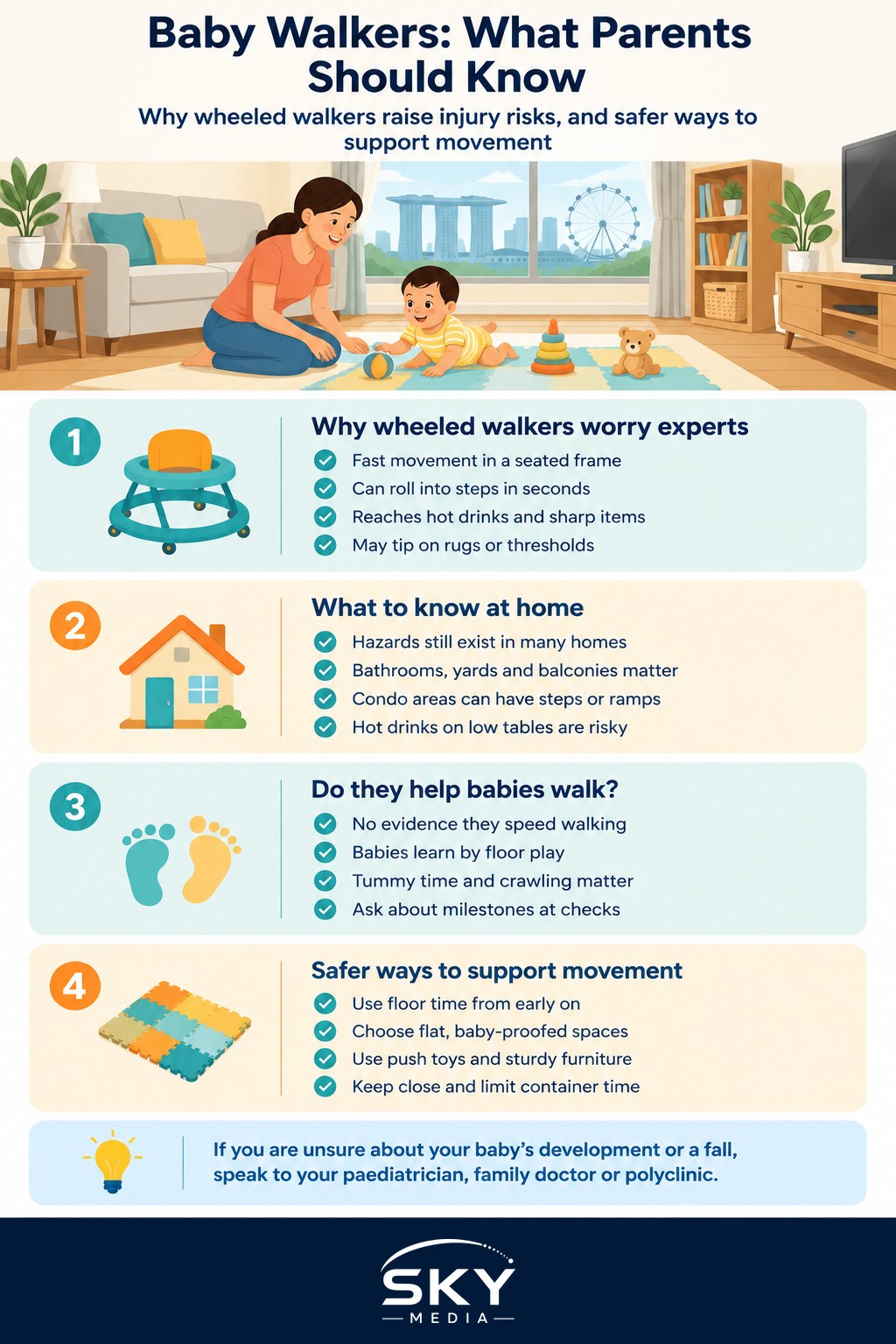
Why Wheeled Walkers Worry Child Safety Experts
A wheeled walker is a seat suspended in a frame on castors. The baby sits upright with feet touching the floor and pushes off to move. The problem is that it gives a baby who cannot yet walk a sudden burst of speed and height.
Paediatric bodies in several countries have raised concerns for years. The American Academy of Pediatrics has called for a ban on their sale in the United States, and Canada banned the sale of baby walkers in 2004. These positions reflect injury patterns seen in hospitals, including:
- Falls down steps. This is the most serious risk. A walker can roll over a step or down stairs in seconds, and head injuries are a particular concern.
- Reaching hazards. Sitting higher means a baby can grab hot drinks, kettle cords, tablecloths, medicines or sharp objects on tables and counters that would otherwise be out of reach.
- Tipping over. Walkers can tip when a wheel catches on a rug edge, threshold strip or toy.
- Water hazards. A walker can carry a baby towards a pail of water, bathroom or pool.
Even attentive parents get caught out, because walkers move quickly and a parent only needs to turn away briefly.
What this means in a Singapore home
You might think a flat without internal stairs is safe. In practice, many homes still have hazards at walker height or ground level:
- Raised or sunken steps into bathrooms, kitchens and yard areas.
- Balconies and service yards with ledges or floor-level gaps.
- Landed homes and maisonettes with internal staircases.
- Condo common areas with ramps, steps and pool decks.
- Low coffee tables holding hot tea, kopi or soup within easy reach.
Do Walkers Help Babies Learn to Walk?
Many families buy walkers believing they speed up walking. Research does not support this. Some studies have suggested that walker use may be linked with slightly later independent walking, possibly because babies in walkers do not practise balancing, falling safely and pulling to stand in the same way.
Babies build walking skills through a natural sequence that typically includes tummy time, rolling, sitting, crawling or shuffling, pulling to stand, cruising along furniture and finally taking independent steps. The timing varies widely between children. If you are worried that your baby seems behind on milestones, raise it at developmental checks or with your doctor rather than trying to hurry things along with equipment.
Wheeled Walkers vs Stationary Activity Centres
Stationary activity centres (sometimes called “exersaucers” or activity jumpers) look similar but have no wheels. The baby sits or stands in a seat that may spin, bounce or rock, surrounded by toys. Because the baby cannot travel, the stair and reaching risks largely disappear.
That does not make them risk-free or beneficial for walking. Here is how the options compare:
| Feature | Wheeled walker | Stationary activity centre | Free floor play |
|---|---|---|---|
| Can the baby travel across the room? | Yes, quickly | No | Yes, at their own developmental pace |
| Risk of falls down steps | High | Very low if placed on flat ground | Low with supervision and safety gates |
| Access to hazards on tables | Increased due to height and movement | Limited to what is within arm’s reach | Limited, depends on baby-proofing |
| Helps build walking skills | No evidence it helps | No evidence it helps | Supports natural motor development |
| Main concern | Injury | Too much time spent upright and contained | Needs a safe, baby-proofed space |
Using a stationary activity centre sensibly
If you choose a stationary centre, these habits help:
- Keep sessions short. Many health professionals suggest limiting time in any container device, such as bouncers, car seats outside the car and activity centres, so that babies spend most awake time moving freely on the floor.
- Check readiness. Follow the manufacturer’s guidance on minimum age, weight and head and trunk control. Your baby should be able to hold their head steady.
- Adjust the height. Feet should rest flat or nearly flat, not dangle on tiptoe.
- Place it well. Use it on flat ground away from stairs, windows, heaters, cords and kitchen hazards.
- Stay close. It is not a babysitter, and a baby can still pull nearby objects towards them.
If You Already Have a Wheeled Walker
Perhaps you received one as a gift or a relative is keen to use it. If you decide to keep it, reduce the risks as much as you can, while understanding that the safest choice is not to use one:
- Install safety gates at the top and bottom of any stairs and across doorways to bathrooms and kitchens.
- Remove the wheels or lock them, if the model allows, turning it into a stationary seat.
- Clear tables and counters of hot drinks, cords and small objects.
- Never use it near water, a pool or on a balcony.
- Supervise every second it is in use.
- Check for product recalls on the brand and model.
When older relatives are caring for your baby, explain your reasons calmly. Many grandparents used walkers at a time when the risks were less widely discussed. Sharing guidance from your paediatrician can make the conversation easier.
Safer Ways to Encourage Movement
Babies do not need special equipment to learn to walk. Practical ideas include:
- Plenty of floor time on a clean play mat from early on, including supervised tummy time.
- Sturdy furniture to cruise along, with sharp corners covered and unstable items secured.
- Push toys with a stable base once your baby can stand, used on flat floors and with supervision.
- Barefoot practice indoors, which lets babies feel the floor and balance. Ask your doctor if you have questions about footwear.
- Baby-proofing the main play area so free movement is safe.
Hot weather can make babies tired and fussy, so play during cooler parts of the day and keep them hydrated. For more on keeping little ones safe, read our guides on keeping babies and toddlers safe in hot months, safe sleep practices for your baby and finding parent and baby classes, where you can learn movement games with other families.
When to Seek Medical Help
Call for urgent help or go to the A&E department if your baby falls from a height, hits their head and then vomits, becomes unusually drowsy, is hard to wake, has a seizure or seems not themselves. For any other concerns about a fall or about development, see your doctor or polyclinic. HealthHub and the Health Promotion Board also publish general child safety information worth reading.
Further reading: Choosing a Baby High Chair: Types, Safety and Small-Flat Fit · Buying Baby Gear in Online Sales: What’s Safe to Buy Online and What Isn’t · Buying Second-Hand Baby Gear Safely in Singapore