
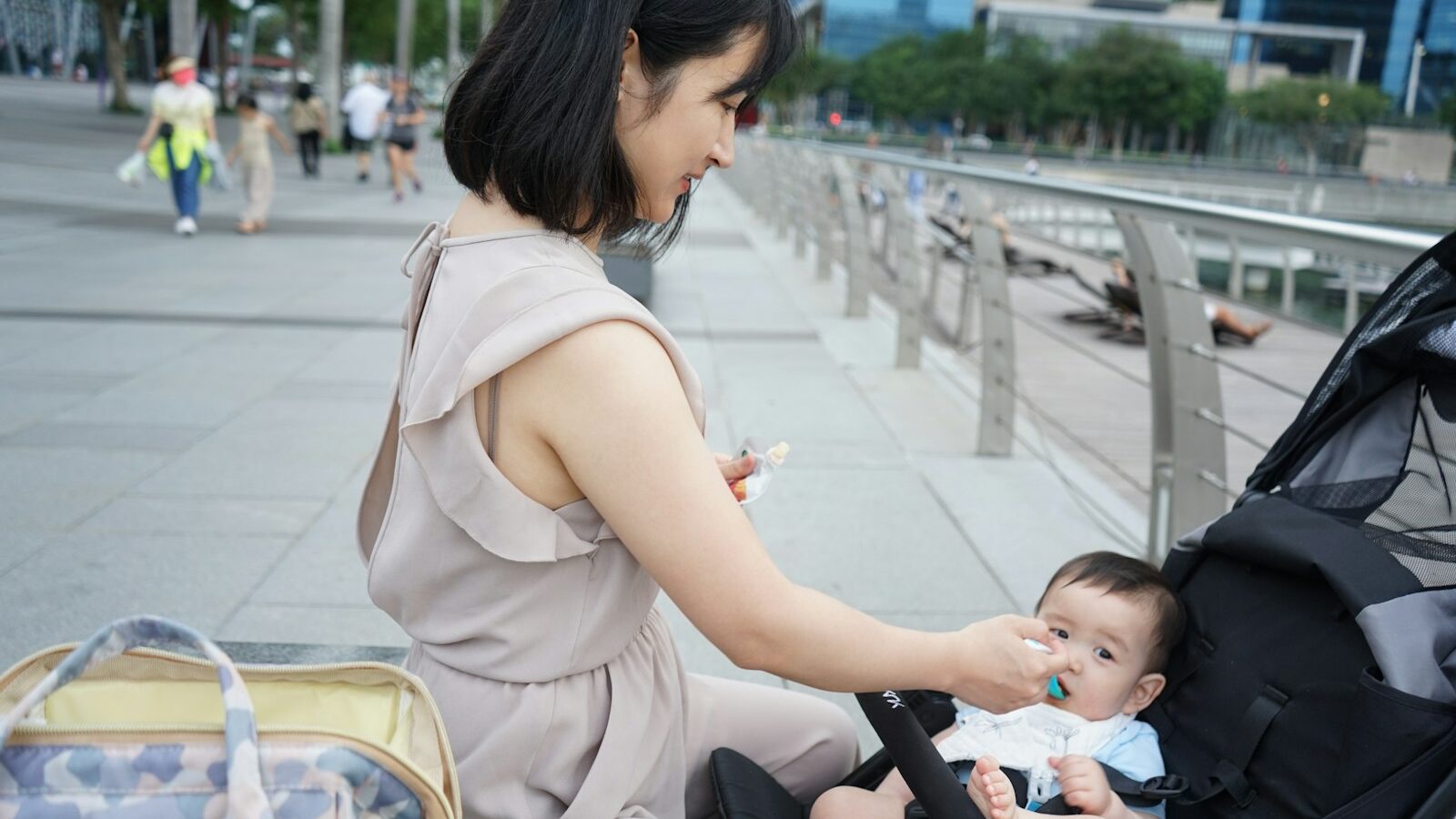
A baby high chair is one of those purchases that seems simple until you stand in a shop facing a dozen designs. Some fold flat, some grow into a child’s chair, some clip onto the dining table. In a Singapore home, where the dining area may double as a work desk and storage is tight, the wrong choice can take up space for years.
This guide explains the main types, the safety features that matter most, and how to fit a high chair into a small flat. It is general information; for questions about when your baby is ready to start solids or sit up for meals, speak to your paediatrician or polyclinic, and see HealthHub for feeding guidance.
When You Actually Need a High Chair
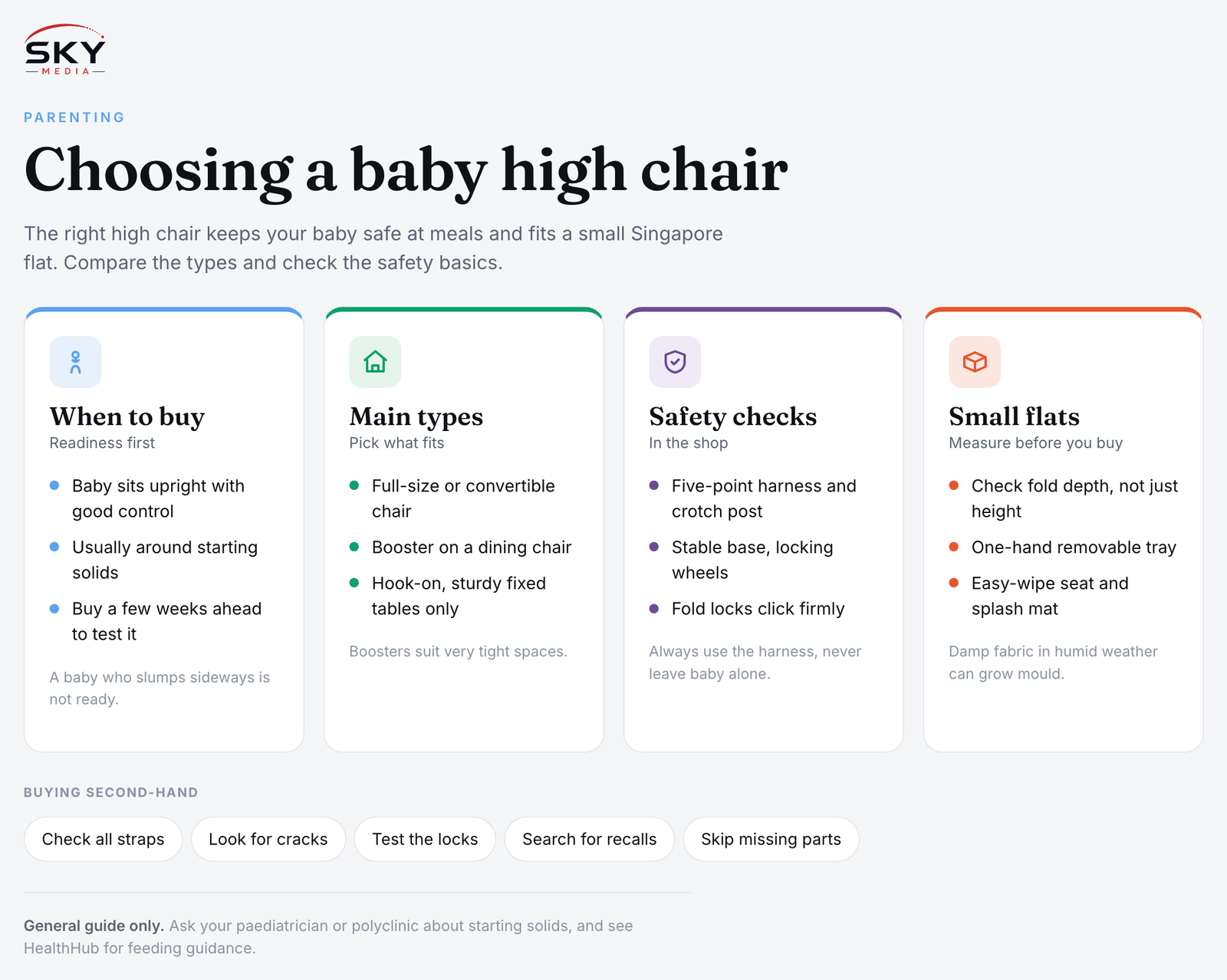
Most families buy a high chair around the time their baby starts solid food. The key sign is not age alone but whether your baby can sit upright with good head and trunk control. A baby who slumps sideways is not ready to sit in a high chair for meals, even if a friend’s baby of the same age was.
Before then, there is little reason to rush. Buying a few weeks before you start solids gives you time to assemble it, test the fold and get used to the straps.
The Main Types of Baby High Chair
Full-size standalone high chair
The classic design: a tall chair with its own legs, a tray and a harness. Many have adjustable seat heights, recline positions for younger babies and removable trays.
- Good for: families who want one dedicated feeding spot and plenty of adjustment.
- Watch out for: footprint. Splayed legs give stability but take up floor space in a narrow dining nook.
Convertible or grow-with-me chair
These start as a high chair with a tray and harness, then convert into a toddler seat that pulls up to the family table, and sometimes into a small child’s chair. Some wooden designs adjust the seat and footrest to suit a child for years.
- Good for: families who would rather buy once and keep one chair through toddlerhood.
- Watch out for: whether the baby setup includes a proper harness and a front bar or tray, not just a seat.
Booster seat
A compact seat that straps onto an ordinary dining chair. Many have a detachable tray and their own harness. They are popular in small homes and for travel.
- Good for: older babies and toddlers, flats with no room for another piece of furniture, and visits to grandparents.
- Watch out for: the dining chair itself. It needs a flat, solid seat and a back the straps can grip; slippery or narrow chairs are not suitable.
Hook-on or clip-on table chair
A fabric or frame seat that clamps directly onto the edge of the table. It takes up no floor space and packs down small.
- Good for: occasional use, travel and very small homes.
- Watch out for: table type. Hook-on chairs need a sturdy, fixed tabletop of the right thickness. They are not suitable for glass tops, pedestal tables that can tip, tables with a lip or tablecloth, or extendable leaves. Follow the manufacturer’s weight and table limits strictly.
Comparing High Chair Types at a Glance
| Type | Floor space | Best stage | Main trade-off |
|---|---|---|---|
| Full-size standalone | Large | Starting solids onwards | Takes room, may outgrow its use |
| Convertible | Medium | Baby through to preschool | Higher upfront cost, heavier |
| Booster seat | None extra | Older baby and toddler | Depends on a suitable dining chair |
| Hook-on table chair | None | Occasional and travel | Only safe on specific table types |
Safety Features to Check in the Shop
Whatever type you choose, safety comes first. Falls from high chairs usually happen when a child climbs, stands or slides out, or when the chair tips.
- Five-point harness: straps over both shoulders, around the waist and between the legs. A waist strap alone is not enough for an active baby.
- Crotch post or bar: stops a baby sliding down under the tray.
- Stable base: the chair should not rock when you push it gently from the side. Wider legs are more stable.
- Locking wheels: if the chair has wheels, they must lock.
- Secure fold mechanism: check that locks click firmly so the chair cannot fold while in use.
- No sharp edges or pinch points: run your fingers around hinges and tray slots.
- Safety standards: many chairs sold internationally state that they meet a recognised safety standard such as the European standard for high chairs. Look for this on the packaging or product listing and buy from reputable retailers.
Good habits matter as much as features. Always use the harness, even for a quick snack. Keep the chair away from walls, counters and window grilles that a baby could push off from. Never leave a baby alone in a high chair, and do not let older siblings climb on it.
Fitting a High Chair Into a Small Singapore Flat
In an HDB flat or compact condo, measure before you buy. Note the space between your dining table and the nearest wall or sofa, and leave room to walk behind the chair.
Points that help in small homes:
- Fold depth, not just height. Some chairs fold flat enough to slide beside the fridge; others stay bulky.
- Tray removal. A tray that clips off with one hand lets you push the chair up to the table and save space.
- Lightweight frame. If you will move the chair between the kitchen and the living room, weight matters.
- Easy wiping. Mealtimes are messy, and in humid weather spilt food and damp fabric can quickly lead to mould and smells. Smooth plastic, sealed wood and wipeable or machine-washable covers are easier to keep clean. Avoid deep seams that trap rice and puree.
- Floor protection. A washable splash mat under the chair saves scrubbing between floor tiles.
If space is very tight, a booster seat strapped to an existing dining chair is often the most practical choice. If you already use low furniture at home, our guide to tatami and floor chairs for small homes explains how floor-level seating works for the rest of the family.
Buying New or Second-Hand
Second-hand high chairs are widely available through parenting groups and marketplaces. They can be a good saving, but inspect them carefully:
- Check that all straps, buckles and the crotch post are present and work.
- Look for cracks in plastic, loose joints and wobbly legs.
- Make sure locks and fold mechanisms engage properly.
- Search the model name online for any product recalls.
- Avoid chairs with missing parts or no manufacturer information.
Replacement covers and straps can sometimes be ordered from the brand, which also helps refresh a well-used chair.
A Calm Start to Family Mealtimes
A high chair is a tool for helping your baby join the family table safely. Set it at a height where you can make eye contact while feeding, keep meals relaxed, and expect plenty of mess in the early weeks. If feeding becomes a struggle or your baby seems unsettled at every meal, talk to your doctor or a polyclinic nurse; our article on coping with a high needs baby also has ideas for tiring stretches.
Further reading: Playpens and Baby Gates: Do You Need Them in an HDB Flat? · Are Baby Walkers Safe? What Parents Should Know