
Few dishes feel as comforting as a steaming bowl of bak kut teh in Singapore, where pork ribs are simmered until the meat slips off the bone and the broth carries a warm, savoury depth. The name translates loosely from Hokkien as “meat bone tea,” and while the tea itself is served on the side rather than in the soup, the whole ritual, ordering, dipping, sipping, is part of what makes this humble bowl such a beloved local institution. If you are new to it, this guide walks you through what it is, the two main styles, what goes in the bowl, and how to order with confidence.
What Bak Kut Teh Actually Is
At its heart, bak kut teh is a soup of pork ribs slow-cooked in a seasoned broth. Depending on the style, that broth is either bright and peppery or dark and gently medicinal, but the core idea is the same: tender pork, a flavourful liquid, and a handful of supporting players that turn a bowl of soup into a full meal.
The dish has working-class roots. One popular account traces it to labourers and dock workers who needed something cheap, warming, and hearty to start a long day. Whatever its exact origins, it settled comfortably into the local food scene and became a staple you will find in coffee shops, food courts, and dedicated eateries across the island.
Think of bak kut teh less as a single recipe and more as a family of dishes. The ribs are the constant; the broth is where the regional personality shows up.
The Two Main Styles
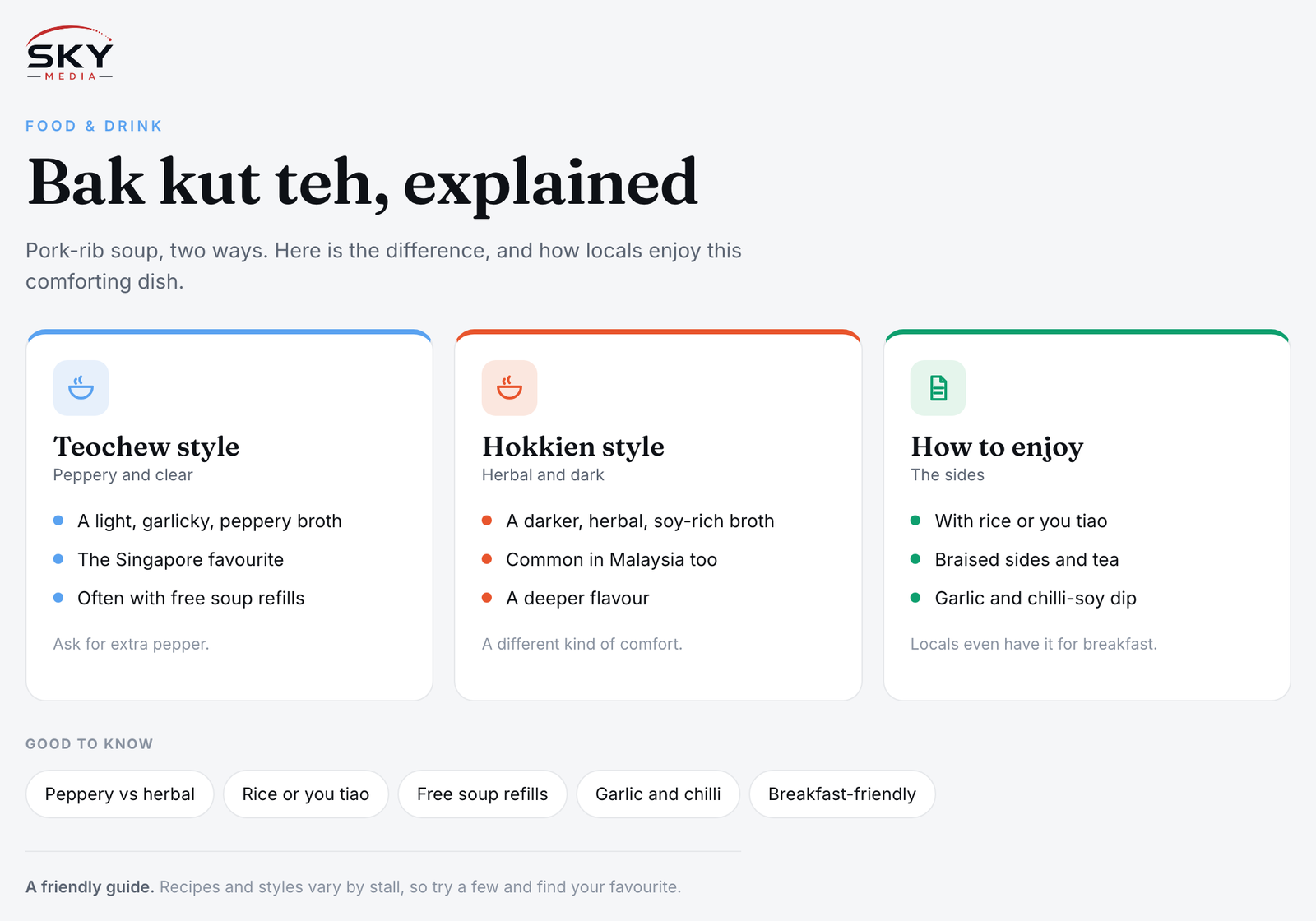
The most useful thing to know before you order is that there are two dominant styles, and they taste quite different. Knowing which one you are getting sets your expectations for the whole meal.
Teochew Peppery (Clear and Sharp)
The Teochew peppery version is the one most closely associated with Singapore. The broth is clear, almost golden, and built on a generous hit of white pepper and plenty of garlic. It is light in colour but far from bland: the pepper gives it a clean heat that clears the sinuses and wakes you up, which is part of why it is such a popular breakfast.
If you like your soup bright, punchy, and drinkable, this is the style to start with. Many stalls will happily top up your bowl with more of the peppery broth, so you can keep sipping as you eat.
Hokkien Herbal (Dark and Fragrant)
The Hokkien herbal style, more commonly found across the Causeway but also available in Singapore, takes a different route. The broth is darker, coloured by soy sauce, and simmered with Chinese herbs and spices such as star anise, cinnamon, and various roots and barks. The result is richer, sweeter, and more aromatic, with a warming, almost tonic-like quality rather than a peppery kick.
Neither style is more authentic than the other; they simply reflect different regional traditions. Trying both is the best way to decide which one you prefer.
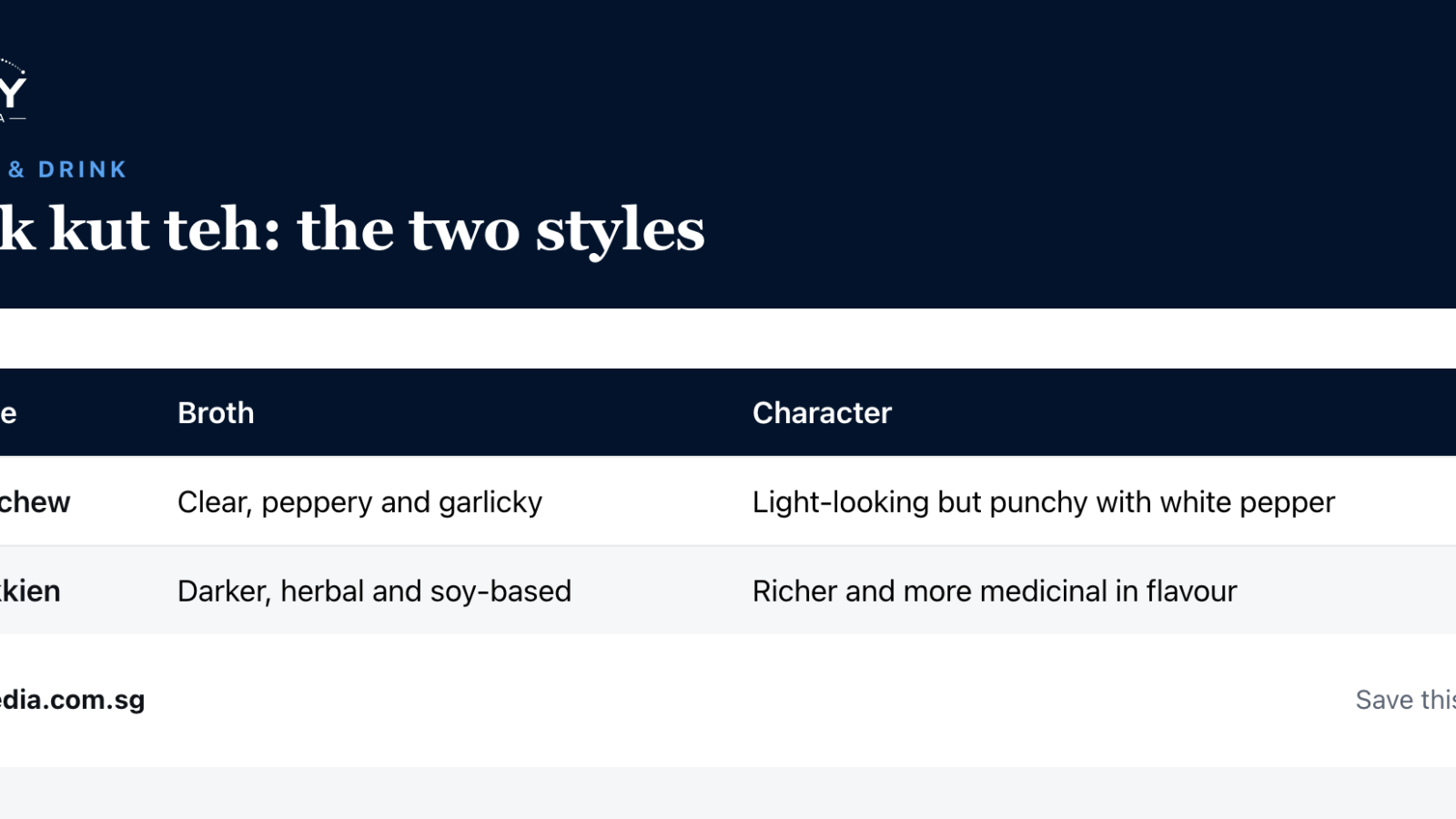
Here is how the two main styles compare:
| Style | Broth | Character |
|---|---|---|
| Teochew | Clear, peppery and garlicky | Light-looking but punchy with white pepper |
| Hokkien | Darker, herbal and soy-based | Richer and more medicinal in flavour |
What Is In the Bowl
Whichever style you choose, the ingredients are refreshingly simple. The magic is in the long simmering rather than any long list of components.
- Pork ribs: The star. Look for meat that pulls away from the bone easily. Some stalls also offer prime ribs, soft bones, or other cuts.
- Garlic: Often whole cloves cooked until soft and mellow, adding sweetness and body to the broth.
- White pepper: The defining seasoning of the Teochew style, giving that signature warming heat.
- Herbs and spices: In the Hokkien style, a blend of Chinese herbs and warming spices does the heavy lifting.
That short ingredient list is exactly why quality matters so much. With so few elements, the freshness of the pork and the patience of the cooking come through in every spoonful.
The Classic Sides
A bowl of bak kut teh rarely travels alone. The sides are half the fun, and mixing and matching them is where you start to eat like a regular.
- Youtiao (dough fritters): Crisp golden sticks of fried dough, torn into pieces and dunked into the broth so they soak up the soup. This is the classic pairing and hard to skip.
- Braised items: Many stalls offer a range of braised sides such as pig trotter, tau kwa (firm beancurd), tau pok (puffed beancurd), salted vegetables, and braised peanuts. These add texture and variety alongside the soup.
- Rice: A bowl of plain steamed white rice is the standard base, letting you spoon broth over it or eat it alongside the ribs. Some people prefer plain noodles instead.
Quick tips for first-timers
- Order the peppery style first if you are unsure; it is the most recognisably Singaporean version.
- Ask for extra broth. Free top-ups are common with the clear peppery style.
- Dip your youtiao just before eating so it stays crisp on the outside and soft within.
- Season to taste with the dark soy sauce, sliced chilli, and chopped garlic usually found at the table.
The Tea-Drinking Tradition
The “tea” in the name is not a poetic flourish; it points to a genuine tradition. At many old-school stalls, especially those with Teochew roots, strong Chinese tea is brewed and served alongside the meal. Diners steep tea in small pots and sip it from tiny cups between mouthfuls of rich, fatty pork.
There is a practical logic to it. The tea is bitter and astringent, which cuts through the oiliness of the ribs and cleanses the palate, leaving you ready for the next bite. It also slows the meal down and turns a quick bowl of soup into something more leisurely and social. If your stall offers tea, it is worth ordering, both for the flavour and for the ritual.
When Locals Eat It
One of the charming things about bak kut teh is how flexible its timing is. Traditionally, the peppery style was a breakfast dish, hearty and warming enough to fuel a morning of hard work, and you will still find stalls that open early and do a brisk trade before the day gets going.
At the other end of the clock, it is also a much-loved late-night meal. A few dedicated eateries stay open into the small hours, drawing a crowd after a night out or a late shift. In between, plenty of places serve it for lunch and dinner too. In short, there is rarely a wrong time for a bowl.
How to Order
Ordering is straightforward once you know the rhythm. Here is a simple approach that works almost anywhere:
- Pick your ribs. Tell the stall how many portions or which cut you want. A single portion of ribs plus rice is a solid starting order for one person.
- Add your sides. Point to the youtiao and any braised items you fancy. These are usually charged separately.
- Choose your base. Ask for rice or noodles to go with the soup.
- Ask about tea. If tea is on offer and you would like some, request it when you order.
Prices vary from stall to stall, so treat any figure as a rough guide rather than a fixed rate; a simple bowl with rice is generally an affordable meal, with the total climbing as you add richer cuts and more sides. When in doubt, watch what regulars are ordering, or simply ask the person at the counter, most are happy to point a newcomer in the right direction.
Bak kut teh rewards curiosity. Try the peppery style, then the herbal one; pair it with youtiao and a pot of tea; eat it for breakfast one week and after midnight the next. However you come to it, this pork rib soup is one of the warmest introductions to local comfort food you can find.
Explore more: Must-try hawker food in Singapore and Hawker centre etiquette