
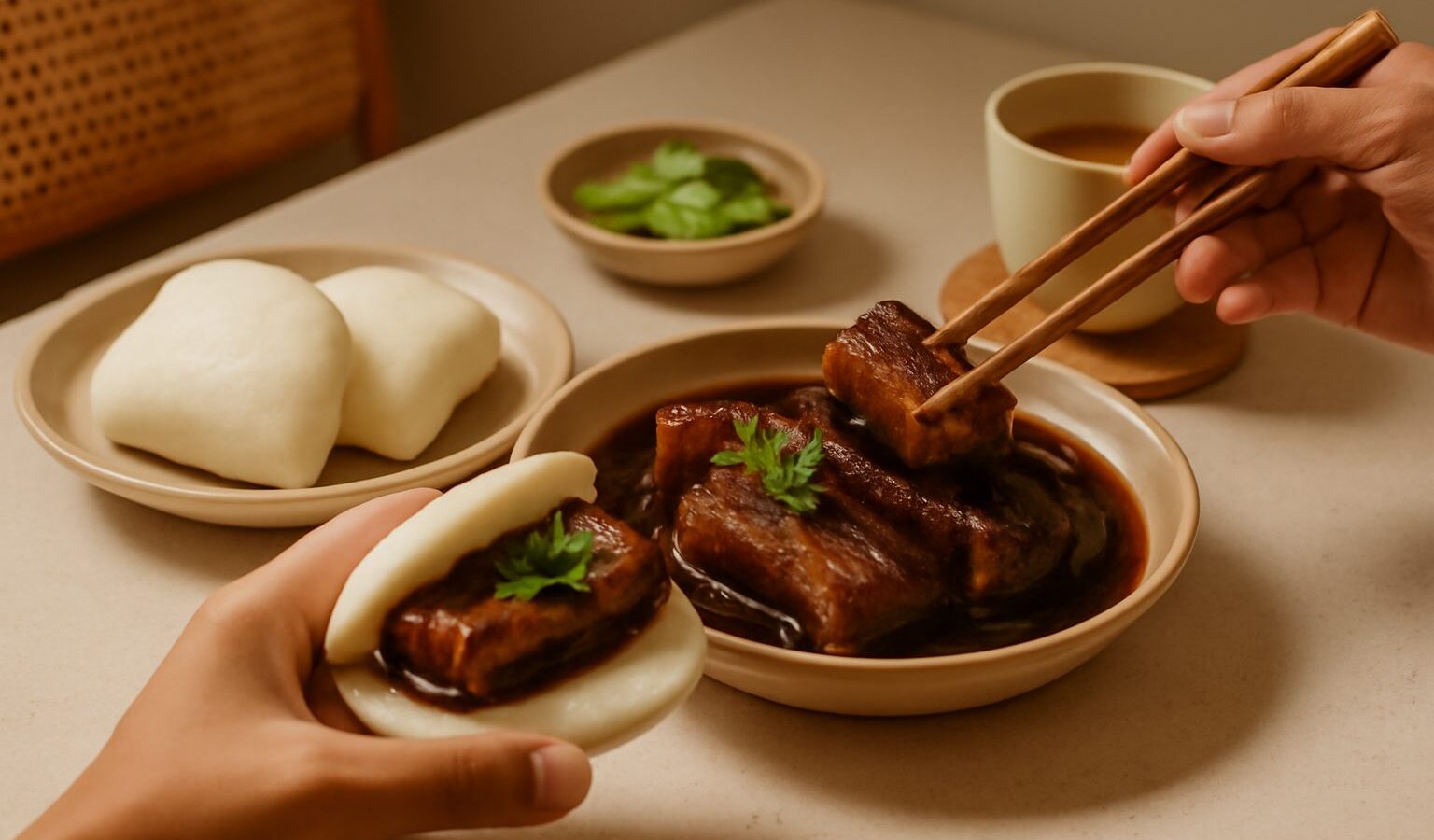
A kong bak pau is one of the simplest pleasures in Singapore’s hawker repertoire: a soft, folded steamed bun wrapped around a thick slice of dark, glossy braised pork belly, often with a leaf of lettuce or a sprig of coriander to cut the richness. It sits in a family of Hokkien-style braised pork dishes that also includes braised pork rice and the soy-stewed pot known as tau yu bak. This guide explains what the dish is, how it is cooked, where you are likely to find it and how to order it, so you can tell a good one from a tired one.
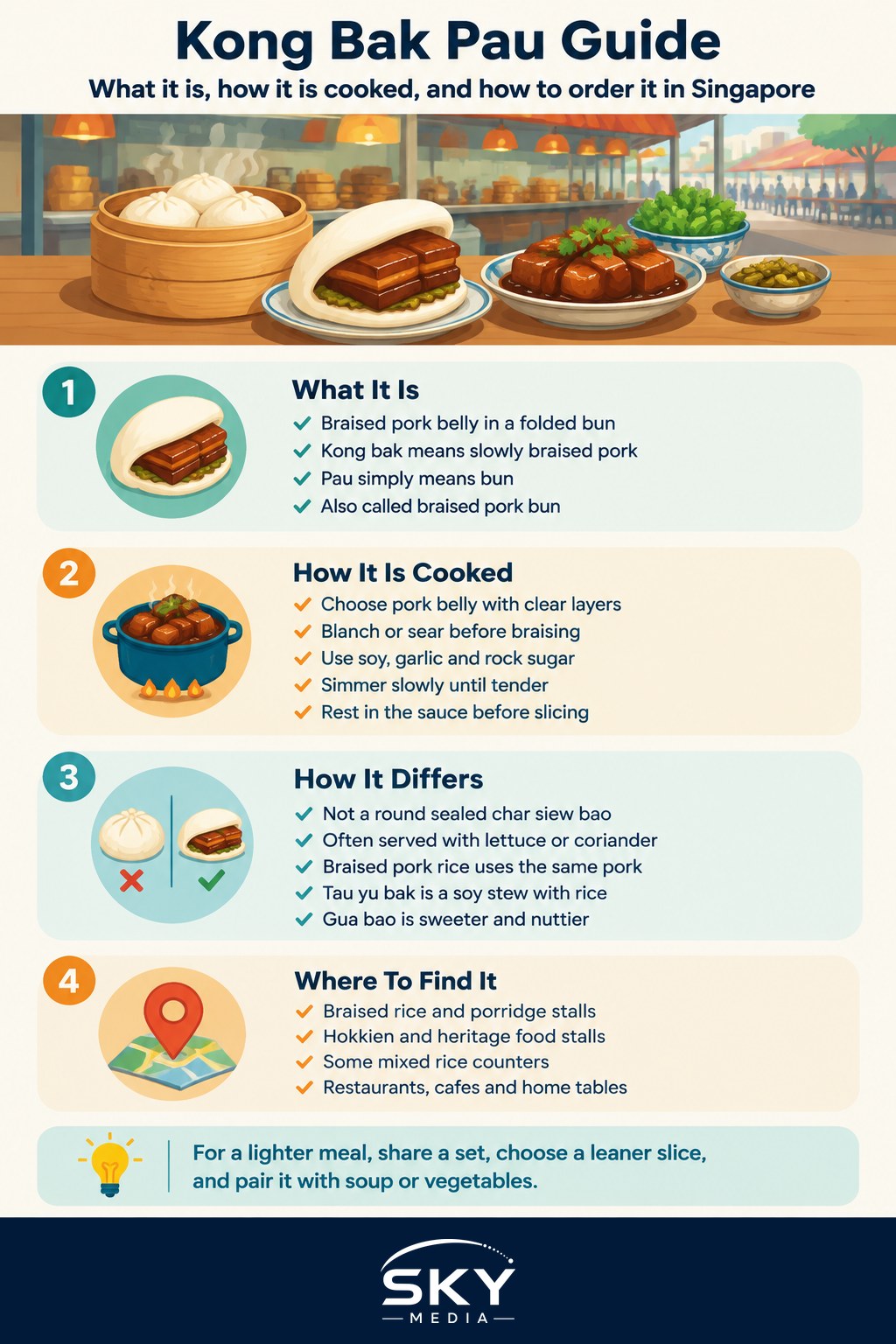
What Kong Bak Pau Actually Is
“Kong bak” is the Hokkien name for slowly braised pork, usually belly, cooked until the fat turns soft and wobbly and the lean meat pulls apart easily. “Pau” simply means bun. Put together, kong bak pau is braised pork belly served in a bun, and it is sometimes described on menus in English as a “braised pork bun” or “pork belly bun”.
The bun is the key visual difference from other Chinese buns in Singapore. Rather than a round, sealed bao with filling steamed inside, the kong bak pau uses a flat, folded bun, sometimes called a lotus leaf bun because its shape and fold lines resemble a leaf. It is steamed on its own, then opened like a clam shell and filled to order. That means the bun stays fluffy and the pork stays hot and saucy rather than soaking into the dough during steaming.
You will often see the dish alongside close relatives:
- Braised pork belly rice, where slices of the same pork are spooned over plain rice with braising sauce, often with a braised egg and some salted vegetables.
- Tau yu bak, a Hokkien home-style stew of pork belly in dark and light soy sauce with garlic, usually with eggs and sometimes fried beancurd puffs, eaten with rice.
- Lor bak, which in Singapore usually refers to five-spice pork rolls wrapped in beancurd skin, a different dish despite the similar name. Our guide to ngoh hiang and lor bak explains that one.
How Hokkien-Style Braised Pork Belly Is Cooked
Recipes vary, but most Hokkien-style braised pork belly follows the same broad method.
- Choosing the cut. Pork belly with clear layers of skin, fat and lean meat is preferred, because the layers give the bite its contrast. Some cooks use a slightly leaner section to make the dish less heavy.
- Blanching or searing. The pork is often blanched briefly to clean it, or seared so the skin tightens and the surface browns.
- Building the braise. Garlic, sometimes shallots, dark soy sauce for colour, light soy sauce for salt and a little rock sugar for gloss and sweetness go into the pot. Many cooks add star anise, cinnamon bark, cloves or a five-spice blend, while others keep it plain to let the soy sauce lead.
- Long, slow simmering. The pork is covered and simmered gently for a long time until a chopstick slides through easily. Hard-boiled eggs and fried beancurd puffs are often added towards the end so they soak up the colour.
- Resting and slicing. Many cooks say the pork tastes better after resting in its sauce, even overnight, because the flavour settles into the meat. It is then sliced thickly for buns or rice.
A related Teochew-style braise uses lighter soy, galangal and more herbal notes and is often used for duck. If you enjoy the comparison, our Teochew braised duck guide covers that tradition.
Kong Bak Pau Versus Other Braised and Bun Dishes
If you are new to Singapore food, it is easy to mix these dishes up. The table below sets out the main differences.
| Dish | What it is | Typical sauce and flavour | How it is usually eaten |
|---|---|---|---|
| Kong bak pau | Braised pork belly in a folded lotus leaf bun | Dark soy, sweet and savoury, sometimes spiced | Held in hand, often with lettuce or coriander |
| Braised pork belly rice | Sliced braised belly over rice | Same braising sauce, ladled over rice | With braised egg, salted vegetables and chilli |
| Tau yu bak | Home-style soy-stewed pork belly | Garlicky, soy-forward, slightly sweet | In a bowl with rice, eggs and beancurd puffs |
| Char siew bao | Round sealed bun with barbecued pork filling | Sweet, red-tinted barbecue sauce | Steamed whole, often at dim sum or breakfast |
| Gua bao (Taiwanese style) | Folded bun with braised pork belly | Often topped with peanut powder and pickled greens | Street snack, sweeter and nuttier finish |
The kong bak pau and the Taiwanese gua bao are cousins. Both use a folded bun and braised pork, but the Singapore Hokkien version usually leans more on soy and garlic, while the Taiwanese style is typically finished with crushed peanut and sugar, pickled mustard greens and coriander.
Where to Find Kong Bak Pau in Singapore
You will not usually find kong bak pau at every hawker centre, but it turns up in a few predictable places:
- Braised rice and porridge stalls. Stalls selling braised pork, braised duck or Teochew porridge sometimes offer buns as a side or a set with the pork.
- Hokkien and heritage food stalls. Stalls that specialise in traditional Hokkien dishes, sometimes run by older hawkers, may list kong bak pau as a signature.
- Food court and mixed rice counters. Some economic rice counters sell a braised pork belly dish that you can pair with plain rice, even if they do not sell the bun.
- Restaurants and modern cafes. Some Chinese restaurants serve it as a starter, and modern eateries sometimes offer reinterpretations with pickles, crispy shallots or different sauces.
- Festive tables and home cooking. Braised pork belly is a common home dish, and it often appears at family gatherings and reunion meals.
Because stalls open, move and close, the most reliable way to find a current spot near you is to search recent reviews and food listings for “kong bak pau” or “braised pork belly bun” along with your neighbourhood name, and check the stall’s opening days before making a special trip.
How to Order and Eat It
Ordering is usually straightforward. Some tips that help:
- Ask whether buns are sold singly or in sets. Many stalls sell them individually, while others bundle a few buns with braised egg or soup.
- Specify lean or fatty if you have a preference. Some hawkers will cut a leaner slice if asked politely, though this depends on what is left in the pot.
- Pair with a light side. The pork is rich, so a clear soup, plain tea or a side of salted vegetables balances it well.
- Eat it hot. The bun is softest straight from the steamer, and the pork fat firms up as it cools. If you are taking it away, keep the bun and pork separate if the stall allows.
- Use the chilli sparingly at first. Some stalls offer a vinegary chilli or pickled green chilli that brightens the pork. Taste before adding a lot.
For those who want to compare it with other pork-centric classics, a bowl of bak kut teh shows a completely different approach to pork, with a peppery or herbal broth instead of a sweet soy braise.
Making Kong Bak Pau at Home
Braised pork belly is forgiving and suits home cooks, because it mostly needs time rather than technique. A few pointers:
- Cook a larger batch, since the pork keeps well in the fridge in its sauce and often tastes better the next day.
- Skim the fat from the surface once the braise cools if you want a lighter sauce.
- Reduce the remaining sauce to a glossy coat before serving.
- Store-bought frozen lotus leaf buns are widely sold in supermarkets and only need re-steaming, but you can also make your own. Our home bao and pau making guide walks through the dough and steaming basics.
A Note on Richness and Balance
Kong bak pau is a rich heritage comfort food that many locals treat as an occasional indulgence. Sharing a set, choosing a leaner slice, or adding vegetables and soup are simple ways to enjoy it without overdoing it. If you have dietary restrictions or a health condition that affects what you eat, follow your doctor’s or dietitian’s advice.