
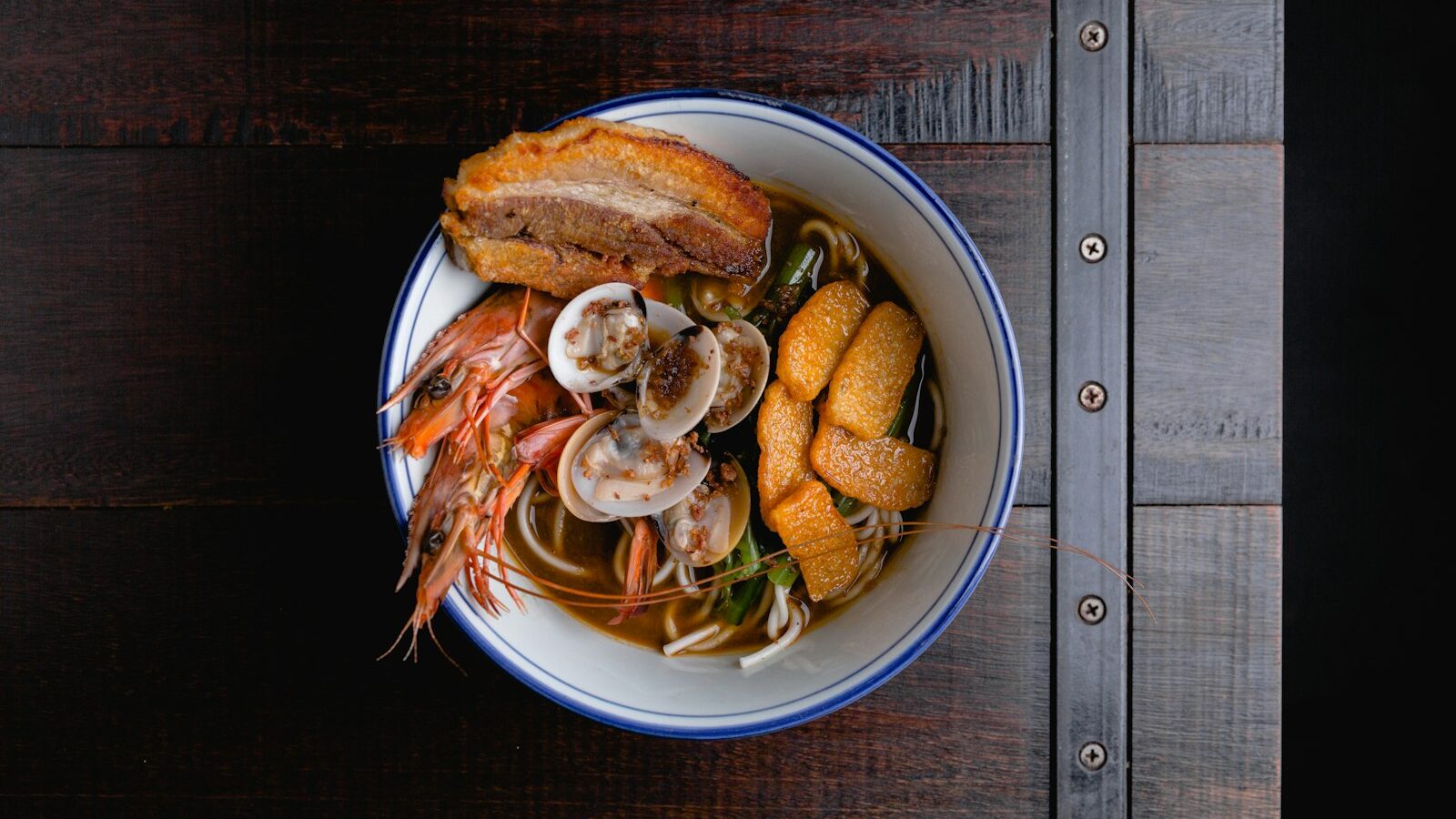
Ladled steaming into a bowl, pig organ soup looks unassuming, a clear, peppery broth crowded with sliced innards, soft tofu, salted vegetable and tender greens. Yet for many in Singapore it is the taste of comfort itself, a Teochew classic that has warmed generations through late nights, hangovers and ordinary weekday lunches alike. It is honest, thrifty, deeply savoury food, the kind that makes the most of every part of the pig and rewards you with a bowl that is both restorative and quietly delicious.
Pig organ soup, sometimes called pig innards soup, belongs to the Teochew tradition of clear, peppery soups that let good ingredients speak for themselves. The broth is the backbone, typically simmered from pork bones until it turns sweet and full-bodied, then seasoned generously with white pepper for that signature warming heat. Into it go an assortment of pork offal, plus tofu, salted mustard greens and fresh vegetables, making a soup that is as much about texture as it is about flavour.
What Is In The Bowl
The defining feature is the offal. A typical bowl carries a mix of pig innards, which may include sliced intestine, stomach, liver and lean meat, sometimes with minced pork balls or pork slices too. Each part brings its own character, the springy chew of well-cleaned intestine, the soft bite of stomach, the tender richness of liver. Preparing these properly is a point of pride, as thorough cleaning is essential to a clean-tasting, aroma-free bowl, and skilled cooks take great care over it.
Around the offal, the supporting ingredients bring balance. Soft tofu or tau pok soaks up the broth. Salted mustard greens, known as kiam chai, add a gentle sourness that cuts the richness. Fresh leafy vegetables lend freshness, and a scatter of spring onion and fried garlic or shallot finishes it off. The whole thing rests on that peppery pork broth, clear rather than creamy, letting every element shine.
White pepper is doing quiet but crucial work here. It gives the soup its characteristic warmth and lift, a heat that builds gently and makes the broth feel bracing and invigorating, especially welcome on a rainy day or when you are feeling under the weather.
How It Is Served And Enjoyed
Pig organ soup is usually eaten with a bowl of steamed white rice, making it a complete, satisfying meal. Many stalls serve it with a side of chopped chilli in dark soy or light soy sauce, into which you dip the pieces of offal and meat for an extra savoury kick. Some diners like a splash of that sauce, or extra pepper, to tune the bowl to their taste.
You will often find it at Teochew-leaning stalls and coffee shops, sometimes alongside related dishes such as kway chap, the flat rice sheets served with braised offal and egg, which shares the same thrifty, offal-loving spirit. The two make natural neighbours on a menu, both celebrating the nose-to-tail traditions of Teochew cooking.
A note on diet and moderation. Pig organ soup is a pork dish and is not halal, being served at non-halal stalls, so halal diners should look for certified alternatives. Offal is also rich, so as with any organ-heavy dish it is best enjoyed in moderation as part of a varied diet. If you have dietary concerns, it is sensible to check current information and choose accordingly.
Finding A Good Bowl
Quality in pig organ soup comes down to the care taken with the broth and the offal. A good bowl smells clean and peppery, never off-putting, a sure sign the innards were properly prepared. The broth should be sweet and full from long simmering, the pepper present but balanced, and the offal tender rather than tough or rubbery.
| What to look for | A good bowl | A weaker bowl |
|---|---|---|
| Broth | Clear, sweet, well peppered | Cloudy, flat or greasy |
| Offal | Clean-smelling, tender | Off-aroma or rubbery |
| Balance | Salted greens cut the richness | Overly salty or one-dimensional |
| Freshness | Bright greens, hot broth | Wilted or lukewarm |
| Seasoning | Warming white pepper throughout | Under-seasoned or harsh |
A Teochew Tradition
Pig organ soup sits within a wider Teochew culinary philosophy that prizes clean, clear flavours and makes thrifty, respectful use of the whole animal. The Teochew community, with deep roots in Singapore, brought with them a love of light, well-made broths and an appreciation for offal that many other cuisines overlook. Nothing goes to waste, and what might elsewhere be discarded becomes, in careful hands, the heart of a nourishing bowl. That resourcefulness reflects a time when frugality was a way of life, yet the results are so good that the dish has long outlived any need for thrift.
It shares a kitchen and a spirit with other Teochew favourites. Kway chap, with its braised offal and flat rice sheets, is the most obvious cousin, and the two are often found side by side. Both celebrate the same nose-to-tail ethos and the same quiet confidence that humble ingredients, treated with skill, can be every bit as satisfying as grander fare. Understanding that context makes the bowl taste even better, connecting a simple lunch to a long and living food heritage.
Why It Endures
There is something deeply satisfying about a food tradition that wastes nothing and turns humble ingredients into real comfort. Pig organ soup is exactly that, a peppery, warming bowl that has quietly nourished Singapore for decades, unglamorous but beloved. It asks little and gives much, especially with a bowl of rice and a dip of chilli soy on the side.
If you have never tried it, approach it with an open mind and a good stall, one that takes pride in its broth and its preparation. A clean, well-made bowl of pig organ soup is a lovely thing, savoury, peppery and comforting, the sort of unpretentious meal that keeps people coming back long after the trendier dishes have faded.