
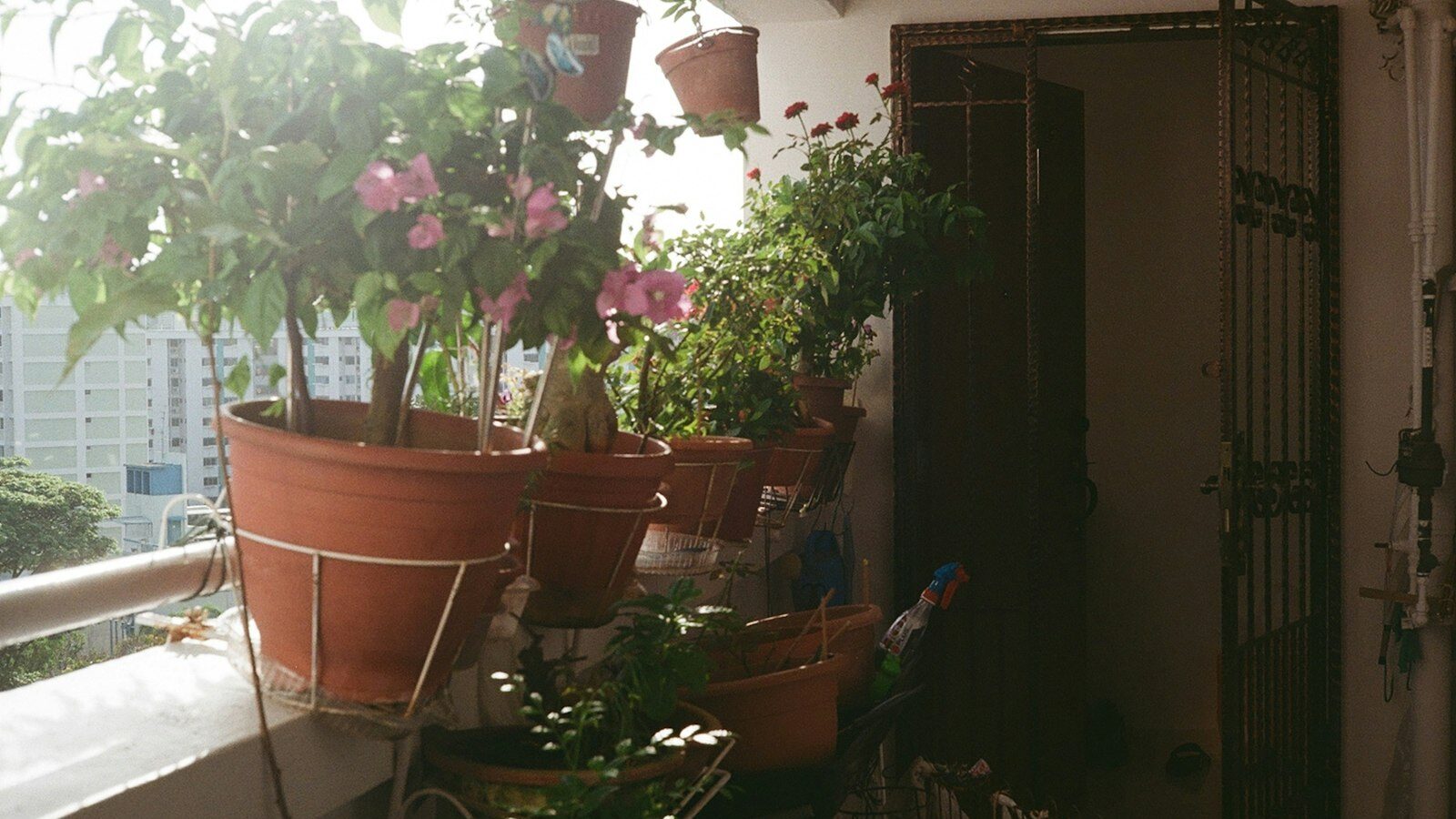
You do not need a garden to grow things in Singapore. A balcony, a corridor edge, a service yard, or even a sunny window ledge is enough to keep herbs, chillies, and leafy plants thriving all year. Container gardening Singapore residents can actually manage means working with pots rather than soil beds, which suits our flats perfectly: everything is movable, nothing touches the building structure, and you can start with three pots and grow from there. This guide covers choosing containers, drainage, soil and feeding, coping with sun and wind on high floors, watering in the heat, the HDB and MCST rules that matter, and keeping pests down.
The good news is that our climate is generous. With steady warmth and long daylight all year, plants that would need a greenhouse elsewhere grow happily on a Singapore balcony. The catch is the intensity of the sun, the sudden downpours, and the wind that picks up higher off the ground.
Choosing Containers and Getting Drainage Right
The pot matters as much as the plant. Too small and roots cook and dry out in an afternoon; too large and heavy and you cannot move it or lift it to clean underneath. For most balcony and corridor setups, medium pots of 20cm to 30cm across are the workhorse size, big enough to hold moisture through a hot day but still liftable.
Every container needs drainage holes. This is the single most common reason plants die here: water pools at the bottom, roots rot, and the plant collapses even though you were watering it faithfully. If a decorative pot has no holes, drill some or use it as an outer sleeve with a holed inner pot inside. Sit pots on saucers or feet, but do not let them stand in a full saucer of water, which both drowns the roots and breeds mosquitoes.
Material affects how often you water. This table compares common container types for a Singapore balcony.
| Container type | Weight | Moisture retention | Best for | Watch-outs |
|---|---|---|---|---|
| Plastic / resin | Light | High, holds water well | Most balconies, high floors, movable pots | Cheaper ones go brittle in the sun over time |
| Terracotta / clay | Heavy | Low, dries fast | Herbs, succulents, plants that hate wet feet | Needs more frequent watering, can crack |
| Glazed ceramic | Heavy | Medium to high | Feature plants, sheltered corners | Weight limits, awkward to move |
| Fabric grow bags | Very light | Medium, airy roots | Edibles, corridors, renters | Dry out fast, look casual |
| Self-watering pots | Medium | Very high, reservoir | Frequent travellers, thirsty plants | Costlier, still need overflow drainage |
Soil, Feeding, and Choosing Plants That Cope
Do not dig up garden soil or use plain earth in pots. It compacts, drains poorly, and brings in pests. Use a proper potting mix, ideally a light, free-draining blend, and many local gardeners mix in materials such as burnt earth, perlite, or coco peat to keep it airy. Good plant shops and hardware stores carry ready-made mixes, and Shopee and Lazada sellers deliver larger bags if you are potting up a whole balcony.
Container plants exhaust their soil faster than ground-grown ones because you flush nutrients out every time you water. Feed lightly and regularly with a balanced fertiliser, following the label rather than overdoing it, since too much fertiliser burns roots. A slow-release granule at potting time plus an occasional liquid feed suits most people.
For plant choices, match the plant to your light and your patience. Reliable performers in our heat include:
- Edibles and herbs: chilli, cherry tomato, kang kong, laksa leaf (daun kesum), mint, basil, curry leaf, and pandan.
- Hardy foliage: snake plant, pothos, aglaonema, and spider plant for shadier corners.
- Sun-lovers: bougainvillea, succulents, and portulaca for a west-facing, baking balcony.
Sun, Wind, and Watering on High Floors
Aspect decides everything. A west-facing balcony gets brutal afternoon sun that scorches tender leaves, while a north-facing or shaded corridor stays gentle and suits leafier plants. Watch where the sun actually falls across a day before you commit expensive plants to a spot. Reflected heat off walls and glass makes a balcony hotter than the open, so full-sun plants thrive but thirsty leafy greens may wilt by mid-afternoon.
Wind is the underrated factor up high. On higher floors, gusts dry out soil quickly, snap tall stems, and can tip light pots off ledges. Keep tall or top-heavy plants low and grouped, weight down light pots, and never balance anything on a railing or parapet where it could fall. A pot dropping from a height is a serious safety risk to people below, so secure railing planters properly on the inner side and skip them entirely if there is any doubt.
Watering in our heat usually means daily in the hot months, sometimes twice a day for small terracotta pots in full sun. Water deeply in the early morning or evening rather than a quick splash at noon, which mostly evaporates. Grouping pots together raises humidity and slows drying. If you travel often, self-watering pots or a simple drip system take the worry out of it.
HDB and MCST Rules, and Not Dripping on Neighbours
Before you fill the corridor with pots, know the rules. HDB common corridors must stay clear as fire escape routes, so plants cannot obstruct the walkway, block access, or become a hazard. A tidy, contained row against your own wall is generally fine; a jungle that narrows the corridor is not, and town councils do act on complaints. In a condo, the MCST by-laws govern balconies and corridors, and some restrict planters on railings or the external facade altogether, so check before you buy.
The neighbourly issue that causes the most friction is dripping water. When you water pots on a ledge, corridor, or balcony, run-off that drips onto the unit below, their laundry, or the common area is a genuine nuisance and a common source of disputes. Always water over a saucer, never let excess pour off the edge, and site pots so overflow stays on your own floor. Keep saucers emptied so they do not hold stagnant water, which brings us to pests.
Keeping Pests and Mosquitoes Down
Container plants attract the usual suspects: aphids, mealybugs, whitefly, and the occasional caterpillar. Catch them early by checking undersides of leaves, and start gentle: a spray of water, wiping leaves, or a mild soap solution handles most small outbreaks before you reach for anything stronger. Remove badly infested leaves and keep the balcony airy so problems do not spread pot to pot.
The bigger concern here is mosquitoes. Any pot saucer, tray, or clogged drainage that holds water for a few days can breed the Aedes mosquito that spreads dengue. Follow NEA’s Mozzie Wipeout habits: tip out saucers and trays, do not let water collect anywhere, clear leaf litter from drains, and change the water in any decorative water features often. This one habit protects your whole block, not just your home. For a wider view of common household pests, see our pest control guide below.
Explore more
For choosing plants and where to buy them across the island, start with our guide to indoor plants and gardening in Singapore. If your green corner is on a balcony, our balcony design ideas for Singapore homes covers seating, weatherproof materials, and drainage, and our pest control guide for Singapore helps when uninvited guests move in.