
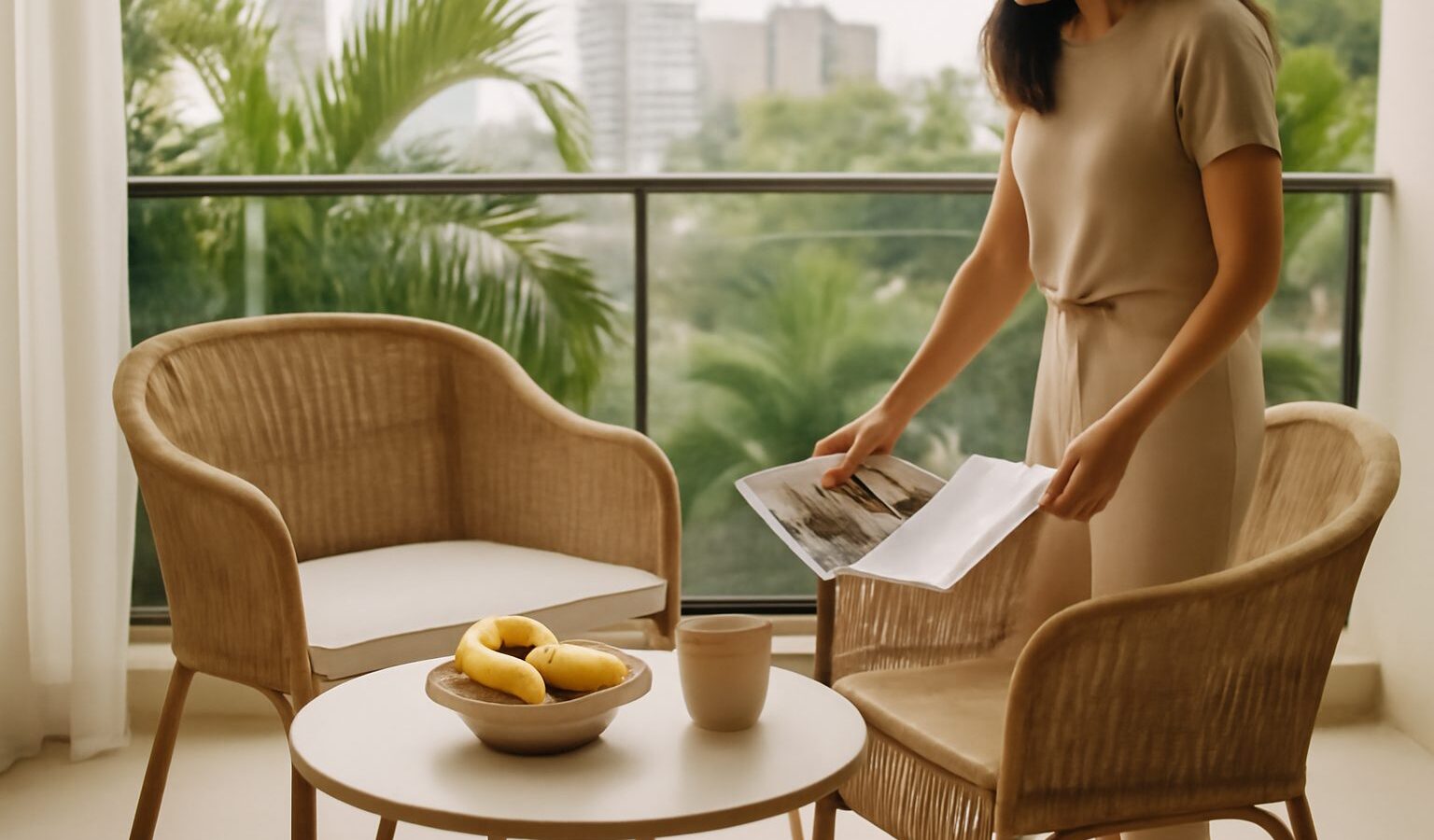
Buying outdoor furniture singapore balconies and yards can rely on means planning for weather far more than for looks, because our climate is unusually hard on anything left outside. Strong sun, sudden downpours and constant humidity attack materials that would last for years in a cooler, drier place. A balcony or patio is precious extra living space, so the right furniture turns it into a spot for morning coffee or evening wind-down without falling apart in a season. This brand-neutral guide covers weather and UV resistance, materials that suit rain and humidity, sizing a small balcony, securing pieces on high floors, following building rules, and judging value.
Weather and UV Resistance First
Before style, ask how a piece will cope with our two constants: intense sun and heavy rain. Ultraviolet light fades colours, makes plastics brittle and cracks cheap finishes, sometimes within months on a west-facing balcony. Rain and humidity rust weak metals, rot untreated wood and grow mildew on fabrics that stay damp. Look specifically for materials described as UV-stabilised or UV-resistant, and finishes rated for outdoor use rather than indoor pieces pushed outside. Good drainage helps too, so choose seats and tables that let water run off rather than pool, and cushions you can bring in or that dry quickly.
The amount of shelter your balcony gets should steer your choices. A fully covered balcony that only catches wind-blown rain can take a wider range of materials, while an open, exposed ledge that bakes in the sun and floods in a storm demands the toughest options. Notice which direction your space faces and how many hours of direct sun it gets, then buy for the harshest conditions it sees rather than the mild ones.
Materials That Suit Rain and Humidity
Material choice decides how long your set survives.
Powder-coated aluminium is a strong all-rounder here: it does not rust, stays light enough to move indoors before a storm, and the coating resists UV. Stainless steel is durable and smart but heavier and pricier, and lower grades can still develop surface spotting near the coast. Avoid untreated or mild steel, which rusts fast. Synthetic rattan made from PE or resin wicker over an aluminium frame handles sun and rain far better than natural rattan, which quickly rots and unravels outdoors. Teak and other dense hardwoods naturally resist moisture and can last for years, weathering to a silver-grey unless you oil them, though they need occasional cleaning to stop mildew. Softwoods and cheap timber are a poor bet outside. For tops, tempered glass, HPL (high-pressure laminate) and sintered stone all shrug off rain and sun. For cushions, look for quick-dry foam and solution-dyed fabric made for outdoor use, and store them inside when not in use to extend their life.
| Material | Weather performance | Care needed |
|---|---|---|
| Powder-coated aluminium | Rust-free, UV-resistant, light | Wipe down, check coating |
| Stainless steel | Durable, mostly rust-resistant | Clean to avoid spotting |
| Synthetic (PE) rattan | Handles sun and rain well | Rinse, keep frame dry |
| Teak or dense hardwood | Naturally moisture-resistant | Clean, oil if desired |
| Natural rattan or softwood | Poor outdoors, rots and fades | Not recommended |
Sizing a Small Balcony
Most balconies here are compact, so scale is everything. Measure the usable floor and leave room to open the door and move around. Folding or stackable chairs and a slim bistro table let you clear the space when needed, while a compact bench with storage inside doubles up usefully. A narrow railing-mounted or wall-mounted table can serve drinks without taking floor space at all. Resist the urge to overfill: two comfortable seats and a small table often beat a bulky set you cannot walk past.
Think about how the space drains and dries, as well. Balcony floors often slope slightly towards a drain, so pieces with slim feet sit more stably than a solid base that traps water underneath. Furniture you can lift easily also lets you sweep, mop and clear leaves without a struggle, which keeps the area from turning slippery or growing mildew in the damp.
Securing Pieces on High Floors and Wind
Wind is a serious and often overlooked risk on higher floors, where gusts can lift and topple lightweight furniture, umbrellas and cushions, creating a hazard to people below. Choose pieces heavy or low enough to stay put, and avoid tall, sail-like umbrellas on an exposed high balcony unless they are properly weighted and can be taken down easily. Bring in or secure light items such as cushions, foldable chairs and small side tables before stormy weather. Never place anything loose on or near the railing, and do not use the parapet as a shelf. If you use a parasol, weight its base firmly and close it whenever you leave the balcony.
Following Building Rules
Before you buy, check the rules that apply to your home. HDB and most condominium managements have guidelines on balconies, and many prohibit permanently mounting or drilling into the parapet, hanging items over the edge, or altering the balcony structure. Some condos restrict changes to a balcony’s appearance for a uniform building facade. Placing plants and furniture is generally fine, but securing them so nothing can fall is your responsibility. When in doubt, check with your building management or the relevant guidelines so your setup stays safe and compliant.
Judging Value
Judge outdoor furniture by how well it will survive our sun and rain, not the showroom price. A slightly dearer piece in powder-coated aluminium, teak or genuine synthetic rattan usually outlasts several cheap sets that fade, rust or crack within a year, making it better value over time. Check the frame for solid welds or joints, confirm the fabric and finish are rated for outdoor use, and think about storage and weight so you can move or protect pieces before a storm. Furniture that is sized for your balcony, safe on a high floor and built for the weather will give you far more use, and far less waste, than a bargain set you replace every season.
Explore more
Balcony and Container Gardening
How to Choose a Sofa
Space-Saving and Multifunctional Furniture
Caring for Wood Furniture in a Humid Climate