
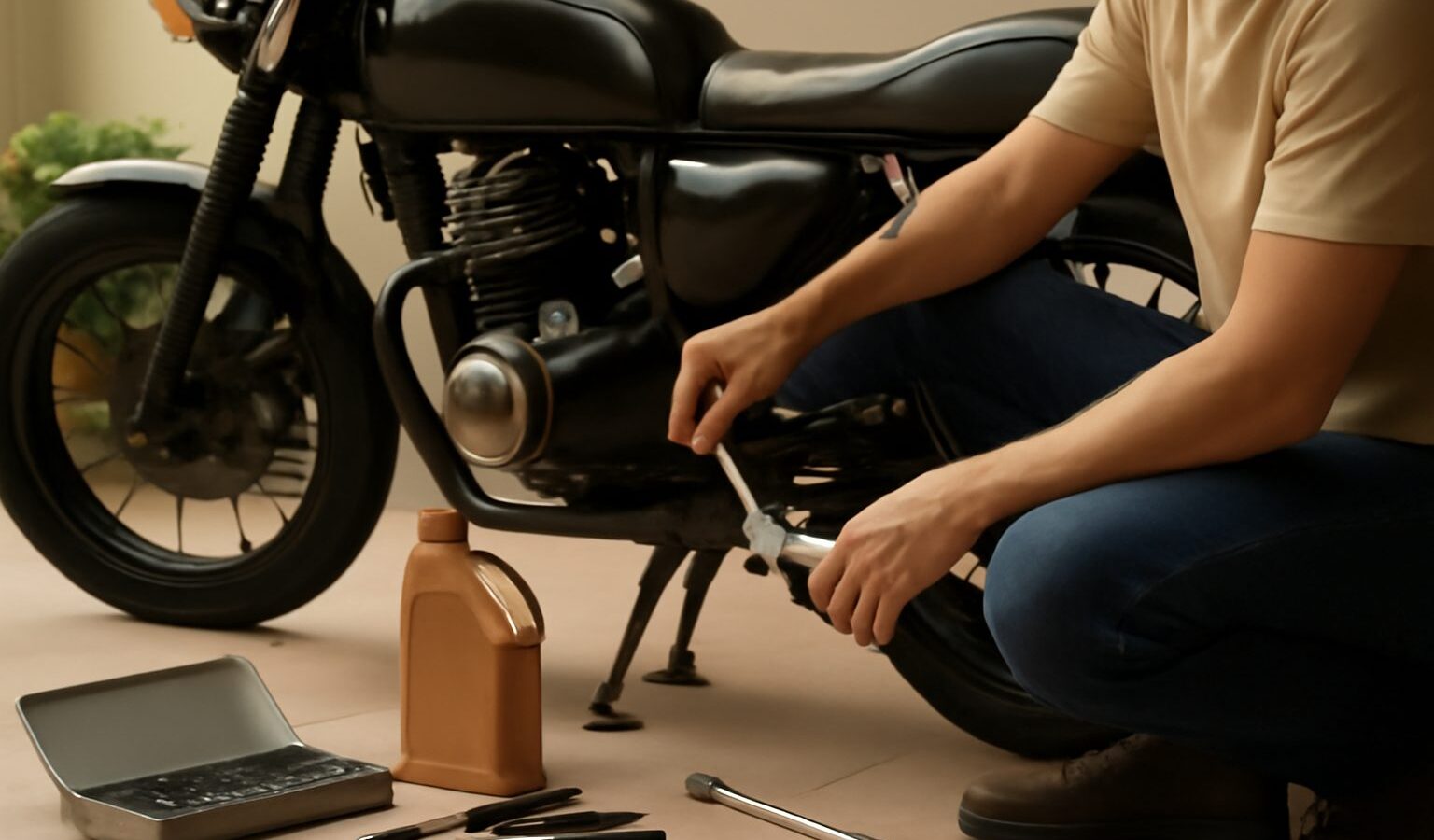
A motorcycle asks more of its owner than a car does. With only two wheels and every component out in the weather, a bike rewards regular attention and punishes neglect quickly. The reassuring part is that a lot of basic motorcycle maintenance is well within a careful owner’s reach, needs only a few tools, and pays you back in safety, reliability and lower running costs. Singapore’s hot, humid and wet climate makes staying on top of it all the more important, because heat, rain and road grime work against your bike every day.
This is general information, not professional mechanical advice. Anything safety-critical, or anything you are unsure about, belongs with a qualified or LTA-authorised workshop. Use this guide to understand your bike and handle the simple, routine tasks, and let a professional handle the rest.
Build a Simple Pre-Ride Habit
The most valuable maintenance takes under a minute and happens before you ride. A quick walk-around catches small problems before they become breakdowns or dangers. Many riders use the memory aid T-CLOCS, a checklist covering tyres, controls, lights, oil and other fluids, chassis and chain, and the stands. You do not need to be formal about it; the point is a consistent glance over the essentials.
Each time you set off, check that:
- The tyres look properly inflated and free of obvious cuts, nails or bulges.
- The brakes feel firm at both levers and the bike does not roll when the front brake is held.
- The headlight, brake light, indicators and horn all work.
- The chain is not visibly loose, dry or rusty.
- There are no fresh oil patches under the bike where it was parked.
If any of these looks wrong, sort it before you ride rather than after. A one-minute check is the cheapest insurance you will ever buy.
Look After the Chain
On a chain-driven bike, the chain and sprockets transmit every bit of power to the rear wheel, and they are exposed to all the rain, dust and grit our roads throw at them. A neglected chain wears fast, runs rough, and in the worst case can snap or jump the sprocket. Chain care is the single most rewarding routine job a rider can learn.
Two things matter: lubrication and tension. After riding in the rain, or roughly every few hundred kilometres, clean off the old grime and apply a proper chain lubricant to a warm chain, letting it settle before you ride so it does not fling straight off. For tension, your owner’s manual gives the correct amount of free play, the slack measured at the midpoint of the lower run. Too tight strains the bearings; too loose risks the chain jumping off. Adjusting tension involves loosening the rear axle and moving the adjusters evenly on both sides, so if you are not confident of getting the alignment right, have a workshop set it and simply keep it clean and lubricated yourself.
Check Tyres, Brakes and Lights
These are the parts that keep you alive, so treat them with respect and never let a problem slide.
Tyres. Check pressures at least weekly with your own gauge, when the tyres are cold, against the figures in your manual. Correct pressure gives the best grip, wear and fuel economy, and matters even more in the wet. Inspect the tread for depth and even wear, and look for cracks, embedded nails or sidewall damage. A worn or damaged tyre is a common cause of loss of control, so replace tyres before they reach their limit rather than stretching them out.
Brakes. Squeeze both levers and feel for firm, consistent pressure. Spongy brakes, a lever that pulls back too far, or a squealing or grinding noise all point to worn pads, low fluid or air in the lines. Brake pads and any brake fault are safety-critical: have them inspected and replaced by a professional workshop, and never ride on brakes you doubt.
Lights and electrics. Walk around and confirm the headlight (high and low beam), tail and brake lights, indicators and horn all work. On a bike these are your main way of being seen and understood by drivers, especially in rain or at night. Bulbs are cheap and often easy to replace, but if wiring or a switch is at fault, get it checked.
Keep the Fluids and Filters in Check
Your engine and its systems depend on clean fluids at the right levels. You can monitor most of these yourself, even if a workshop does the actual changes.
- Engine oil is the lifeblood of the motor. Check the level regularly using the sight glass or dipstick with the bike upright, and top up or change it on the schedule in your manual. Our hot climate and stop-start traffic are hard on oil.
- Coolant, on liquid-cooled bikes, should sit between the marks on the reservoir. Never open a hot radiator cap.
- Brake fluid should sit between the level marks; a dropping level can signal wear or a leak and warrants a check.
- Air filter clogs with dust over time and starves the engine; a workshop cleans or replaces it at service.
The table below shows which routine jobs a careful owner can typically handle and which belong with a professional.
| Task | Owner can do | Leave to a workshop |
|---|---|---|
| Cleaning and lubricating the chain | Yes | Only if unsure of alignment |
| Checking tyre pressure and tread | Yes | Fitting new tyres |
| Topping up engine oil to the mark | Yes | Full oil and filter change |
| Testing brakes and reporting issues | Yes | Replacing pads, fluid or discs |
| Checking that lights work | Yes | Wiring or electrical faults |
Know When to See a Professional
Regular servicing at the intervals in your owner’s manual is not optional. A workshop checks and adjusts the many things beyond a home routine: valve clearances, the fuel system, wheel bearings, suspension, and the deeper brake and drivetrain components. Skipping services to save money almost always costs more later and can leave you with an unsafe bike.
See a mechanic promptly if you notice new noises, vibrations, warning lights, a change in how the brakes or clutch feel, fluid leaks, or anything that simply does not feel right. Riders often develop a sense for their machine, and that instinct is worth trusting. Keeping a small logbook of what you have done and when helps you and the workshop track wear and spot patterns.
Good basic motorcycle maintenance is really a set of small, steady habits: a glance before every ride, a clean and lubricated chain, healthy tyres and brakes, and fluids kept in check. Handle the simple jobs with care, respect the safety-critical parts by leaving them to professionals, and keep your bike legal and roadworthy. Do that, and your motorcycle will be safer to ride and cheaper to own for years.