
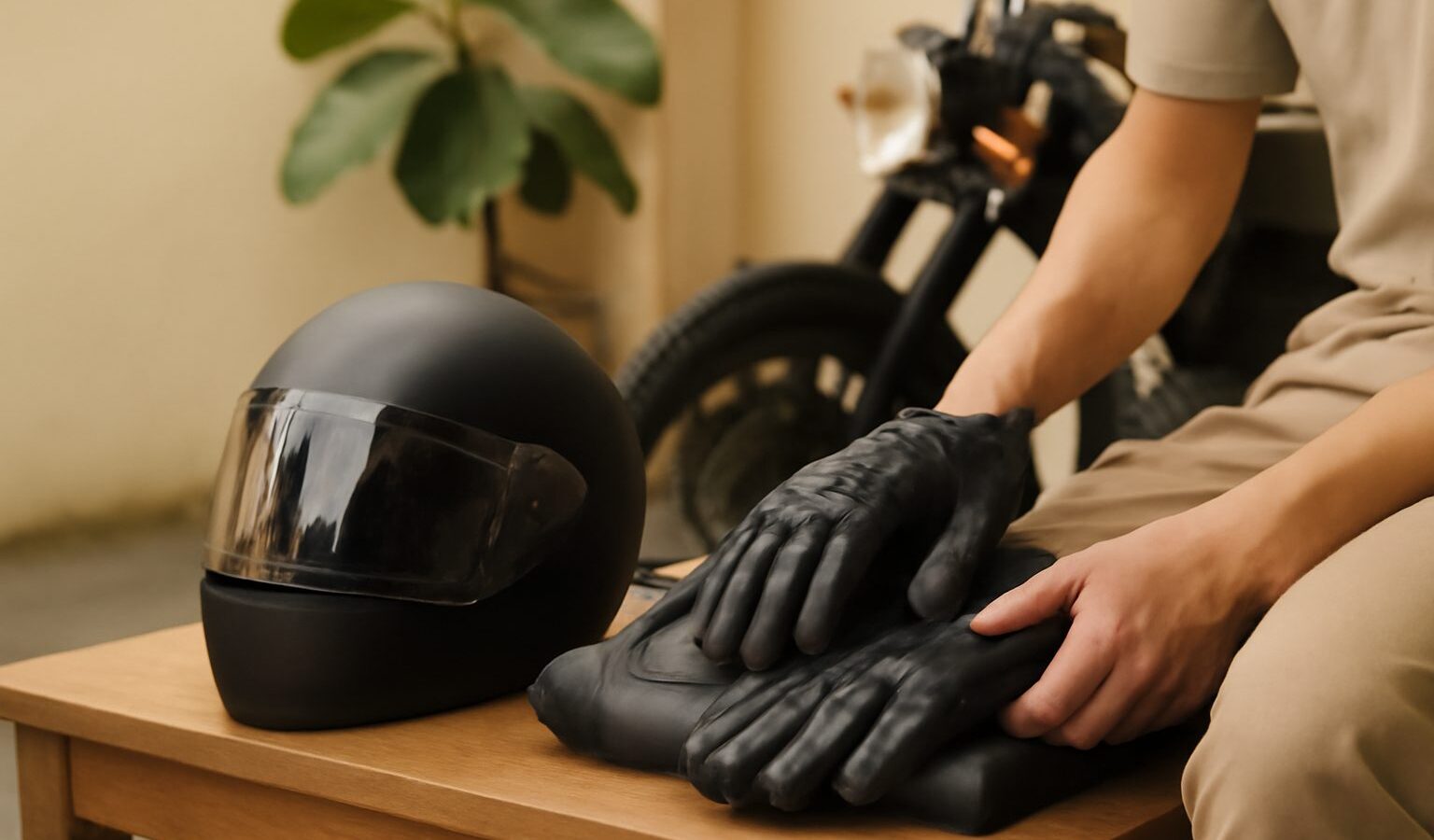
On a bike, you are the crumple zone. There is no metal cage, no airbag and no seatbelt between you and the tarmac, which is exactly why motorcycle safety gear is not an accessory but part of the machine you ride. In Singapore the challenge is doubled: you need kit that will protect you in a fall yet stay bearable in relentless heat and sudden monsoon downpours. Skimping on either front is a mistake. This guide runs through the core pieces every rider should own, what to look for when buying, and how to keep cool without leaving yourself exposed. Treat it as general information and safety guidance rather than a substitute for the manufacturer’s fitting instructions and the Traffic Police rules.
The golden rule underpins everything below: always wear your gear, on every ride, however short. The low-speed run to the coffee shop is where plenty of spills happen, and skin does not grow back the way a jacket sleeve can be replaced.
The Helmet Comes First
If you buy one piece properly, make it the helmet, because it protects the one part of you that cannot be repaired. A motorcycle helmet is a legal requirement for riders and pillions in Singapore, and it must meet an approved safety standard, so look for the appropriate certification marking and check the current requirements with the Traffic Police rather than assuming any helmet will do.
Fit matters as much as the standard. A helmet should sit snugly all the way around without pressure points, and it should not shift when you shake your head. A loose helmet can come off or rotate in a crash, and a painfully tight one will tempt you to leave it at home. Try several sizes and shell shapes, since heads differ.
A few pointers for our conditions:
- Full-face offers the most protection, shielding the chin and face, which open-face and half helmets do not. It is the sensible default.
- Ventilation is not a luxury here. Look for a helmet with genuine intake and exhaust vents to move air over a sweaty scalp in stop-start traffic.
- A clear and a tinted visor cover day and night. An anti-fog treatment or insert helps when you ride from air-conditioned cool into humid air or into the rain.
- Replace after any real impact, even if it looks fine. The protective liner crushes once, by design, and a dropped or crashed helmet may no longer protect you.
Jacket, Gloves and Boots for the Tropics
Below the neck, the aim is to cover skin and add impact protection at the joints that hit the ground first. The classic advice to dress for the slide, not the ride, holds even in the heat.
A proper riding jacket is built from abrasion-resistant material and carries armour at the shoulders and elbows. In Singapore, mesh or perforated textile jackets are the practical answer: they flow air through the fabric while still holding armour in place, so you are protected without cooking at the lights. Look for a back protector pocket too, and fit armour that sits over the actual joint rather than sliding around.
Gloves protect the hands you will instinctively throw out in a fall, so they belong on every ride. Choose gloves made for riding, with reinforced palms and knuckle protection, and make sure they let you work the levers with feeling. Boots or at least sturdy ankle-covering footwear guard against a crushed or twisted ankle and a burnt calf from a hot exhaust; flip-flops and canvas shoes offer none of that. Riding trousers or armoured jeans complete the picture for the legs, though many commuters prioritise the jacket, gloves and boots first and build up from there.
Seeing and Being Seen
A large share of motorcycle incidents involve another driver simply not noticing the rider. In dense Singapore traffic, with cars changing lanes and buses pulling out, making yourself visible is a safety measure in its own right, not a fashion choice.
Bright and reflective gear helps in daylight and at night. A light-coloured or high-visibility helmet and jacket, or a reflective vest pulled over your kit, stand out against grey tarmac and dark rain far better than head-to-toe black. Reflective piping on jackets, gloves and boots catches headlights after dark, which is when being seen matters most. Keep your visor clean and clear so your own vision is not the weak link, and make sure your bike’s lights all work, since being seen runs both ways.
None of this replaces riding as though you are invisible, positioning yourself where drivers can see you and staying out of blind spots, but good visibility stacks the odds in your favour.
Staying Cool Without Riding Exposed
The real temptation in our climate is to peel off gear to beat the heat. The smarter move is to choose gear designed for it, so protection and comfort stop competing.
- Mesh and perforated kit is made to flow air at speed; it breathes far better than solid leather in traffic.
- Moisture-wicking base layers pull sweat off your skin and can actually feel cooler than riding in a soaked cotton tee.
- Hydrate and plan around the heat. On a long ride, take breaks in the shade and drink water; fatigue and dehydration dull your reactions.
- Manage the rain, do not ignore it. A packable waterproof layer keeps a downpour from chilling and distracting you, and dark clouds are your cue to slow down and increase your following distance.
The table below weighs the common trade-offs so you can choose gear that survives a Singapore commute.
| Gear choice | Better for protection | Better for tropical comfort |
|---|---|---|
| Helmet type | Full-face, well vented | Open-face feels cooler but exposes the face |
| Jacket material | Leather resists abrasion well | Mesh or perforated textile flows more air |
| Coverage on hot days | Full armoured kit every ride | Lightweight summer-weight gear, still armoured |
| Colour and visibility | Bright, reflective, easily seen | Any colour, but reflective still wins at night |
Building Your Kit and Keeping It Ready
You do not have to buy everything at once. If budget is tight, prioritise in order of consequence: a properly fitted, certified helmet first, then gloves, then a jacket with armour, then boots, and add riding trousers when you can. Buy the best helmet you can afford and be willing to spend less elsewhere at the start.
Look after what you own, too. Wash sweat-soaked gear so it does not degrade or grow mould in the humidity, let boots and gloves dry fully between rides, and inspect straps, zips and armour for wear. Retire anything that has taken a real hit. Before you even reach the shop, sorting out your licence comes first; our guide on getting your Class 2B motorcycle licence covers that groundwork. Good motorcycle safety gear is one of the best investments a rider makes, so wear all of it, every ride, and give yourself the best chance of walking away from a bad day.