

In a compact HDB or condo bathroom, the wall above the basin is some of the most useful storage space you have. A well-chosen bathroom mirror cabinet in Singapore does three jobs at once: it gives you a mirror, hides toothbrushes and skincare, and can light your face properly for shaving or make-up. A poorly chosen one swells, rusts or fogs up within a couple of years in our humidity.
This guide focuses on the cabinet that hangs above the sink. If you are still deciding on the basin and the under-sink unit, start with our guide to choosing a bathroom basin and vanity cabinet, then use this one to match the mirror cabinet to it.
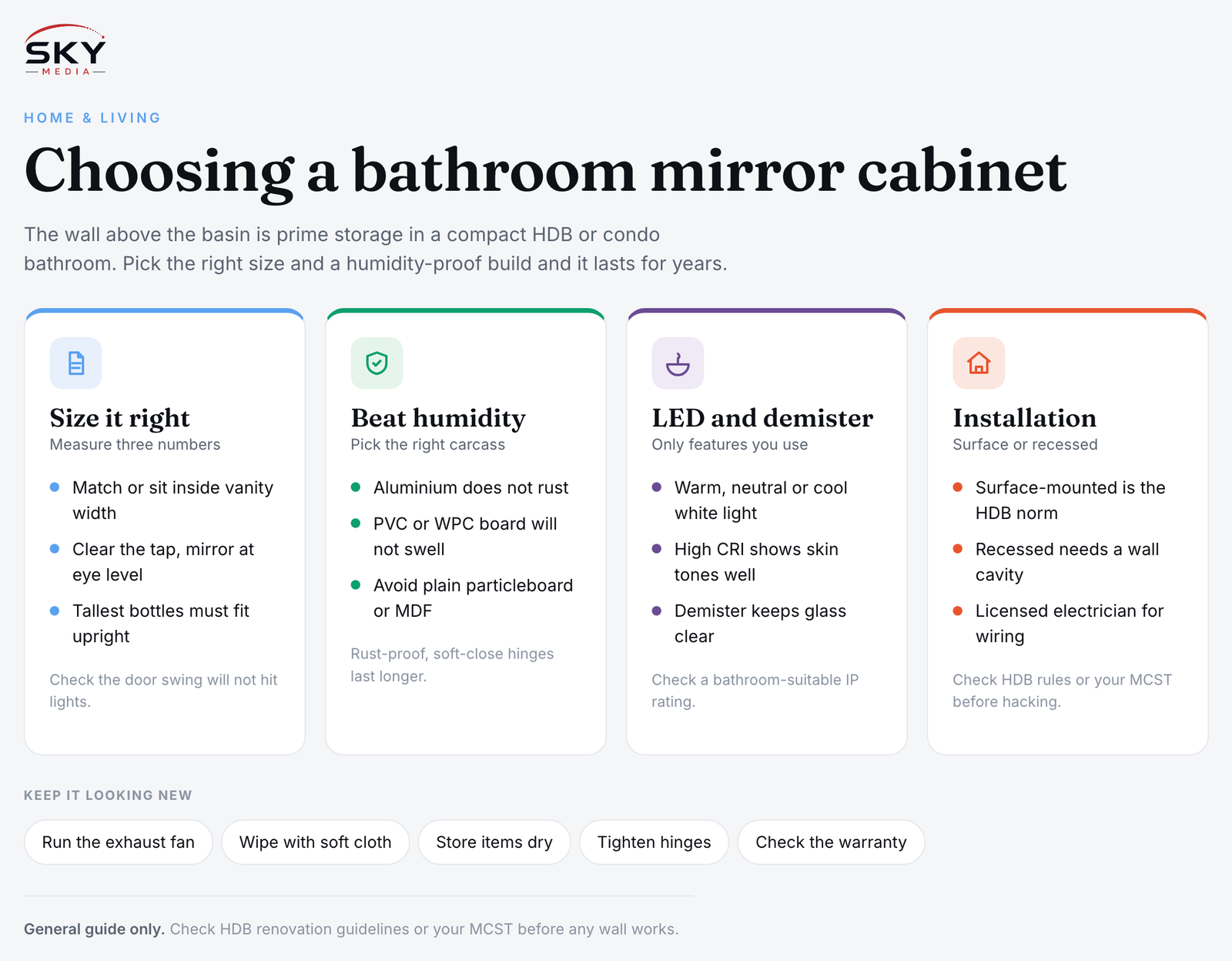
Getting the Size Right for Your Basin and Wall
Measure before you browse. You need three numbers: the width of your basin or vanity, the clear wall height between the top of the basin (or tap) and the ceiling or tiles, and how far the cabinet can stick out before it gets in the way.
Width. A mirror cabinet usually looks best when it is the same width as the vanity below or slightly narrower. A cabinet wider than the vanity looks top-heavy and can clash with a nearby shower screen, towel rail or window. In very narrow common bathrooms, a single-door cabinet often fits better than a double.
Height. Leave enough clearance above the tap so you can splash your face and lean in without bumping your head on the bottom edge. Position the mirror so the eye level of the main users falls roughly in its middle third. If family members differ a lot in height, a taller cabinet covers everyone.
Depth. Mirror cabinets are generally shallow. Check that your tallest items, such as an electric toothbrush, mouthwash bottle or hair spray, fit standing up on the shelves. Also check that the open door will not hit a light fitting, a window frame or a wall corner.
Door swing and layout. Decide which way doors should open based on where you stand and where the light switch is.
Materials That Survive Singapore Humidity
Bathrooms here rarely dry out fully, especially windowless ones that rely on an exhaust fan. The carcass material matters more than the look of the door.
| Material | How it handles humidity | Things to check |
|---|---|---|
| Aluminium | Does not rust; stays stable in damp rooms | Quality of powder coating, finish on cut edges |
| Stainless steel | Rust-resistant if a suitable grade is used | Grade of steel, welds and screws also rust-proof |
| PVC or WPC board | Waterproof board that will not swell | Can look less premium; check rigidity of shelves |
| Moisture-resistant plywood with laminate | Holds up well if every edge is sealed | Edge banding on all sides, sealed screw holes |
| Standard particleboard or MDF | Swells and flakes once water gets in | Best avoided over a basin |
A few more details to inspect in the showroom:
- Hinges. Look for stainless steel or coated hinges, ideally soft-close. Cheap hinges rust first and leave brown stains on the door.
- Shelves. Glass shelves are easy to wipe and do not warp. Check that they are tempered and that the shelf supports are rust-proof.
- Mirror backing. Copper-free or moisture-resistant mirror backing helps prevent the black edge spots known as desilvering.
- Double-sided mirror doors. A mirror on the inside of the door is handy for checking the back of your head.
LED Lighting and Demister Options
Many mirror cabinets now come with built-in lighting and anti-fog features. They add cost and need a power supply, so decide which ones you will actually use.
LED lighting types:
- Front-lit or backlit mirror strips give even, shadow-free light on your face, better than a single ceiling downlight.
- Under-cabinet lights shine down onto the basin and work well as a soft night light.
- Interior lights switch on when the door opens, useful for deep cabinets.
What to look for in the lights:
- Colour temperature. Warm white (around 3000K) feels cosy, neutral white (around 4000K) is a good all-rounder, and cool white (around 6000K) is bright but can feel clinical. Some cabinets let you switch between them.
- Colour rendering. A high CRI (colour rendering index) rating, often quoted as 90 or above, shows skin tones and make-up more accurately.
- Moisture protection. Check the IP (ingress protection) rating for the lighting and that it is designed for bathroom use.
- Switch type. Touch sensors on the mirror are sleek, but some respond to wet fingers less reliably. A wall switch or motion sensor is an alternative.
Demisters. A demister is a heating pad behind the mirror that keeps a patch of glass clear after a hot shower. It is genuinely useful in small, poorly ventilated bathrooms. Most link the demister to the light switch so it runs only when needed.
If you like the idea of hidden lighting elsewhere, our guide to LED strip lights for cabinets and coves explains strip types and drivers in more detail.
Surface-Mounted vs Recessed Installation
Surface-mounted cabinets screw straight onto the wall. They are the norm in HDB flats and most condos because they need no structural work and are easy to replace.
Recessed or semi-recessed cabinets sit partly or fully inside the wall for a flush look. They need a wall cavity, which many HDB and older condo walls do not have, and cutting into walls can affect pipes, waterproofing and, in some cases, structural elements. In HDB flats, works on walls are subject to HDB renovation guidelines and may need approval. Condo owners should check with their MCST (Management Corporation Strata Title, the condo’s management body) before any hacking. Confirm current requirements with HDB or your MCST before planning a recessed unit.
Installation tips:
- Fixings. Bathroom walls are often concrete or brick behind tiles. Use the right drill bit for tiles and suitable wall plugs so the cabinet does not sag when loaded.
- Drilling into tiles. Mark positions with masking tape to stop the bit slipping, and avoid drilling into grout lines where pipes may run vertically above the tap.
- Electrical work. Any cabinet with lights or a demister needs a safe power supply. Wiring in a bathroom should be done by a licensed electrician, who can advise on a suitable point and on concealing the cable.
- Seal and level. A small bead of sanitary silicone along the top edge can stop water tracking behind, and a level check before the final screw keeps doors closing evenly.
If your old cabinet is still sound but the doors sag, you may only need new hardware. See how to replace cabinet hinges and handles before buying a whole new unit.
A Simple Checklist Before You Buy
Run through these points in the shop or before checking out online:
- Width matches or sits just inside your vanity width.
- Bottom edge clears the tap comfortably and the mirror centre suits the main users’ eye level.
- Shelf depth fits your tallest bottles standing up.
- Carcass is aluminium, stainless steel, PVC or properly sealed moisture-resistant board.
- Hinges and screws are rust-resistant, ideally soft-close.
- Lighting has a suitable colour temperature, a good CRI and a bathroom-suitable IP rating.
- You know where the power will come from and who will wire it.
- Door swing will not hit lights, windows or the shower screen.
- Warranty covers the lighting and demister, not just the cabinet.
Keeping It Looking New
A mirror cabinet lasts longer with a little routine care:
- Run the exhaust fan or leave the door open after showers to let moisture escape.
- Wipe the mirror with a soft cloth and a gentle glass cleaner, and avoid spraying liquid directly onto edges where it can seep behind the glass.
- Do not store wet items inside; let razors and toothbrush heads dry first.
- Check hinges every few months and tighten screws before a door starts to drop.
Pick the right size, a material that shrugs off humidity and only the features you need, and your bathroom mirror cabinet should serve you well for many years.
Frequently Asked Questions
Do I need approval to install a recessed mirror cabinet in an HDB flat? Works on walls in HDB flats are subject to HDB renovation guidelines and may need approval. Recessed units also need a wall cavity that many HDB walls lack, so confirm the current requirements with HDB before planning one.
Which mirror cabinet material is least likely to swell in a humid bathroom? Aluminium, stainless steel (in a suitable grade) and PVC or WPC board hold up well, as does moisture-resistant plywood with sealed edges. Standard particleboard or MDF swells and flakes once water gets in, so avoid it above a basin.
Can I wire a mirror cabinet with LED lights myself? Wiring in a bathroom should be done by a licensed electrician, who can advise on a suitable power point and on concealing the cable. Also check the lighting’s IP rating is suitable for bathrooms.
Is a demister worth paying for in a small bathroom? It is genuinely useful in small, poorly ventilated bathrooms, since the heating pad keeps a patch of glass clear after a hot shower. Most link it to the light switch so it only runs when needed, but it does add cost.
How do I stop black spots forming on the edges of the mirror? Those black edge spots are called desilvering. Choose a cabinet with copper-free or moisture-resistant mirror backing, avoid spraying cleaner directly onto the edges, and run the exhaust fan or leave the door open after showers.
Further reading: What to Know Before Buying a Shower Caddy for Small Bathrooms