
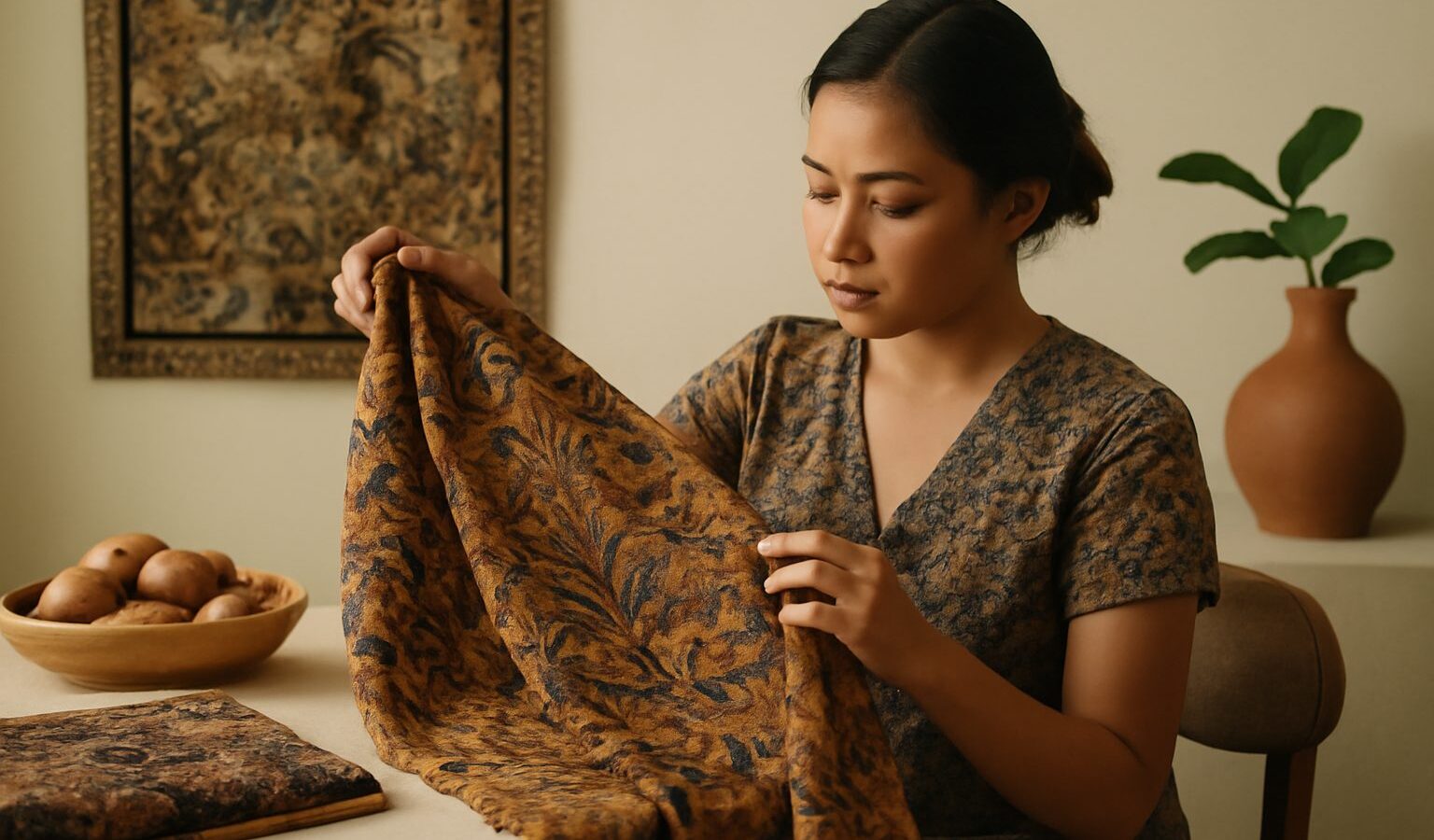
Few fabrics carry as much colour and meaning as batik. Look around Singapore and you will spot it everywhere once you know what to look for: on a flowing shirt at a wedding, on a sarong wrapped at home, on a framed panel in a museum, or on the uniforms of certain airlines and hotels. Batik in Singapore sits at the crossroads of the Malay world, so the cloth you see here draws on traditions shared across the region while carrying its own local flavour. This guide explains what batik actually is, how it differs from other traditional textiles like songket, and how you can appreciate and wear these fabrics today.
What Batik Actually Is
Batik is a method as much as a design. At its heart is wax-resist dyeing: hot wax is applied to cloth in a pattern, the fabric is dyed, and wherever the wax sits, the dye cannot reach. When the wax is removed, the covered areas keep the original colour of the cloth. Repeat the process with different waxing and dye baths and you build up layered, multi-colour patterns.
There are two broad ways the wax is applied, and they produce very different results:
- Batik tulis (hand-drawn batik). The artisan draws the wax by hand using a small copper spouted tool called a canting. Each piece is unique, lines vary slightly, and the work is slow, so hand-drawn batik is generally the most prized.
- Batik cap (stamped batik). A copper stamp, the cap, is dipped in wax and pressed onto the cloth to repeat a motif quickly. This makes batik more affordable and consistent, which helped it spread widely.
You will also come across printed fabric sold as batik-style or batik-print. These are machine-printed to imitate the look without the wax-resist process. They are perfectly fine as everyday cloth, but they are not true batik in the traditional sense, and it helps to know the difference when you shop.
Reading the Patterns and Colours
Batik motifs are rarely random. Many carry names and associations, though meanings vary between makers and regions, so it is best to treat any single reading as a guide rather than a rule. Common families of motif include flowing plant and flower forms, birds and butterflies, geometric lattices, and repeating shapes inspired by nature.
Colour choices traditionally reflected where a cloth was made and the dyes available. Inland styles from parts of Java, for example, are often associated with earthier browns, indigos, and creams, while coastal and trading styles tend toward brighter reds, blues, and greens influenced by many cultures passing through the ports. Because Singapore has always been a trading hub, the batik seen here pulls from this whole spectrum rather than one single school.
If you are new to batik, a good habit is simply to look closely at the back of a piece. On genuine wax-resist cloth the pattern usually shows clearly on both sides because the dye has penetrated the fabric. A print often looks noticeably paler or blurred on the reverse.
Songket, Sarong Kebaya, and Other Traditional Textiles
Batik is the best known, but it is one of several traditional textiles you will encounter in Singapore. Each is made and worn differently.
- Songket is a woven cloth, not a dyed one. Metallic gold or silver threads are woven into a silk or cotton base to create raised, shimmering patterns. Because it is labour-intensive and often reserved for formal and ceremonial wear, songket is associated with weddings and special occasions.
- Sarong kebaya refers to an outfit rather than a single fabric: a fitted, often sheer embroidered blouse (the kebaya) worn with a wrapped lower cloth (the sarong), which may itself be batik. It is closely tied to Malay and Peranakan dress.
- Peranakan textiles overlap with the above, and the Peranakan community developed distinctive tastes in fine embroidered kebaya and specific batik palettes. You can read more in our Peranakan culture guide.
- Everyday sarong is simply a tube or length of cloth wrapped around the waist, worn at home across many communities for its comfort in the local climate. The cloth is frequently batik or a batik-style print.
Here is a quick comparison to keep the main textiles straight:
| Textile | How it is made | Typical use | What to notice |
|---|---|---|---|
| Batik tulis | Wax drawn by hand, then dyed | Special shirts, sarong, art pieces | Slight line variation, unique piece |
| Batik cap | Wax stamped, then dyed | Everyday and semi-formal wear | Repeating, even motifs |
| Songket | Metallic threads woven in | Weddings, formal ceremonies | Raised gold or silver shimmer |
| Sarong kebaya | Embroidered blouse plus wrapped cloth | Formal and cultural occasions | Outfit, not a single fabric |
Where Batik Fits in Singapore Life
Batik is not a museum relic here; it is living dress. You will see batik shirts worn to weddings, festive gatherings, and cultural events, and it has long been considered acceptable smart wear for many formal occasions. Some workplaces, hospitality staff, and cabin crew wear batik-inspired uniforms, which keeps the patterns part of everyday visual life. During festive seasons such as Hari Raya, many families choose coordinated outfits that may feature batik or songket.
To see and learn about traditional textiles, national museums and heritage galleries regularly display historical pieces and explain regional techniques, and the older cultural quarters are good places to browse fabric shops and tailors. If you want to buy, you will find everything from affordable batik-print shirts to hand-drawn pieces that cost considerably more. Prices and shops change often, so ask the seller directly whether a piece is hand-drawn, stamped, or printed, and check current stock rather than relying on any fixed list.
A few pointers for enjoying batik like a local:
- Match the piece to the occasion. A stamped batik shirt is easy everyday wear; save fine hand-drawn or songket pieces for formal events.
- Care gently. Traditional dyes and delicate weaves usually prefer hand-washing in cool water and drying out of direct sun. Follow any care advice from the maker.
- Ask about the origin. Sellers are often happy to explain a motif or technique, and it deepens your appreciation of the cloth.
- Respect the context. Some motifs and songket pieces carry ceremonial weight, so wear them thoughtfully.
Caring For and Continuing the Tradition
Traditional textiles reward a little care. Store batik and songket folded loosely or rolled rather than crammed, keep them away from prolonged damp and strong sunlight, and air them occasionally. Good pieces can last for years and are often passed down within families.
Just as important is keeping the knowledge alive. Hand-drawn batik and songket weaving are slow crafts, and the artisans who master them deserve support. Buying genuine handmade cloth, learning the names of a few motifs, and understanding why a wedding calls for songket rather than a print all help sustain a heritage that Singapore shares with its neighbours. Because customs and details vary between families and communities, treat this guide as a starting point and ask practitioners directly when you want to go deeper.
Explore more
For more on the communities behind these textiles, read our Malay customs and traditions guide and the Peranakan culture guide. You can also wander the fabric-rich streets in our Kampong Glam heritage guide or see how batik and songket appear during Hari Raya in Singapore.