
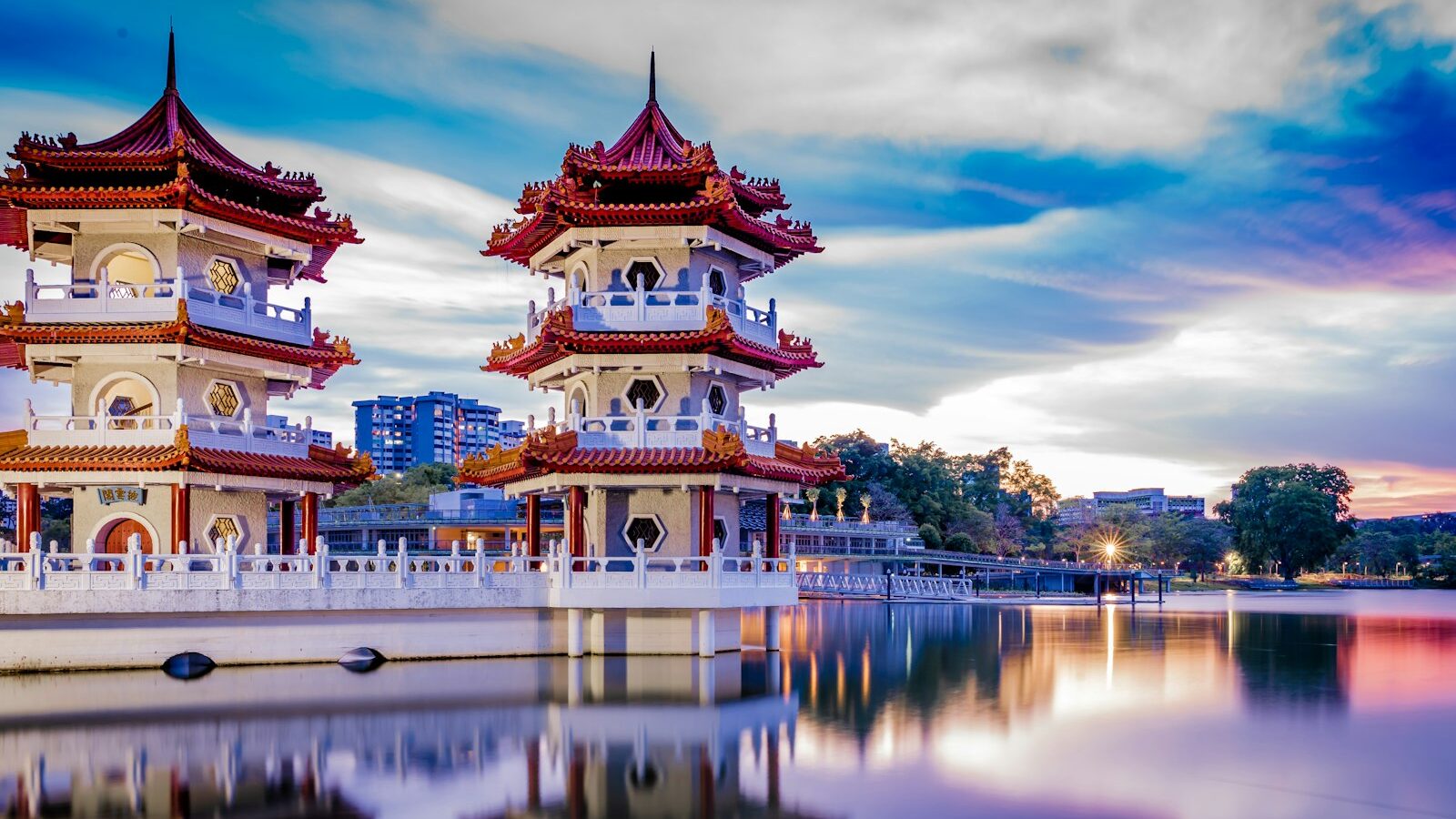
If you grew up on the mainland, you read and write simplified characters without a second thought, so it can be a small surprise to find both scripts floating around Singapore. Official signs and school textbooks look reassuringly familiar, then you pass an old shophouse, a temple, or a heritage restaurant and the characters suddenly grow extra strokes. Simplified traditional chinese singapore questions come up often for newcomers trying to work out which is standard, whether they need to relearn anything, and what it all means. The reassuring answer is that Singapore is officially a simplified-character society, and the traditional forms you spot are heritage and flavour rather than a rulebook you must master. This guide explains where each appears and why.
Singapore Uses Simplified as the Standard
Here is the headline that settles most of the worry. Singapore adopted simplified Chinese characters as its official standard, and did so around the same era as the mainland’s own script reforms. That means the Chinese you meet in the systems that matter, government communications, school textbooks, the national curriculum, official forms, and mainstream newspapers, is the simplified script you already read fluently.
For a newcomer this is genuinely good news. Your child will learn simplified characters in school, the same ones they would have used at home. Your bank letters, your government notices, and the Chinese press use simplified forms. You do not need to learn a new writing system to function, read essential information, or help your child with homework. In the places where reading Chinese actually matters for daily life, you are already equipped.
- School and MOE materials: simplified.
- Government forms and official notices: simplified.
- Major Chinese newspapers and mainstream media: simplified.
- Most everyday signage and public communication: simplified.
Where You Will Still See Traditional
So why do traditional characters keep appearing? Because they carry history, prestige, and a certain aesthetic weight, and Singapore never erased that heritage. Traditional forms survive in the corners of life where culture, art, and memory matter more than administrative standardisation.
You will most often see traditional characters on temple carvings and couplets, calligraphy and paintings, the signboards of long-established family businesses, some restaurant names and menus that want a classical feel, decorative festival banners, and older shopfronts that predate the switch. Clan association halls, heritage sites, and religious settings frequently keep the fuller forms because changing them would erase part of their identity.
There is also a media dimension. Films, songs, and television from Hong Kong and Taiwan, all of which use traditional characters, are popular here, so you will meet traditional script in entertainment and subtitles too. None of this is a competing official standard. It is the older layer of the language showing through, valued precisely because it feels rooted and timeless.
Simplified and Traditional Side by Side
For a mainland reader, the relationship is easy to grasp because you already live it: traditional characters are the older, fuller forms, and simplified characters are the reduced versions standardised in the twentieth century. Many characters are identical in both scripts, and among those that differ, the logic is usually recognisable once you see a few pairs. The table lines up some common examples.
| Meaning | Traditional | Simplified |
|---|---|---|
| Dragon | 龍 | 龙 |
| Love | 愛 | 爱 |
| Country | 國 | 国 |
| Learn | 學 | 学 |
| Listen | 聽 | 听 |
Reading traditional forms is a skill most mainland readers pick up passively, since context and familiarity fill the gaps quickly. You will find that after a few weeks of noticing temple signs and old shopfronts, the fuller characters become easy to read even if you would never choose to write them. There is no need to formally study them unless you want to enjoy calligraphy or classical texts.
What It Means for You Day to Day
Practically, you can carry on writing simplified characters everywhere and you will be understood without issue, because that is Singapore’s standard. When you fill in a form, message a school, or write a note, simplified is entirely correct and expected. You will not be marked down or seen as out of place for using the script you grew up with, and nobody will expect you to switch to traditional forms in ordinary writing.
A few gentle points smooth the experience:
- Do not assume a traditional shop sign means the business expects traditional; it is heritage styling, and simplified is fine in dealings with them.
- If you run a business and want a classical, rooted look, a traditional signboard is a legitimate stylistic choice, while your official paperwork stays simplified.
- Singapore Mandarin also has its own local vocabulary and loanwords, a separate matter from the script, and picking those up will help you sound local faster than any character question.
- Enjoy the mix rather than worrying about it; the two scripts coexisting is part of what makes the culture here layered.
A Living, Layered Written Culture
The coexistence of both scripts is not confusion or inconsistency. It is a small mirror of Singapore itself, a place that modernised and standardised while deliberately keeping its heritage visible. Simplified characters run the practical machinery of daily life, and traditional characters hold the memory, the art, and the sense of a long Chinese story reaching back through the Nanyang and beyond. As a newcomer you arrive already fluent in the standard, and you get the quiet bonus of a heritage layer to enjoy on temple walls and old shophouses whenever you slow down to look. Understanding why both are here turns a moment of confusion into a small pleasure of settling in.
Explore more
Script is one thread of the wider Chinese story woven through Singapore. For a closely related everyday puzzle, read why Singapore Chinese names are spelled differently, and to place it all in context see understanding Nanyang Chinese identity.