
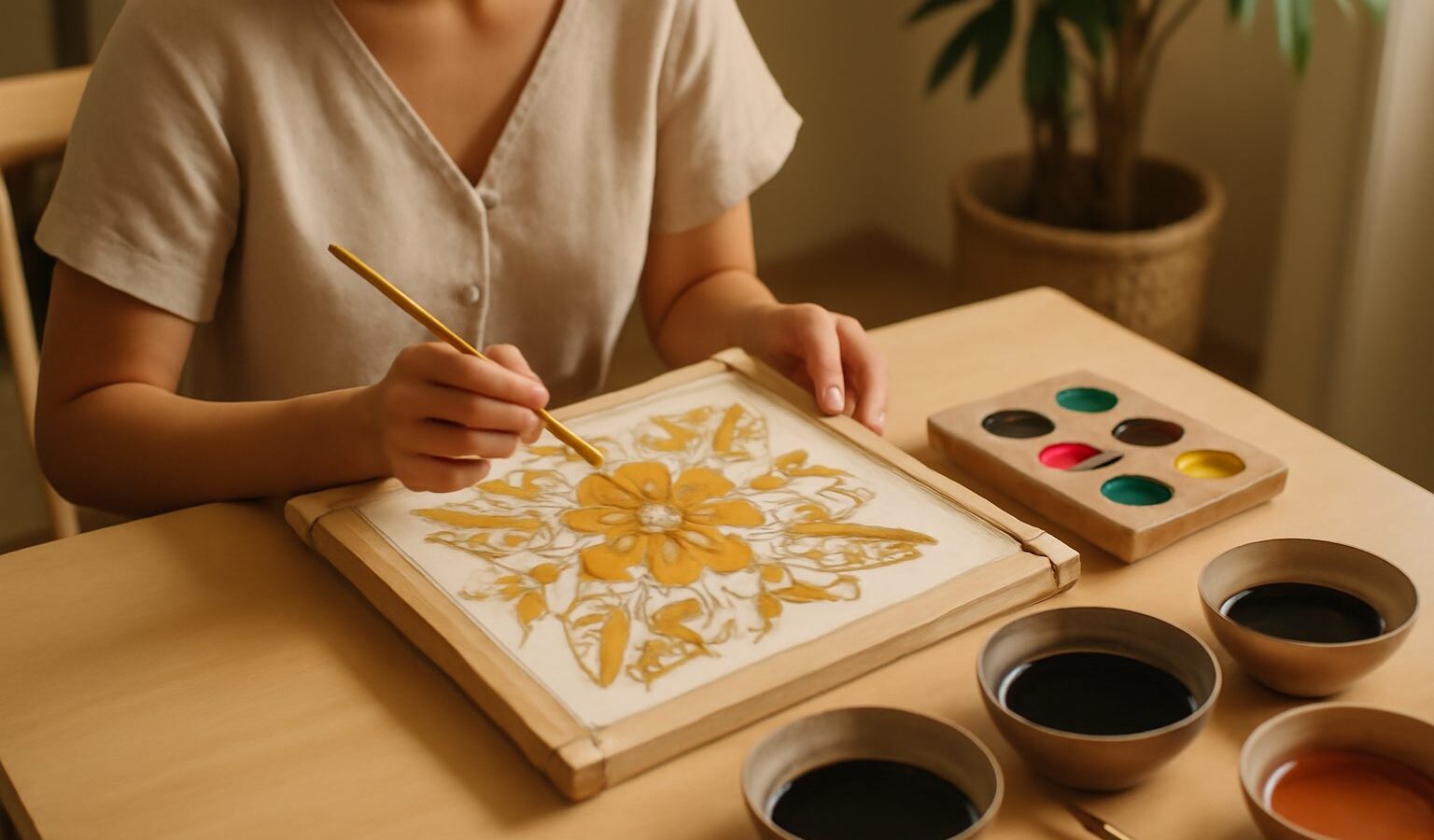
Few crafts are as absorbing or as beautiful as batik. In a batik painting workshop you learn an age old art of decorating cloth with wax and dye, drawing patterns that resist the colour so intricate designs emerge stroke by stroke. It is meditative, colourful and deeply rooted in the cultural heritage of the Malay world and the wider Nusantara region of Southeast Asia. You leave with a piece of fabric you decorated yourself and a real appreciation for a craft that has been passed down through generations.
This guide explains what batik is, walks you through the process you will learn, and offers honest advice on what to expect and how to choose a class. Whether you are drawn by the technique, the culture or simply the pleasure of working with wax and colour, there is a welcoming way in for complete beginners.
What batik is and where it comes from
Batik is a wax resist technique for decorating textiles. The maker applies hot wax to cloth in a chosen pattern, and when the fabric is dyed, the waxed areas resist the colour and stay their original shade. By building up wax and dye in stages, artisans create richly layered designs. The word and the tradition are strongly associated with the Malay archipelago and Indonesia, and the craft is woven through the cultural life of the region, from everyday dress to ceremonial cloth.
The motifs traditionally carry meaning. You will often see flowing florals, leaves and vines, geometric repeats and patterns inspired by nature, each region and community having its own visual language and favoured designs. Part of the joy of a workshop is learning a little about this heritage and approaching it with respect and curiosity, rather than treating the patterns as mere decoration. A good instructor will share context about where the craft comes from and why it matters.
In Singapore, batik is part of our shared multicultural fabric, appearing in fashion, homeware and art. Taking a workshop is a lovely way to connect with a living tradition that belongs to our part of the world, and to understand the patience and skill behind cloth many of us have admired all our lives.
The process you will learn
Most beginner workshops focus on a painted style of batik, which is approachable and forgiving. You usually start with a piece of cloth, often cotton or silk, stretched on a small frame so it is taut and easy to work on. Your instructor will help you sketch or plan a simple design, perhaps a flower, a leaf or a gentle pattern, so you have a guide to follow.
Next comes the wax. Warm, liquid wax is applied along the outlines of your design to create barriers that hold the colours in place. In traditional practice this is done with a special spouted tool or a brush, and your instructor will demonstrate how to control the flow before you try it yourself. The wax cools quickly, so you work steadily and with a little care.
Then the colour. Using dyes and brushes, you paint within the waxed outlines, watching the hues soak into the cloth while the waxed lines keep them from bleeding together. You can blend and layer for depth. Once you are happy, the fabric is set so the colour holds, and the wax is removed to reveal your finished design in full. Seeing the crisp pattern emerge as the wax lifts away is the moment that makes batik so rewarding.
What to expect as a beginner
Do not worry about artistic talent. Beginner batik workshops are designed for people who have never held a wax tool, and simple, bold designs often turn out the most striking. The instructor guides you at every stage, and the wax resist technique has a charm of its own, so small wobbles and drips tend to add character rather than spoil the piece. The aim is to enjoy the process and leave with something you made and like.
Sessions are usually relaxed and sociable. You will likely produce a small piece such as a decorated panel, a scarf or a handkerchief, depending on the class. Wear clothes you do not mind getting a spot of dye on, or use the apron provided, and be ready to slow down and enjoy the rhythm of the craft. Batik rewards patience; the more calmly you work, the better your lines and colours turn out.
There is a gentle safety note too. Batik uses warm wax and dyes, so listen to your instructor’s guidance on handling the wax tool safely, keep it away from your skin, and wash your hands after working with dyes. Studios set these tools up to be beginner friendly, and following the briefing keeps the session safe and stress free.
Choosing the right workshop
Batik workshops come in different formats, so it helps to think about what you want. A short taster session is perfect for a fun afternoon or a creative outing with friends, while a longer class or short course lets you go deeper into technique and produce a more finished piece. Consider what you would like to make and how much time you want to spend.
| Consideration | Taster session | In depth workshop |
|---|---|---|
| Time commitment | A single relaxed session | Longer class or a short course |
| Best for | A creative day out or gift | Learning technique more thoroughly |
| Typical outcome | A small painted piece to keep | A more detailed or larger design |
| Skills covered | Basic wax and dye painting | Layering, blending and finer control |
| Cultural context | A brief, respectful introduction | Deeper look at heritage and motifs |
| Ideal if you want | To try batik for the first time | To develop batik as a hobby |
Look for a class that clearly welcomes beginners and that speaks about the craft with respect for its origins. Check whether materials such as cloth, wax, dyes and an apron are included, and whether you take your finished piece home the same day or collect it later once it is fully set. If you are booking for a group, ask about private sessions, which make a memorable gathering.
A craft worth carrying forward
Batik is more than a pretty pattern on cloth; it is a living tradition with deep roots in Southeast Asia and a natural place in Singapore’s cultural story. Taking a batik painting workshop lets you experience that heritage through your own hands, learning the patience and the skill that generations of artisans have refined. You come away not only with a piece of fabric you decorated, but with a richer understanding of an art form that surrounds us.
If the craft draws you in, you can keep exploring, seeking out intermediate classes, visiting exhibitions and reading about the regional styles and their meanings. However far you take it, the first step is simply to book a workshop, pick up the wax tool, and let the colours and patterns of this beautiful tradition unfold on the cloth in front of you.