
Spotting a buzzing nest on your corridor ceiling, in a condo tree or under the eaves of your house is unsettling. Singapore’s warm, green environment suits bees, wasps and hornets all year round, and they sometimes build close to where people live. The good news is that most situations can be handled calmly if you keep your distance and call the right people. This bee hive removal Singapore guide explains what to do first, who is responsible at HDB, condo and landed homes, and what to avoid.
First, Keep Your Distance and Stay Calm
Whatever the insect, the first steps are the same:
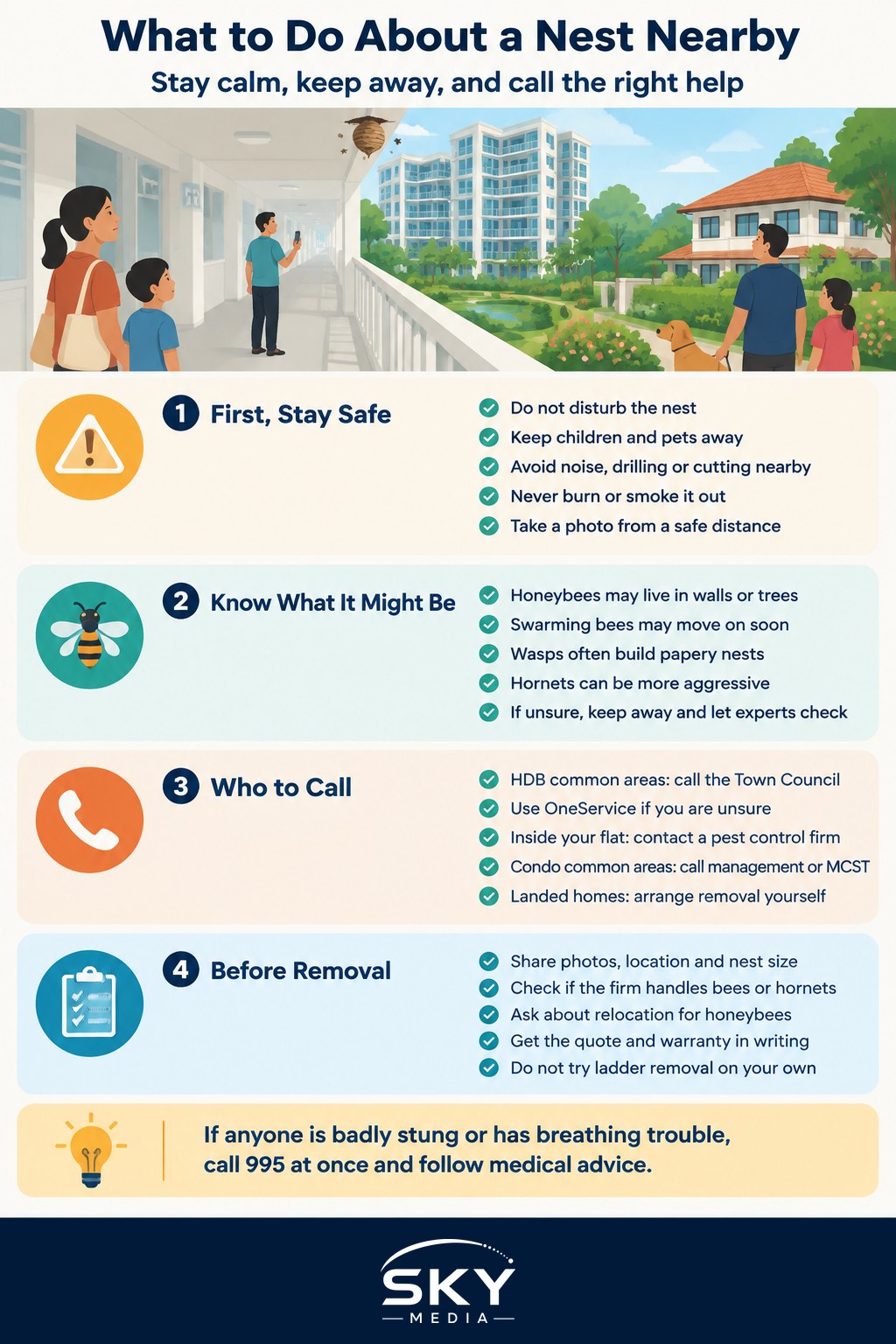
- Do not disturb the nest. No poking, spraying, hosing, swatting or throwing things at it. Most stings happen when a colony feels its nest is under attack.
- Move people and pets away. Keep children and animals well clear, and close nearby windows and doors if the nest is close to your home.
- Avoid strong vibrations and noise near the nest, such as grass cutting or drilling, until it has been dealt with.
- Do not try to burn or smoke it out. This is dangerous for you and your neighbours and can start a fire.
- Note the location and size. A photo taken from a safe distance helps whoever comes to remove it.
If someone has been stung many times, or shows signs of a serious allergic reaction such as difficulty breathing, swelling of the face or throat, dizziness or collapse, call 995 for an emergency ambulance immediately.
Bees, Wasps or Hornets: Why It Matters
Different stinging insects behave differently, and the right response can depend on what you are dealing with. You do not need to be an expert, but a rough identification helps when you call for help.
| Insect | What the nest often looks like | What to expect |
|---|---|---|
| Honeybees | Exposed sheets of wax comb, or a hidden colony in a wall cavity, roof or tree hollow | Usually defensive only near the nest; colonies can sometimes be relocated rather than destroyed |
| Swarming bees | A temporary cluster of bees hanging from a branch or ledge | Often resting while searching for a new home, and may move on by themselves within a short time |
| Wasps | Smaller papery nests under eaves, ledges or leaves | Can be defensive if the nest is bumped; often found at window ledges and gardens |
| Hornets | Larger, rounded papery nests in trees, roofs or shrubs | Can be aggressive in defending the nest and stings are painful; treat with extra caution |
If you are unsure, assume it could be dangerous and keep away. Let the professional or the managing authority identify it properly.
Who to Call at an HDB Flat
For HDB estates, responsibility depends on where the nest is.
- Common areas such as corridors, void decks, staircases, lift lobbies, roofs and trees within the estate are generally managed by your Town Council. Call the Town Council’s hotline or report it through the OneService app, which routes municipal issues to the right agency. Give the block number, the floor and a photo if you have one.
- Inside your own flat or on fixtures you are responsible for, such as your own window grilles, air-conditioner ledge or bomb shelter, arrangements usually fall to you as the owner or tenant. Contact a pest control company to remove the nest. Tenants should inform their landlord as well.
- Trees along public roads or in parks near your estate may be managed by NParks or another agency rather than the Town Council. The OneService app is a handy starting point if you are unsure who owns the area.
Who to Call at a Condo
In a condominium, the management office or managing agent, acting for the Management Corporation Strata Title (MCST), is your first call for anything in the common property. That includes gardens, pool decks, carpark ceilings, clubhouse roofs and the trees around the blocks.
- Report it to the management office as soon as you spot it, with the exact location.
- Ask whether they will cordon off the area until the nest is removed, especially if it is near a playground or walkway.
- For nests on your own balcony, planter box or air-conditioner ledge, check with management, since some estates treat these differently depending on the by-laws.
Who to Call at a Landed Home
For terrace, semi-detached and detached houses, nests on your own property are generally your responsibility to arrange removal for.
- Engage a pest control company. Look for a firm registered as a vector control operator with the National Environment Agency (NEA), and ask whether they handle bees and hornets specifically, since not all do.
- Ask about relocation for honeybees. Some specialists can remove and relocate a honeybee colony rather than destroy it. This can be a kinder option, though it depends on the nest’s location and accessibility.
- Check what removal includes. Ask whether the service covers removing the comb or nest material, since leftover honeycomb in a wall or roof can attract pests or new swarms.
- Ask about safety precautions and whether you need to keep people and pets indoors during the job.
If the nest is in a tree overhanging a public road or in a neighbouring property, talk to your neighbour or report it through OneService rather than tackling it yourself.
Choosing and Briefing a Pest Control Service
Whichever home type you live in, if you are hiring someone yourself, a quick brief saves time:
- Share photos and the nest’s location, height and approximate size.
- Ask what method they will use and whether it involves chemicals near food areas, fish ponds or pets.
- Confirm whether follow-up visits are included if insects return.
- Get the quote and any warranty in writing.
- Ask how long you should keep the area off-limits afterwards.
Do not attempt removal with a ladder at height on your own. A fall combined with a defensive colony is a serious risk, and nests in roof spaces or wall cavities often need specialist equipment.
If Someone Gets Stung
Most stings cause pain, redness and swelling that ease over time, but some people react much more strongly. General first steps that health sources commonly describe include:
- Move away from the area calmly to avoid further stings.
- If a bee stinger is left in the skin, remove it promptly by scraping it out sideways with a fingernail or card.
- Wash the area with soap and water and apply a cold compress to reduce swelling.
- Watch for signs of an allergic reaction, including widespread rash, welts, swelling beyond the sting site or breathing difficulty.
Raised itchy welts across the body can be a sign of an allergic response; our guide to hives and urticaria in children explains how these look and when to see a doctor. For anyone with a known allergy to stings, multiple stings, a sting in the mouth or throat, or any breathing difficulty, seek urgent medical care or call 995. This is general information, not medical advice; a doctor or polyclinic can advise on individual cases.
Preventing Nests From Coming Back
You cannot make your home completely unattractive to stinging insects, but a few habits help:
- Check eaves, ledges, air-conditioner brackets and shrubs regularly, so small nests are caught early.
- Seal gaps in roofs, walls and vents where colonies could settle.
- Keep sweet drinks and food covered outdoors, and clear fallen fruit from gardens.
- Report early nests in common areas promptly, before they grow.
Acting early and calling the right party keeps everyone safer and usually makes removal quicker and simpler.
Frequently Asked Questions
Should I spray or burn a wasp nest myself? No. Do not poke, spray, hose or throw things at it, and never try to burn or smoke it out, which is dangerous and can start a fire. Most stings happen when a colony feels attacked. Keep your distance and call the right party.
Will a swarm of bees hanging from a branch leave on its own? Often yes. A temporary cluster is usually resting while it searches for a new home and may move on within a short time. Keep people and pets away and let a professional or the managing authority identify it.
Can honeybees be relocated instead of destroyed? Sometimes. Some specialists can remove and relocate a honeybee colony, which can be a kinder option, though it depends on the nest’s location and accessibility. Ask pest control firms whether they handle bees specifically, since not all do.
What should I check when hiring a pest control firm for a nest? Look for a firm registered as a vector control operator with NEA. Ask what method they use, whether follow-up visits are included, and get the quote and any warranty in writing. Also ask whether removal covers leftover comb, which can attract pests or new swarms.
How do I remove a bee stinger and when is a sting an emergency? Scrape the stinger out sideways with a fingernail or card, wash with soap and water and apply a cold compress. Call 995 for breathing difficulty, swelling of the face or throat, dizziness, a sting in the mouth or throat, or multiple stings.
Official sources: National Environment Agency (NEA)