

A good bagel is a simple pleasure: a shiny, slightly blistered crust, a dense chewy crumb and enough flavour to stand up to cream cheese, smoked salmon or a fried egg. Over the years, bagels in Singapore have moved from an occasional supermarket item to something you can find at bakery-cafes, delis and weekend markets across the island. Quality varies a lot, though, and a soft round roll with a hole is not the same thing as a proper bagel.
Rather than ranking specific shops, which open, close and change recipes often, this guide shows you how to judge a bagel, where to look, which styles you will come across and how to build a satisfying bagel breakfast or lunch. Use it to find your own favourite near home or work.
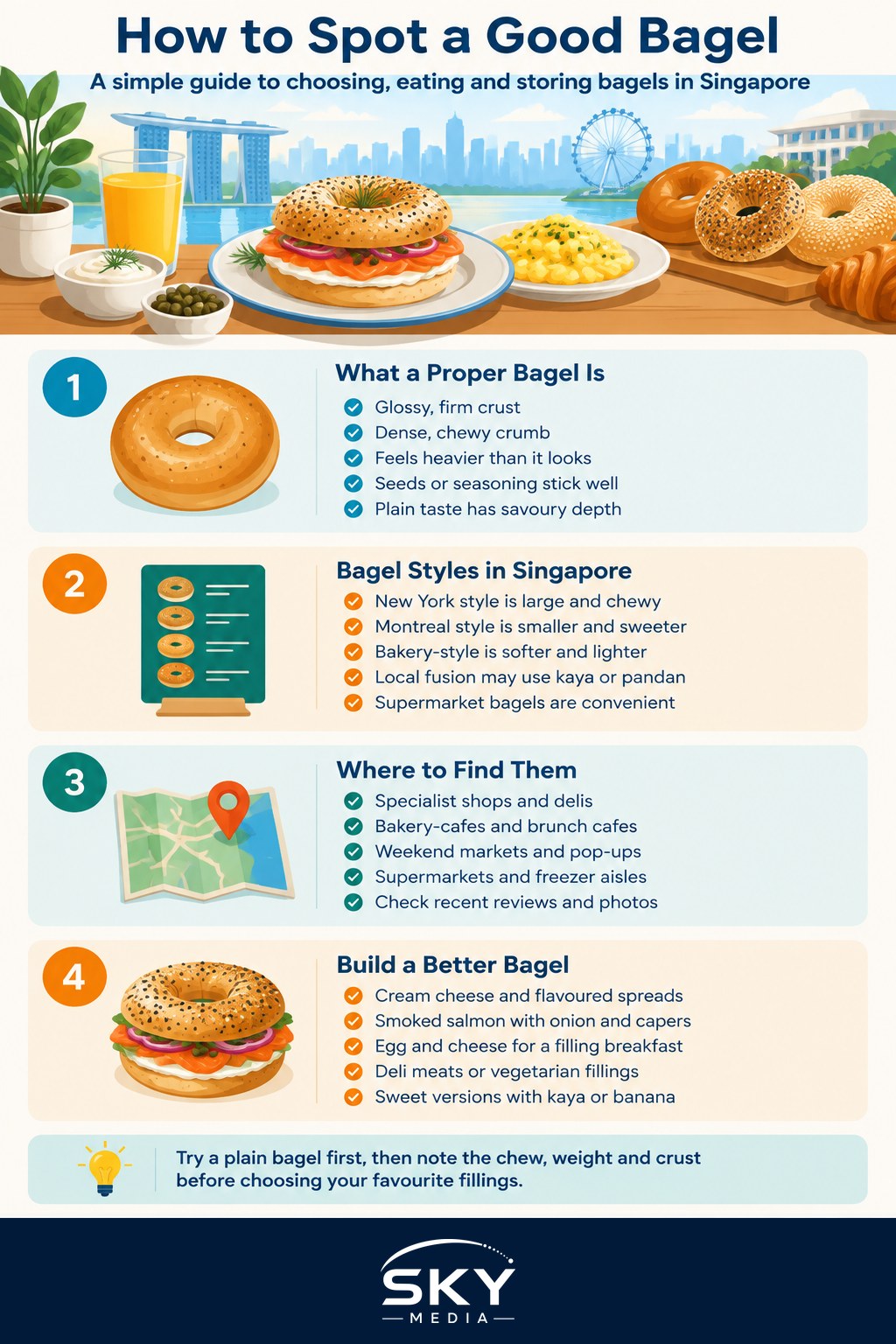
What Makes a Proper Bagel
Traditional bagels are made from a stiff, high-gluten dough that is shaped into rings, often rested slowly, then boiled briefly before baking. That boiling step is what gives a bagel its glossy, chewy crust and dense interior. Many bakeries add malt or honey to the water or dough for colour and a hint of sweetness.
When you try a bagel in Singapore, look and feel for these signs:
- A glossy, firm crust that resists slightly when you bite, rather than a soft bread-roll surface.
- A dense, chewy crumb with small, even holes. It should spring back, not squash flat.
- Good weight. A proper bagel feels heavier than it looks.
- Toppings that stick. Sesame, poppy seeds, salt or “everything” seasoning should be pressed on well, not falling off.
- Flavour on its own. Taste a plain bagel without spreads. A well-made one has a slightly malty, savoury depth.
If a bagel feels light and fluffy, it was probably steamed or baked like bread without boiling. That can still be tasty, but it will not deliver the classic chew.
Bagel Styles You Will Find in Singapore
Several styles appear on menus here, and knowing the difference helps you order what you actually want.
| Style | Texture and flavour | Best used for |
|---|---|---|
| New York style | Large, chewy, slightly salty, often malty crust | Classic cream cheese, smoked salmon, deli sandwiches |
| Montreal style | Smaller, denser, sweeter, often wood-fired with a bigger hole | Eating plain or with simple spreads |
| Soft or bakery-style | Lighter and fluffier, closer to bread | Kids, toasted snacks, people who prefer less chew |
| Local fusion flavours | Varies; may include pandan, kaya, matcha, black sesame or savoury fillings | Trying something new or a sweet treat |
| Packaged supermarket bagels | Softer, longer shelf life, sold in bags | Quick home breakfasts and freezing for later |
Fusion flavours are a fun Singapore twist. A sweet bagel with kaya or coconut-based spreads can feel like a cousin of kaya toast and the traditional Singapore breakfast, just with more chew.
Where to Look for Good Bagels
Bagels show up in a few kinds of places. Each suits a different need.
Specialist bagel shops and delis. These usually bake in-house, offer several flavours and spreads, and build sandwiches to order. Freshness tends to be best in the morning, and popular flavours may sell out.
Bakery-cafes. Many artisan bakeries add bagels to their bread range, sometimes only on certain days. Ask staff whether bagels are boiled and baked on the premises.
Brunch cafes. Bagel sandwiches often appear on brunch menus, typically with smoked salmon, eggs or avocado. The bagel itself may be bought in, so quality varies.
Weekend markets and pop-ups. Small home-based or independent bakers sometimes sell at markets or take pre-orders through social media. These can be excellent, but check how they handle food safety, ordering and collection.
Supermarkets. Both local and imported bagels are sold in bread aisles and freezer sections. They are convenient for home, especially if you toast them well.
To find options near you, search for bagels in your area on map apps, read recent reviews and look at photos of the crumb, not just the toppings. Opening hours and menus change, so check a shop’s latest details before making a trip.
How to Build a Better Bagel Breakfast or Sandwich
A great bagel deserves good fillings. Here are popular combinations and tips for each.
Classic cream cheese. Plain, sesame or everything bagel with a generous layer of cream cheese. Flavoured spreads such as chive, garlic or honey add variety.
Smoked salmon. Cream cheese, smoked salmon, thinly sliced red onion, capers and a squeeze of lemon. Toast lightly so the bagel stays chewy.
Egg and cheese. A fried or scrambled egg with melted cheese makes a filling breakfast. Add a hash brown or some greens for a heartier meal.
Deli-style lunch. Sliced meats, pickles, mustard and lettuce make a sturdy sandwich that travels well, since bagels hold fillings without going soggy.
Vegetarian options. Hummus, roasted vegetables, avocado, tomato and herbs, or egg salad with spring onion.
Sweet bagels. Cinnamon raisin with butter, peanut butter with banana, or a local spread such as kaya.
For a lighter start to the day, pair half a bagel with protein and fruit. Our healthy breakfast ideas guide has more balanced combinations.
Buying, Storing and Reheating Bagels at Home
Bagels are best on the day they are baked. In Singapore’s humidity, they can turn soft or stale quickly. To keep them tasting good:
- Eat fresh bagels within a day at room temperature, kept in a paper bag.
- Freeze extras promptly. Slice them first, then store in an airtight bag. You can toast straight from frozen.
- Avoid the fridge for storage. It tends to dry bread out faster than freezing does.
- Revive a day-old bagel by spritzing it lightly with water and warming it in the oven or air fryer for a few minutes.
- Toast cut side only if you like a crisp face with a chewy outside.
If you enjoy baking, you can also try making bagels at home. The process involves a stiff dough, shaping, resting, a short boil and baking. Home kitchens in Singapore manage this fine with a standard oven, though the dough can be sticky in humid weather, so add flour gradually.
Making Bagels Part of Your Breakfast Routine
Singapore has a rich breakfast culture, from kopitiam toast sets to thosai and chwee kueh. Bagels add another option to that mix, especially for people who want a portable, filling start to the day. If you are curious how they fit into local habits, our look at breakfast culture in Singapore shows how varied mornings here can be.
Try a few places, taste a plain bagel first, and pay attention to the chew. Once you find a bakery you trust, you will have a dependable go-to for weekend brunches, office lunches and quick breakfasts at home.