
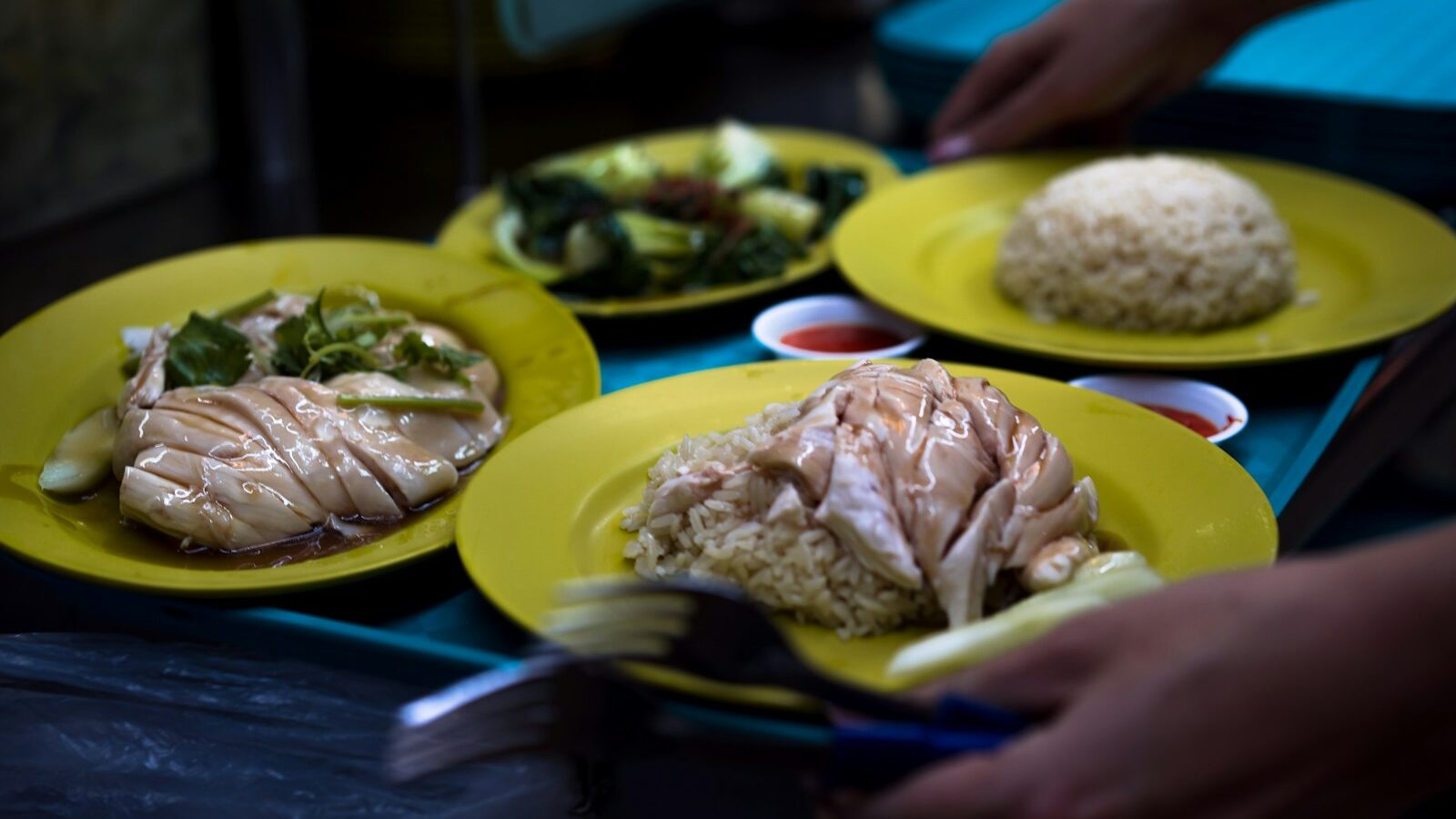
For a gentle, savoury start to the day, few things beat a plate of chwee kueh: soft, steamed rice cakes topped with savoury preserved radish and a dab of chilli. Cheap, comforting and quietly addictive, it is a breakfast institution. This guide covers chwee kueh and the wider family of steamed breakfast kueh that Singaporeans have loved for generations.
What chwee kueh is
Chwee kueh, which means water rice cake, is a Teochew snack made from a rice flour batter steamed in small, saucer-shaped moulds until it sets into a soft, slightly wobbly cake. Each little cake is topped with chai poh, chopped preserved radish fried with garlic and seasonings, and usually served with chilli on the side. The contrast is the whole point: the plain, delicate rice cake against the salty, savoury, slightly sweet radish topping. It is simple food, but the textures and flavours are wonderfully satisfying.
The magic of the topping
While the rice cake is the base, the chai poh topping is what people remember. Preserved radish is chopped and fried until fragrant, developing a savoury depth with hints of sweetness and a pleasant bite. Good chai poh is neither too salty nor too dry, and it clings to the soft cake in a way that makes each mouthful moreish. Stalls guard their radish recipes, and the quality of this topping is often what separates a memorable plate of chwee kueh from an ordinary one. The accompanying chilli adds an optional kick that many find essential.
How it is eaten
Chwee kueh is typically eaten as a light breakfast or snack, often as part of a spread with other morning favourites. The cakes are soft enough to cut easily with the edge of a spoon, and you scoop up cake and topping together, adding chilli to taste. It is unhurried, everyday food, the kind you might grab before work or enjoy slowly over kopi at a coffee shop. A plate is inexpensive, which is part of its enduring appeal.
The wider world of steamed kueh
Chwee kueh belongs to a broad family of local kueh, many of which are steamed and enjoyed at breakfast or as snacks. It is worth knowing a few of its relatives.
- Soon kueh, a steamed dumpling filled with savoury turnip and other ingredients.
- Png kueh, a pink, moulded cake filled with savoury glutinous rice.
- Kueh tutu, small steamed cakes filled with ground peanut or coconut.
- Various nyonya kueh, the colourful sweet cakes of Peranakan tradition.
These kueh reflect the diverse influences in Singapore’s food heritage, spanning Teochew, Hokkien and Peranakan traditions, and together they form a rich tapestry of traditional bites.
Savoury versus sweet kueh
The word kueh covers a huge range, from savoury to sweet, and it helps to understand the distinction.
| Type | Character | Examples |
|---|---|---|
| Savoury kueh | Salty, umami, often breakfast or snack | Chwee kueh, soon kueh, png kueh |
| Sweet kueh | Sweet, often coconut or pandan | Many nyonya kueh, kueh tutu |
Chwee kueh sits firmly in the savoury camp, which is why it works so well as a light, comforting breakfast rather than a dessert.
How to spot a good plate
- Soft, smooth rice cakes that are delicate but hold their shape.
- Fragrant, well-fried chai poh that is savoury without being overly salty.
- A good chilli that complements rather than overwhelms.
- Freshness, since these are best eaten soon after steaming.
A stall with a steady breakfast crowd and freshly steamed cakes is usually a safe bet.
Where to find it
Chwee kueh and its kueh cousins are found at hawker centres, morning markets and coffee shops across the island, often at dedicated kueh stalls that offer a colourful assortment. Wet markets and older food centres are especially rich hunting grounds for traditional steamed kueh, and some stalls have been perfecting their recipes for decades. Buying a mixed selection is a lovely way to sample several types in one sitting.
A snack that spans generations
Chwee kueh has a lovely way of bridging generations. For older Singaporeans, it is a taste of childhood mornings and simpler times, a familiar plate enjoyed at the market for decades. For younger eaters, it is an affordable, comforting bite that has quietly stayed relevant even as flashier foods come and go. This enduring, cross-generational appeal is a hallmark of the best traditional foods: they do not need reinvention because they were quietly perfect all along. A plate of chwee kueh shared across a table can connect grandparents and grandchildren over the same simple pleasure, which is no small thing in a fast-changing city.
The takeaway
Chwee kueh is humble breakfast comfort at its finest: soft steamed rice cakes crowned with savoury preserved radish and a touch of chilli, cheap and quietly irresistible. It also opens the door to the wider world of local kueh, from savoury soon kueh and png kueh to the sweet, colourful cakes of Peranakan tradition. Seek out a good kueh stall at a morning market, sample an assortment, and you will discover a gentle, deeply traditional corner of Singapore’s food culture that rewards slow, unhurried enjoyment.
Making chwee kueh at home
While a good hawker plate is hard to beat, chwee kueh is one of the more approachable steamed kueh to attempt at home, and doing so gives you a real appreciation for the craft behind it. The batter is essentially rice flour loosened with water and a little tapioca or wheat starch for a softer, silkier set, seasoned lightly with salt. The trick lies in the ratio and the steaming: too much water and the cakes turn overly wobbly and collapse, too little and they set dense and rubbery. Most home cooks pre-heat the moulds in the steamer, brush them with a thin film of oil, then pour in the batter and steam over a rolling heat until the tops turn from milky white to translucent.
- Warm the moulds first so the batter sets evenly and lifts out cleanly once cooled slightly.
- Stir the batter as you pour, since rice flour settles quickly and the starch needs to stay suspended for a uniform texture.
- Fry the chai poh separately, rinsing preserved radish briefly to control saltiness, then frying it slowly with garlic and a pinch of sugar until fragrant.
- Do not rush the steam, as under-steamed cakes taste raw and floury while over-steamed ones weep water.
Preserved radish and rice flour are widely stocked at wet markets and supermarkets across Singapore, so the ingredients are neither exotic nor expensive. If you are watching sodium intake, note that preserved radish is naturally high in salt, and you can check general dietary guidance with the Health Promotion Board (HPB) if that is a concern for your household.
Storing, reheating and pairing
Chwee kueh is at its best freshly steamed, when the cake is warm and yielding, but leftovers keep perfectly well for a day or two if handled sensibly. Store the plain cakes and the fried chai poh separately in the fridge, since keeping the topping off the cake stops it from turning soggy. To bring cold cakes back to life, a quick re-steam for a few minutes restores the soft texture far better than a microwave, which tends to make them tough or unevenly hot. Warm the radish topping in a dry pan just before serving so it regains its fragrance.
As for what to drink and eat alongside, chwee kueh slots naturally into a leisurely local breakfast. A cup of kopi or teh is the classic companion, the bitterness of the coffee or the milkiness of the tea balancing the savoury radish nicely. Because a plate is light, many people pair it with other morning bites to round out the meal, whether that is a soft-boiled egg, a slice of kaya toast, or a couple of soon kueh from the same stall. Served this way, chwee kueh becomes less a single dish and more a gentle centrepiece of the unhurried Singapore breakfast table.
Explore more: Nyonya kueh guide · Kopitiam culture and the toast set · Traditional kueh: a guide to local bites