
Searching for the best Japanese buffet Singapore has to offer quickly throws up dozens of options, from mall restaurants with endless salmon sashimi to wagyu grilling buffets and quiet neighbourhood spots where everything is cooked to order. Japanese food is one of Singapore’s favourite cuisines, and the buffet format suits it well: small plates, many textures, and the freedom to order one more round of sashimi without doing the maths.
The trouble is that “Japanese buffet” covers very different experiences. This guide explains the main formats, how to judge sashimi quality and value, what to ask before you book, and then gives a researched shortlist of frequently recommended Japanese buffets that were operating when we checked. It is written for locals, newcomers and visitors alike.
How to Choose a Japanese Buffet
Promotions and menus change all the time, so the lasting value is knowing what separates a good Japanese buffet from a disappointing one.
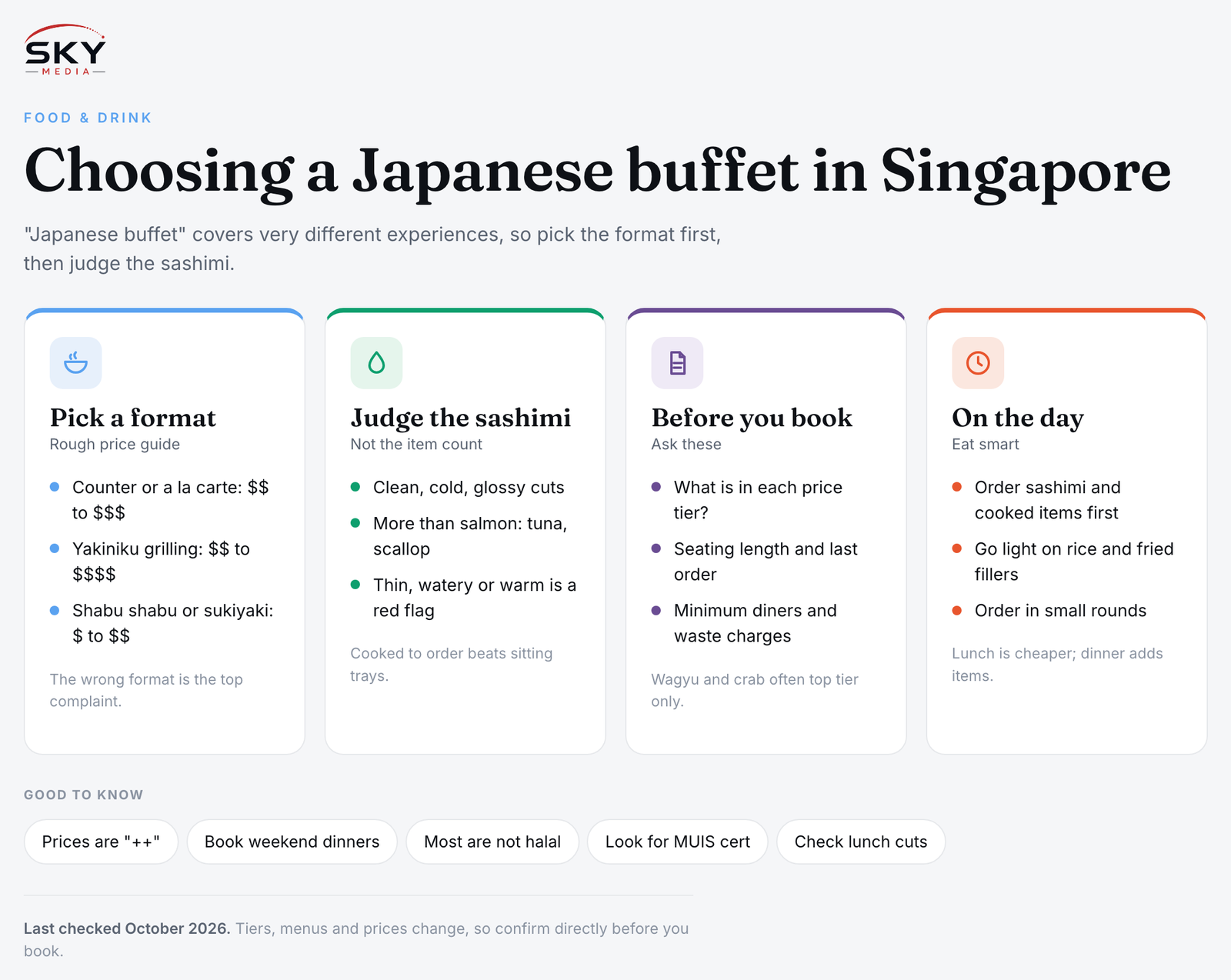
- Decide on the format first. Do you want variety without cooking (counter or a la carte buffets), the fun of grilling meat yourself (yakiniku), or simmering ingredients in broth (shabu shabu or sukiyaki)? Picking the wrong format is the most common reason people leave unhappy.
- Judge the sashimi, not the item count. A buffet boasting 200 dishes is only as good as its fish. Good signs: cleanly sliced, cold, glossy cuts, and more than just salmon (look for tuna, swordfish, yellowtail or scallop). Thin, watery or warm slices are a red flag.
- Prefer cooked to order. In a la carte buffets you order from a menu or tablet and dishes arrive fresh. Tempura and grilled items in particular suffer when they sit in trays.
- Check what is in each tier. Many buffets have two or three price tiers, and the items people actually want (wagyu, premium sashimi, crab, oysters) often sit only in the top tier. Read the tier menu before choosing.
- Ask about time limits and minimums. Japanese buffets in Singapore often run timed sessions, and some need a minimum of two diners. Ask “How long is the seating, and when is last order?” when you book.
- Watch the waste policy. Some a la carte buffets charge for large amounts of food left uneaten, especially sushi rice. Order in small rounds.
- Read the price properly. Prices quoted “++” have service charge and GST added, so the final bill is higher than the headline. Dinner usually costs more than lunch and may add premium items.
Red flags include old reviews only, very slow ordering during peak hours, and sashimi limited to one serving per round without notice.
What to Expect From Japanese Buffets in Singapore
Here is how the main formats compare. Price bands are a rough guide only and change with promotions and sessions.
| Format | How it works | Best for | Rough price guide |
|---|---|---|---|
| Counter buffet | Help yourself from sushi, sashimi, tempura and dessert counters | Variety and speed, mixed groups | $$ |
| A la carte buffet | Order unlimited dishes from a menu or tablet, cooked fresh | Sashimi lovers and relaxed meals | $$ to $$$ |
| Yakiniku buffet | Grill meat and seafood yourself at the table | Meat lovers, wagyu fans | $$ to $$$$ |
| Shabu shabu or sukiyaki buffet | Cook thin slices of meat and vegetables in broth | Budget meals, cooler evenings, students | $ to $$ |
Most popular buffets take reservations, and weekend dinner slots fill quickly, so book ahead. Many are not halal certified, so Muslim diners should check directly.
Our Shortlist of Japanese Buffets in Singapore
Last checked: October 2026. Outlets and details change, so please confirm directly before you visit.
Kiseki Japanese Buffet
Best for: variety without cooking · Area: Orchard Central, Orchard · Price guide: $$
Kiseki is a long-running counter buffet on an upper floor of Orchard Central, with sushi, sashimi, tempura and teppanyaki among a very wide spread. Dinner adds more premium items than lunch.
Shin Minori
Best for: a la carte sashimi and a celebratory meal · Area: UE Square, River Valley · Price guide: $$$
Shin Minori’s a la carte buffet has one of the widest menus in Singapore, with more than 200 items ordered at the table, from sashimi to grilled and fried dishes.
Shin Yuu Japanese Restaurant
Best for: a quieter neighbourhood meal · Area: Greenwood Avenue, Bukit Timah · Price guide: $$$
This standalone a la carte buffet is known for thick sashimi cuts, aburi sushi and well-liked chawanmushi, in a calmer setting than the malls.
Kushi Japanese Dining
Best for: izakaya-style grilled dishes · Area: MacPherson, near Tai Seng · Price guide: $$$
Kushi, at Grantral Mall in MacPherson, pairs fresh sashimi with kushiyaki skewers and other izakaya favourites, all ordered a la carte, with an add-on menu for premium items.
Tajimaya Yakiniku
Best for: wagyu grilling · Area: Great World, River Valley · Price guide: $$$
Tajimaya offers a timed premium wagyu yakiniku buffet on smokeless grills, so you can enjoy table grilling without leaving smelling strongly of smoke.
Tenkaichi
Best for: yakiniku with views · Area: Marina Square, Marina Bay · Price guide: $$ to $$$
Tenkaichi runs Standard, Deluxe and Premium yakiniku and sashimi buffets, with wagyu reserved for the upper tiers. Its Marina Square restaurant is the outlet most guides now point to.
Suki-Ya
Best for: affordable hotpot · Area: several malls, including Bugis, Marina Square and Plaza Singapura · Price guide: $
Suki-Ya is a budget-friendly shabu shabu and sukiyaki buffet with a choice of broths and dips. Wagyu and seafood are generally kept for the higher tier.
These are editorial picks curated from publicly available information, not paid placements. Details such as pricing and opening hours change, so please confirm directly before visiting.
Tips and Common Questions
What is the best Japanese buffet in Singapore?
It depends on what you want. For sashimi and variety, a la carte buffets such as Shin Minori, Shin Yuu or Kushi are popular choices. For grilling, yakiniku buffets suit meat lovers, and for a cheap, filling meal, shabu shabu buffets are hard to beat.
Is lunch or dinner better value?
Lunch is usually noticeably cheaper, though dinner often adds premium items. If sashimi is your main interest, check whether the lunch menu includes the same cuts.
How do I make the most of an a la carte buffet?
Order sashimi and cooked items first, while you are hungry, and go light on rice and fried fillers. Order in small rounds to avoid waste charges and to keep dishes arriving hot.
Are Japanese buffets halal?
Most Japanese buffets in Singapore are not halal certified, partly because of mirin and other ingredients. Ask the restaurant and look for MUIS certification if this matters to you.
Explore more: Japanese Food in Singapore: A Guide for Every Budget · The Best Buffets in Singapore: Our 2026 Editorial Shortlist · Buffet Dining in Singapore: A Guide
What is the difference between shabu shabu and sukiyaki? Shabu shabu means swishing thin slices of meat and vegetables in a light broth, then dipping them in sauces such as ponzu or sesame. Sukiyaki uses a sweeter soy-based broth and the cooked meat is traditionally dipped in raw egg. Buffets like Suki-Ya let you choose either broth.
Will I smell of smoke after a yakiniku buffet? Usually a little, though restaurants with smokeless or downdraft grills, such as Tajimaya, reduce it considerably. Avoid wearing delicate fabrics or anything you need for the rest of the day, and keep jackets and bags in a sealed bag or under the table if the restaurant provides covers.
Can people at the same table choose different buffet tiers? Often not. Many Japanese buffets require everyone at a table to order the same tier, so premium items are not shared across tiers. Agree on a tier with your group before you go, and ask when booking if children or light eaters can be priced differently.
Can someone with a gluten intolerance eat at a Japanese buffet? It is tricky, because regular soy sauce, tempura batter, many marinades and some broths contain wheat. Plain sashimi and steamed rice are usually safer, but tell the restaurant when booking and ask whether a gluten-free soy sauce is available. Those with coeliac disease should be especially careful.
Do Japanese buffets offer cheaper prices for children? Many do, with reduced prices based on age or height and free entry for very young children, but the rules differ between restaurants and tiers. Check the current child policy when you book, and bring proof of age if the restaurant asks for it.