
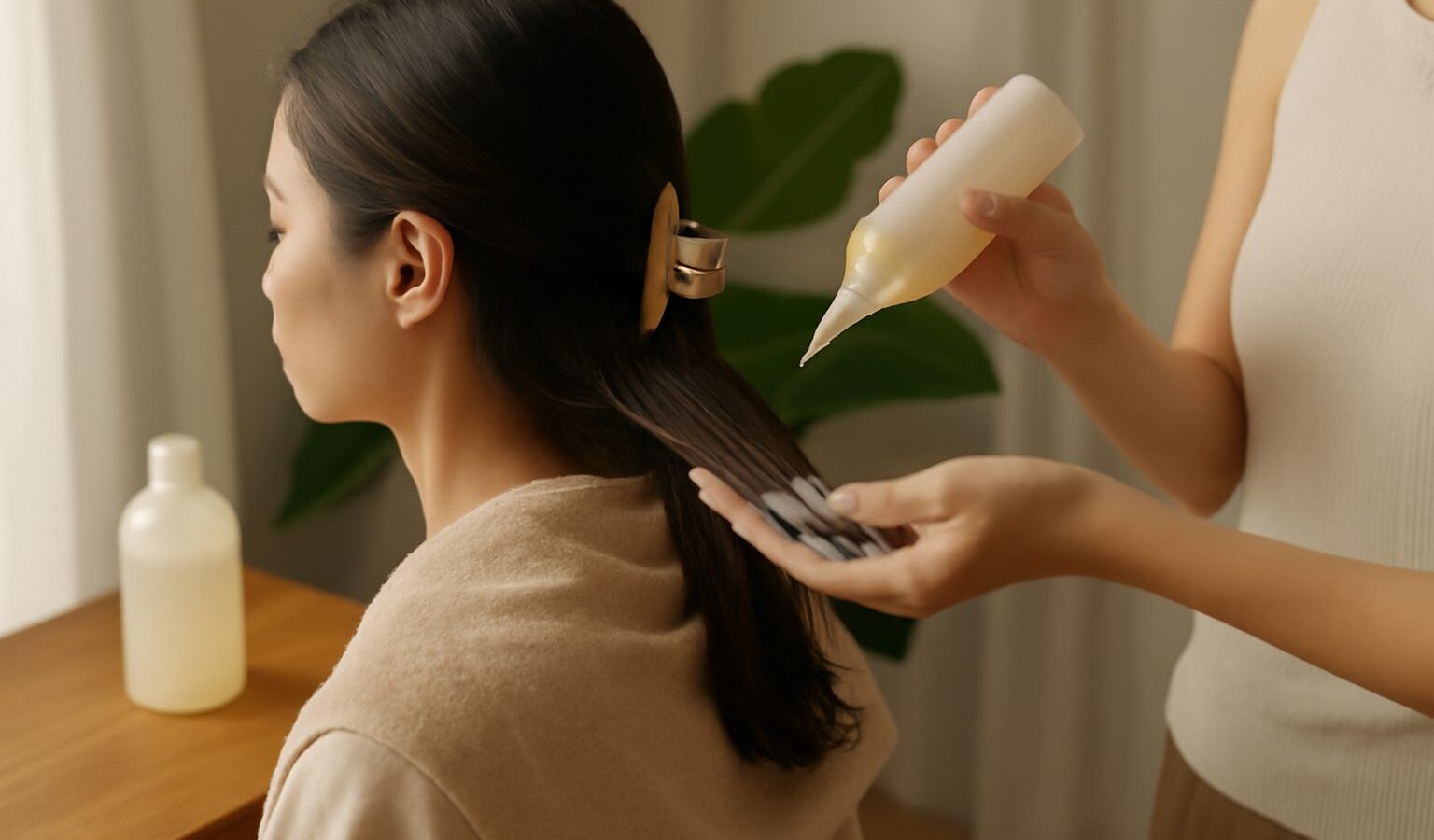
If you have ever bleached, coloured or heat styled your hair and watched it turn dry and brittle, you have probably come across bond builders. A bond building hair treatment in Singapore is often marketed as a way to rescue damaged strands, and there is real science behind the idea. Still, it helps to understand what these treatments actually do, what they cannot do, and how to fit them into your routine so your expectations stay realistic.
This guide keeps things practical and honest. Bond builders are a useful tool, especially in our humid climate where hair already takes a beating, but they are not magic. Knowing how they work will help you spend your money wisely and treat your hair more kindly overall.
What bond building treatments actually do
Your hair is made of protein, and those proteins are held together by internal bonds. Some of these are called disulphide bonds, and they give hair much of its strength and elasticity. When you bleach or lift colour, or when you apply high heat repeatedly, some of those bonds are broken. Once enough bonds are damaged, hair starts to feel weak, stretchy when wet, rough, and it snaps more easily.
A bond building hair treatment works on this internal structure rather than just coating the outside of the strand. The active ingredients are designed to seek out broken bond sites and help form new links, which can restore some strength and reduce breakage. This is different from a normal conditioner or hair mask, which mainly smooths the cuticle on the surface and adds slip and shine. Both are useful, but they do different jobs.
Here is the honest part. Bond builders can help repair and strengthen bonds that have been damaged, and they can noticeably reduce how much hair breaks during brushing and styling. What they cannot do is fully undo damage or turn severely compromised hair back into virgin hair. If a strand has been fried to the point where it is barely holding together, no treatment will make it brand new again. The realistic goal is stronger, more manageable hair with less breakage, not a complete reversal.
There are two broad ways people use these treatments. Salons often mix a bond builder into bleach or colour to reduce damage as it happens, which is genuinely helpful during a big colour change. At home, you use a bond building treatment as a separate step to maintain and support hair between salon visits. Both approaches are valid, and many people use both.
Who benefits most, and who may not need it
Bond builders are most useful for hair that has been chemically or thermally stressed. You are a good candidate if you bleach or lift your colour, go platinum or pastel, use hot tools frequently, or if your hair already feels weak, stretchy and prone to snapping. People with fine hair that has been coloured often see a clear improvement in strength and less mid length breakage.
If your hair is healthy, uncoloured and rarely heat styled, you may not need a bond builder at all. In that case, a good conditioner and the occasional moisturising mask will usually be enough. Adding a strengthening treatment you do not need will not harm you, but it is not always the best use of your budget. Listen to how your hair actually feels rather than following the marketing.
It also helps to know the difference between strength and moisture. Bond builders address structural strength. Protein treatments add a temporary reinforcing layer of protein. Moisturising masks add softness and hydration. Damaged hair usually needs a balance of all three, and leaning too hard on any one of them can backfire. Too much protein, for example, can leave some hair feeling stiff or straw like, so pair strengthening steps with proper conditioning.
| Treatment type | Main job | Best for | Honest limit |
|---|---|---|---|
| Bond building treatment | Supports internal bonds and strength | Bleached, coloured or heat damaged hair | Cannot fully undo severe damage |
| Protein treatment | Adds a temporary reinforcing protein layer | Weak, over stretchy hair needing structure | Too much can feel stiff or brittle |
| Moisturising mask | Softens and hydrates the surface | Dry, rough, thirsty hair | Does little for structural strength |
| Everyday conditioner | Smooths cuticle, adds slip and shine | All hair types, daily use | Surface only, not deep repair |
How to use one at home in Singapore
Most bond building treatments follow a similar routine, though you should always read the instructions for the specific product you buy, since formulas differ. As a general pattern, you apply the treatment to damp, towel dried hair, comb it through so every section is coated, and leave it on for the time stated. Some are rinse out treatments, some are left in, and stronger salon systems have multiple steps. Do not leave a treatment on far longer than directed in the hope of better results, as more time does not equal more repair.
How often you use one depends on your hair. Heavily bleached or very damaged hair may benefit from a weekly treatment, while mildly stressed hair might only need it every couple of weeks. Once your hair feels stronger and breaks less, you can space treatments out. Consistency over time matters more than a single intensive session.
Bond builders work best as part of a gentler overall routine, and this matters a lot in Singapore. Our heat and humidity mean many people wash often and use hot tools to fight frizz, both of which add wear. Support your treatments by using a heat protectant before any hot tool, keeping styling temperatures moderate, drying hair gently rather than rubbing it hard, and using a wide tooth comb on wet hair to avoid snapping. A silk or satin pillowcase reduces friction overnight and is an easy win.
Finally, keep your expectations grounded. A bond building hair treatment is a strong ally for damaged hair, and used regularly it can make hair feel meaningfully more resilient. It will not replace the need for regular trims to remove split, ragged ends, and it will not license unlimited bleaching without consequences. Think of it as one part of a kinder routine rather than a cure. Combine strengthening treatments with sensible heat use, good conditioning and patience, and over the months your hair will genuinely feel and behave better.
Explore more
Heat Styling and Hair Protection in Singapore
Colouring Your Hair: At Home vs Salon
Hair Care in Singapore’s Climate
Choosing Shampoo and Conditioner for Your Hair Type