

Eating well on a tight budget is not about giving things up, it is about cooking smart. With grocery bills and the cost of living on many minds, budget cooking in Singapore is one of the most satisfying ways to look after both your wallet and your family. A home-cooked pot of curry or a big tray of roasted vegetables often costs a fraction of the same meal delivered, and it usually tastes better and feeds more.
This guide walks through shopping cleverly, choosing ingredients that stretch, and cooking in ways that turn a little into a lot. No fancy equipment, no rare ingredients, just practical habits that quietly save you money every week.
Where the Real Savings Come From
Before the recipes, it helps to see where the money goes. The biggest savings rarely come from hunting one cheap ingredient. They come from planning, from wasting less, and from cooking more of what you already buy. Roughly speaking, a household that plans meals, uses up leftovers, and cooks from scratch spends noticeably less than one that shops on impulse and lets food spoil.
Food waste is money in the bin. Buying a bag of vegetables and using half of it doubles the real cost of what you ate. So a big part of budget cooking is simply using everything you bring home. The rest is knowing which ingredients give you the most meals for the fewest dollars, and cooking in batches so your effort and your energy bill go further.
Prices shift constantly, so treat any figure as a rough guide and check the shop, wet market or app for what things actually cost today. The habits below work whatever the prices are doing.
Shopping Smart at Markets and Supermarkets
Where and how you shop sets the ceiling on your grocery bill. A few habits make a real difference.
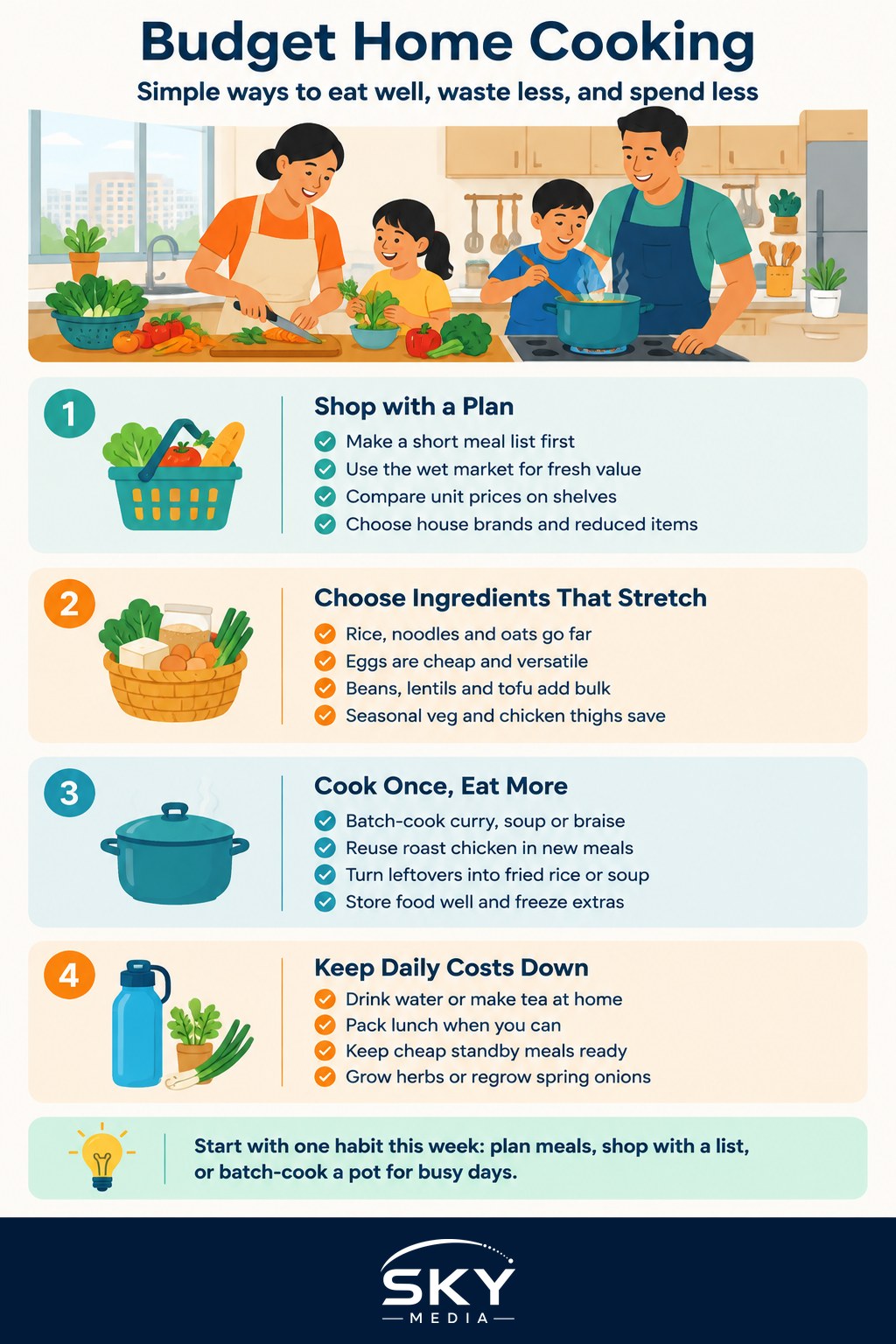
- Plan meals before you shop. Write a short list around what you will actually cook, and stick to it. Impulse buys and forgotten vegetables are where budgets leak.
- Use the wet market for fresh produce. Wet markets often offer good value on vegetables, fish and meat, especially near closing time, and you can buy the exact amount you need rather than a fixed pack. Building a rapport with a regular stallholder helps.
- Buy what is in season and plentiful. Local and seasonal produce is usually cheaper and fresher. Let the best-value vegetables of the week shape your menu rather than the other way round.
- Compare unit prices, not pack prices. Supermarkets label price per 100g or per litre on the shelf. Bigger is not always cheaper, but staples like rice, oats and oil often are.
- Try house brands. Supermarket own-label rice, sauces, canned goods and frozen veg are typically cheaper than big names and often just as good.
- Shop the reduced shelf and freezer. Marked-down bread, meat and produce near their date are fine to cook or freeze straight away. Frozen vegetables and fish are cheap, keep for ages, and waste nothing.
Go with a rough weekly budget in mind and, ideally, not on an empty stomach. A little planning at the shop saves more than any single recipe.
Cheap Ingredients That Stretch a Long Way
Some ingredients simply give you more meals per dollar. Build your cooking around these and the savings look after themselves.
| Ingredient | Why it stretches | Easy ways to use it |
|---|---|---|
| Rice, noodles and oats | Cheap, filling, long shelf life | Fried rice, congee, one-pot rice, overnight oats |
| Eggs | Low cost, high protein, endlessly versatile | Steamed egg, omelette, fried rice, egg and tomato |
| Dried beans, lentils and tofu | Cheap protein that swells when cooked | Dhal, braised tofu, soups, adding bulk to meat dishes |
| Seasonal vegetables | Best value when plentiful | Stir-fries, soups, roasted trays, fillings |
| Chicken thighs and whole chicken | Cheaper than fillet, more flavour | Curry, soup stock, braises, one big roast |
| Canned and frozen goods | No waste, always ready | Tomatoes, sardines, mixed veg, quick weeknight bases |
Stretch pricier ingredients like meat by treating them as a flavour rather than the whole plate. A little chicken or fish goes a long way in a stir-fry, curry or soup that is mostly rice and vegetables. Beans, lentils, tofu and eggs let you cut the meat further without cutting the protein.
Cooking in Batches and Using Everything
How you cook decides how far your groceries stretch. Cooking once and eating twice, or more, is the heart of budget home cooking.
- Batch-cook and portion. Make a big pot of curry, soup, braise or bolognese, then refrigerate or freeze portions for busy days. It saves money, time and the temptation to order in.
- Cook once, remix twice. Roast a whole chicken for dinner, use the meat in fried rice or sandwiches the next day, and simmer the bones into a stock for soup. One buy, three meals.
- Turn leftovers into new dishes. Yesterday’s rice becomes fried rice or congee, tired vegetables go into soup or an omelette, and odd ends become a clear-the-fridge stir-fry. Aim to bin as little as possible.
- Store food well. Keep your fridge tidy so nothing hides and spoils, freeze what you cannot eat in time, and label portions. In our warm, humid climate, refrigerate cooked food promptly and reheat it thoroughly.
- Use energy sensibly. A rice cooker, slow cooker or one big oven tray cooks a whole meal at once, and cooking in bulk uses less power per portion than firing up the stove nightly.
A little food safety keeps your savings from becoming a stomach upset. Cool leftovers quickly, store them covered and cold, eat them within a couple of days, and when in doubt, throw it out. Saving money should never mean risking a dodgy meal.
Simple Habits That Keep Costs Down
Beyond the shopping and cooking, a few everyday habits quietly protect your budget. Drink water or brew your own kopi and tea at home rather than buying drinks with every meal. Pack lunch a few times a week, since a home-cooked tingkat or lunchbox easily beats a food-court set on cost. Keep a few reliable cheap meals in your back pocket for tired evenings, so you reach for the pantry instead of the delivery app.
Grow a pot of herbs like spring onion, chilli or basil on your window ledge if you can, and regrow spring onion ends in water for a free top-up. None of these is dramatic on its own, but together they add up across a month.
Eating Well for Less, for Good
Budget cooking is a skill that pays you back every single week. Plan your meals, shop with intention, lean on ingredients that stretch, and cook in batches that use up everything you buy. Do that and you will eat well, waste little, and spend far less, without feeling like you are missing out. Pick one habit from this guide, a weekly meal plan, a wet-market run, or a big batch-cook on Sunday, and let the savings build from there.
Explore more
Keen to save even more in the kitchen? Plan ahead and cook once for the whole week with our guide to meal prep for the work week, and get the best value on fresh produce by learning how to shop at a wet market. Cooking for yourself? Our tips on cooking for one help you buy small and waste nothing.
Frequently Asked Questions
What are the cheapest ingredients to build home meals around? Rice, noodles, oats, eggs, dried beans, lentils and tofu give you many meals per dollar. Seasonal vegetables and chicken thighs also stretch well. Canned and frozen goods are handy because nothing goes to waste. Check current prices at your usual shop.
How can I stretch meat across more meals? Treat meat as a flavour rather than the whole plate. A little chicken or fish goes a long way in a stir-fry, curry or soup that is mostly rice and vegetables. Beans, lentils, tofu and eggs let you cut the meat without cutting protein.
Does batch cooking really save money? Yes, it saves money, time and the temptation to order in. Make a big pot of curry or soup, then portion and freeze. Cooking in bulk also uses less power per portion than firing up the stove nightly.
Is it worth growing herbs at home to save money? A pot of spring onion, chilli or basil on your window ledge can give a small free top-up. Regrowing spring onion ends in water also helps. The savings are small, but together with other habits they add up over a month.
Further reading: Cooking With Kids in Singapore · Using AI for Cooking and Recipes