
Few desserts have stuck around in Singapore cafes quite like the burnt cheesecake. With its caramelised, almost blackened top and soft, creamy centre, it has moved from a cafe trend to a fixture in bakeries, restaurants and home-baker menus. Searching for the best burnt cheesecake in Singapore can bring up dozens of options, so this guide focuses on how to judge one yourself: what makes a great slice, the local flavour twists to look for, how takeaway and dine-in experiences differ, and how to keep a whole cake in good shape in our tropical heat.
What Exactly Is a Burnt Cheesecake?
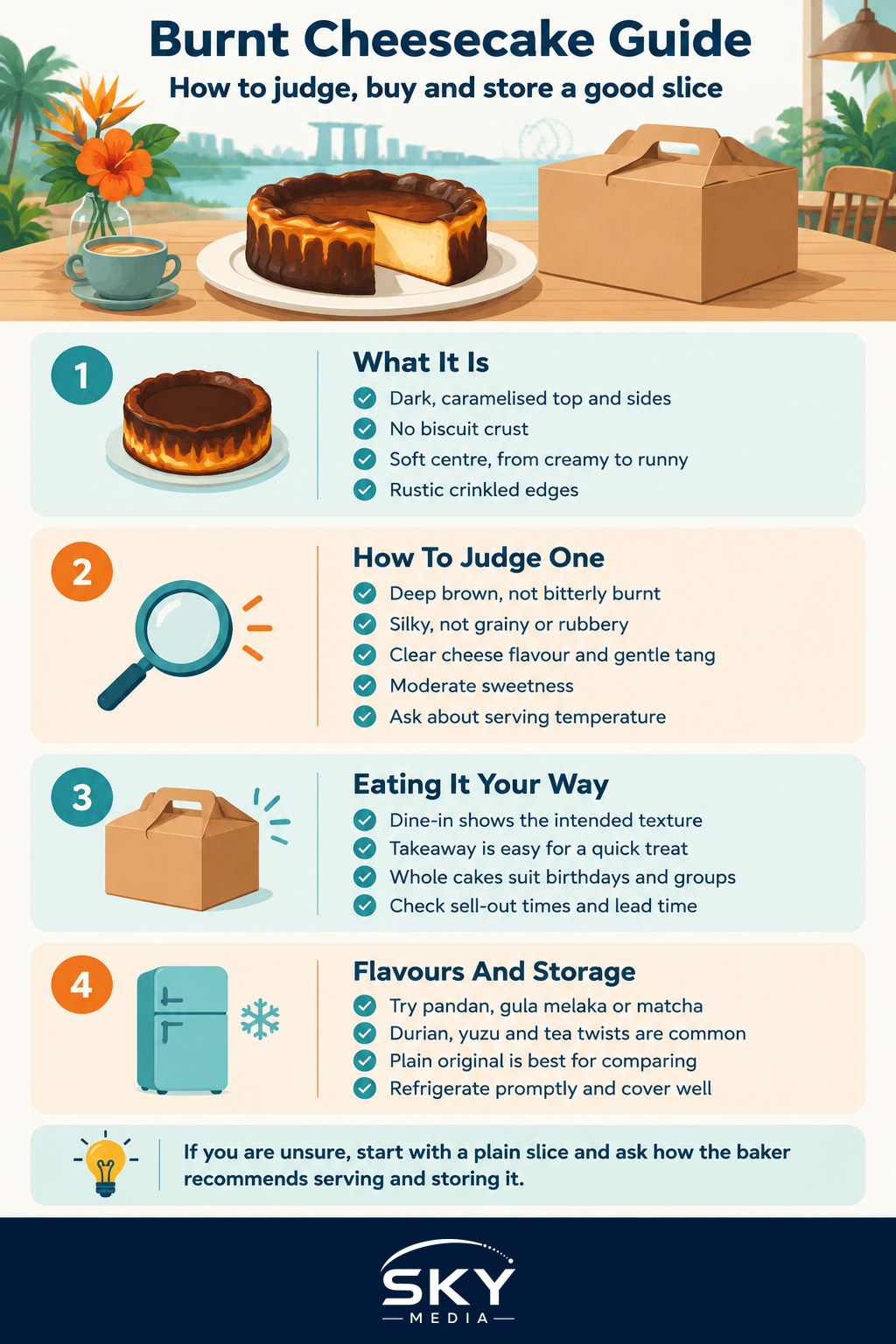
The burnt cheesecake is widely known as Basque burnt cheesecake, inspired by a style that originated in San Sebastián in the Basque Country of Spain. Unlike a New York cheesecake, it has no biscuit crust. The batter of cream cheese, sugar, eggs, cream and a small amount of flour is poured into a tin lined with crumpled baking paper and baked at a high temperature. The heat deeply caramelises the outside while the centre stays soft.
What sets it apart:
- A dark, caramelised top and sides. The “burnt” surface tastes bittersweet, a little like caramel or crème brûlée, rather than charred.
- A rustic shape. The crinkled parchment leaves rough, folded edges. A perfectly smooth burnt cheesecake is unusual.
- A soft, sometimes molten centre. Depending on the baker, the middle ranges from just set and creamy to runny and custard-like.
- No crust. The whole slice is cheesecake, which makes it rich but lighter in texture than many baked cheesecakes.
How to Judge a Great Burnt Cheesecake
Everyone has their own preference, but these are the qualities fans tend to look for:
- Balanced caramelisation. The top should be deeply browned, but the bitterness should not overwhelm the cheese. A thin dark layer is ideal; a thick, acrid crust is a sign of overbaking.
- Creamy, smooth texture. The interior should be silky, not grainy or rubbery. Air bubbles or a cracked, dry centre suggest the cake was overmixed or overbaked.
- Clear cheese flavour. The cream cheese should come through, with a gentle tang. Some bakers add a little blue cheese, mascarpone or other cheeses for depth.
- Moderate sweetness. A good burnt cheesecake is not cloying. The caramel top carries much of the sweetness.
- Proper serving temperature. Some places serve it chilled for a firmer texture, others at room temperature for a softer, more oozing centre. Ask which they recommend.
Takeaway or Dine-In: Which Is Better?
Burnt cheesecake travels better than many delicate cakes, but the experience still changes depending on where you eat it. The table below sets out the trade-offs.
| Factor | Dine-in at a cafe or restaurant | Takeaway slice | Whole cake order |
|---|---|---|---|
| Texture at its best | Served at the temperature the baker intends | Can soften or firm up during travel | Can be served at your preferred temperature |
| Presentation | Plated, sometimes with sauces, fruit or ice cream | Boxed, may shift in transit | Whole cake looks impressive for gatherings |
| Convenience | Need to visit during opening hours | Quick to grab and go | Usually needs advance ordering |
| Best for | Trying a new place, dessert dates | A treat at home or office | Birthdays, parties, family visits |
| What to check | Whether slices sell out early | How long it can be kept out of the fridge | Order lead time, pick-up or delivery options, size |
If you are trying a place for the first time, dine-in is the fairest test, since you taste the cake as intended. Once you find a favourite, whole cake orders are often better value for groups, though pricing varies widely between bakeries, so compare directly.
Local Flavour Twists to Look Out For
Singapore bakers love putting a local spin on the classic. Flavours you may come across include:
- Pandan. Fragrant and lightly grassy, pandan adds a familiar Southeast Asian aroma to the creamy base.
- Gula melaka. Palm sugar deepens the caramel notes with a smoky sweetness.
- Matcha and hojicha. Japanese tea flavours add bitterness that pairs well with the caramelised top.
- Durian. For durian lovers, a burnt cheesecake with durian pulp folded in can be an indulgent treat. Expect a strong aroma.
- Earl Grey and other teas. Floral and citrus notes lighten the richness.
- Coffee, chocolate and Biscoff. Popular cafe-style flavours that lean more dessert than classic.
- Yuzu and other citrus. A bright, tangy contrast to the dense filling.
- Savoury twists. Some bakers add cheeses like cheddar or truffle for a less sweet profile.
Flavoured versions are fun, but the plain original is the best way to compare bakers, since there is nowhere to hide.
Where to Find Burnt Cheesecake in Singapore
Without naming specific businesses, here are the kinds of places that commonly sell burnt cheesecake:
- Specialist cafes and dessert bars. Some focus on cheesecake and offer several flavours by the slice.
- Bakeries and patisseries. Many now include a burnt cheesecake alongside tarts and cakes, often available whole with advance notice.
- Restaurants. Spanish, Western and fusion restaurants sometimes serve it as a signature dessert.
- Home bakers. Singapore has a large community of home-based bakers taking orders through social media and messaging apps. Many are known for burnt cheesecake in particular.
- Online cake delivery platforms. These gather bakeries in one place, which is convenient for gifting.
To find highly rated options, check recent reviews on food platforms and social media, look for photos of the cut cake rather than only the top, and ask friends and colleagues for recommendations. Menus and flavours change often, so confirm what is available before making a trip.
Tips for Ordering a Whole Cake
Whole burnt cheesecakes are popular for birthdays, office celebrations and Chinese New Year or Deepavali visits. To avoid disappointment:
- Order early. Many bakers, especially home bakers, need a few days’ notice and have limited daily capacity. Festive periods book up fast.
- Check the size. Ask for the diameter and how many slices it serves.
- Ask about delivery. Some offer delivery, others pick-up only. Confirm the time window and whether insulated packaging is used.
- Clarify allergens and dietary needs. Burnt cheesecake contains dairy, eggs and usually wheat flour. Ask whether a gluten-free version is available, and whether the kitchen handles nuts if that matters to you. If you need a halal-certified option, look for MUIS (Majlis Ugama Islam Singapura) certification and check the baker’s current status on the MUIS website.
- Read the cancellation terms. Especially for festive orders.
Storing and Serving Burnt Cheesecake at Home
Singapore’s heat and humidity mean cheesecake should not sit out for long.
- Refrigerate promptly. Keep the cake in the fridge once you get home unless you plan to eat it straight away. Follow any storage advice given by the baker.
- Choose your texture. Serve straight from the fridge for a firm, dense slice, or let it sit briefly at room temperature for a softer centre.
- Cut with a warm knife. Dip a knife in hot water and wipe it dry between cuts for clean slices.
- Cover well. Cheesecake absorbs fridge odours easily, so keep it in a sealed container or well wrapped.
- Eat within the recommended time. Ask the baker how long the cake keeps. When in doubt, eat it sooner rather than later.
Whether you prefer a molten slice at a cafe or a whole cake for a family gathering, the best burnt cheesecake in Singapore is the one that gets the balance right between caramel, cream and cheese. Use these pointers to judge each slice, try a plain version first, and keep a list of the bakers you love.
Explore more: The Best Cake Shops in Singapore · Dessert Cafes and Late-Night Sweets
Frequently Asked Questions
Is burnt cheesecake safe to eat when pregnant? Because the centre is often soft, some people worry about undercooked egg. The cake is baked at high heat, but doneness varies by baker. Ask the baker whether it is fully baked and made with pasteurised dairy, and check with your doctor before eating it.
How is burnt cheesecake different from Japanese cotton cheesecake? Burnt cheesecake is dense, creamy and rich, with a dark caramelised top and no crust. Japanese cotton cheesecake is light, fluffy and wobbly, usually pale golden and mildly sweet. Pick burnt if you want strong cheese flavour and a bittersweet top.
Can burnt cheesecake be frozen? Yes, usually. Slice it, wrap each piece well and freeze in an airtight container, then thaw slowly in the fridge. The texture can turn slightly firmer or less silky. Ask your baker how they recommend storing it, since recipes differ.
How do I carry a whole burnt cheesecake to a party without it softening? Keep it chilled until you leave, and use an insulated bag or cooler with ice packs for the trip. Place the cake flat, not tilted, and avoid leaving it in a hot car. Transfer to the fridge on arrival and serve it shortly before eating.
What makes homemade burnt cheesecake turn out grainy or cracked? Overmixing adds air, cold ingredients make lumps, and overbaking dries the centre. Use room-temperature cream cheese, mix gently until smooth and watch the colour rather than just the timer. Ovens differ, so adjust your temperature and time over a few attempts.
Further reading: Best Japanese Cheesecake in Singapore and Where to Buy It