
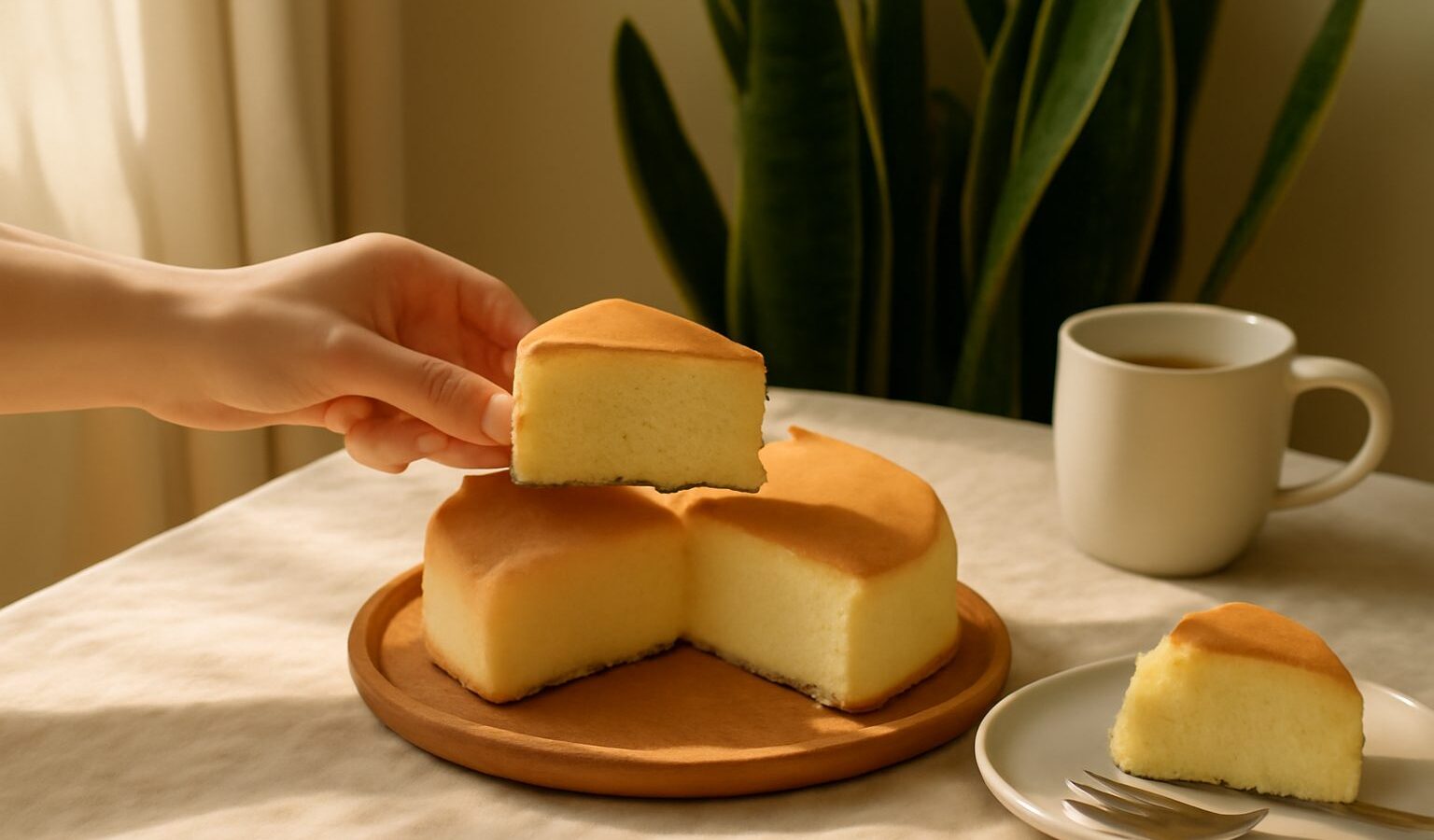
Few cakes cause as much excitement in a queue as a fresh Japanese cheesecake wobbling out of the oven. Light, airy and only gently sweet, it sits somewhere between a sponge and a soufflé, and it suits the Singapore palate that often prefers desserts “not too sweet”. This guide to Japanese cheesecake in Singapore focuses on one product only: what a good one looks and tastes like, the kinds of shops that sell it, how to tell a fresh cake from a tired one, and how to carry it home in our heat without it collapsing.
Bakeries open, close and change recipes often, so instead of ranking shops, this guide shows you how to judge any cake yourself.
What Makes a Japanese Cheesecake Different
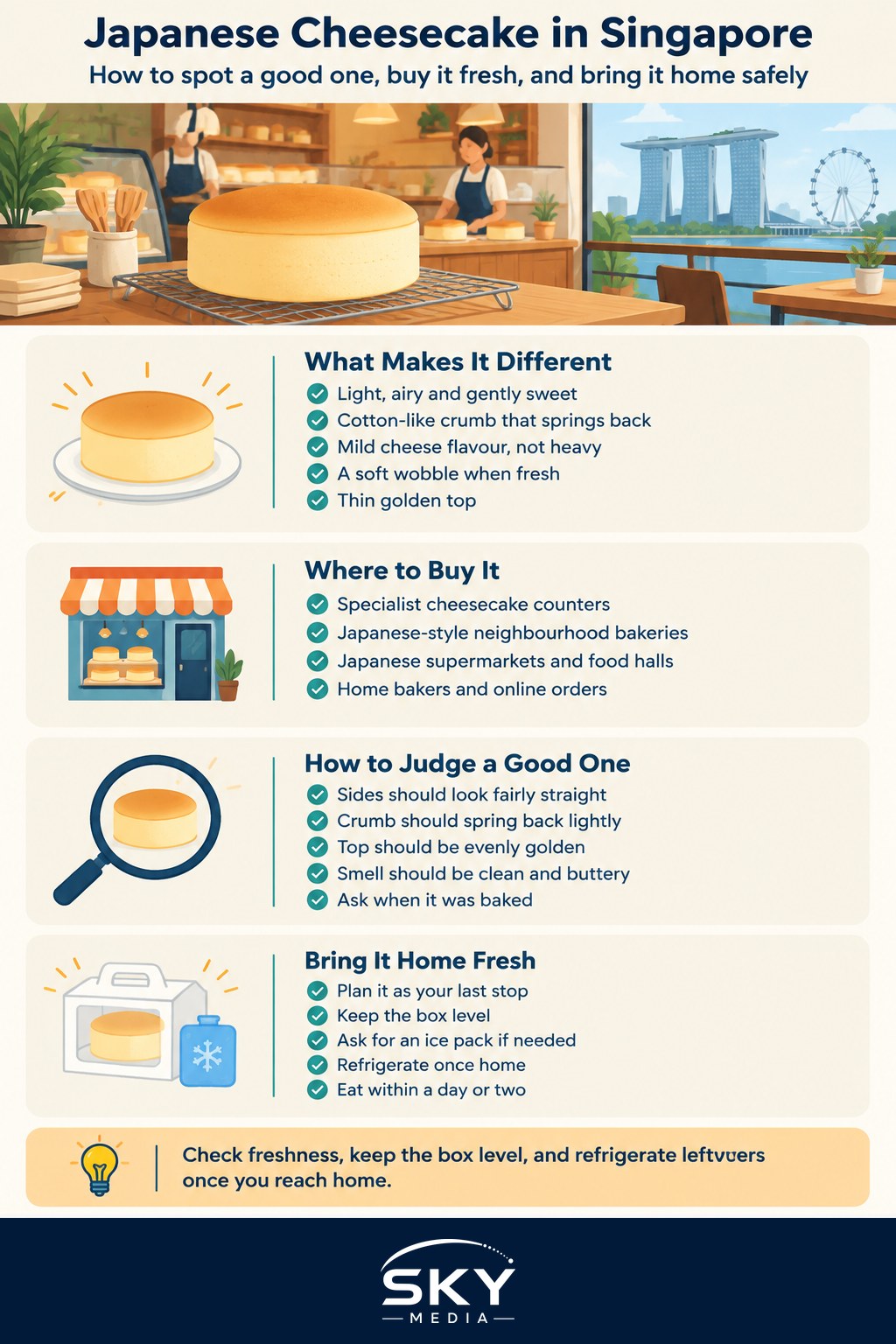
A Japanese cheesecake, often called a cotton cheesecake or soufflé cheesecake, is built very differently from the dense New York style. The batter combines cream cheese, butter, milk and egg yolks, and then folds in egg whites that have been whipped into a meringue. The cake is usually baked slowly in a water bath, which keeps the heat gentle and the crumb moist.
The result has a few signature traits:
- A fine, cotton-like crumb that springs back when pressed lightly.
- A gentle wobble when the cake is fresh, which is why some sellers call it a “jiggly” cheesecake.
- A mild cheese flavour with a hint of tang, rather than a rich, heavy cheese hit.
- Low sweetness, which makes it easy to eat a large slice.
- A thin, golden top that may carry a stamped logo at bakeries that brand their cakes.
Because the structure depends on air trapped in egg whites, the cake is delicate. It shrinks a little as it cools, and it is best eaten within a short window of baking.
Japanese Cheesecake Compared With Other Styles
If you are standing at a counter deciding between options, this quick comparison helps. The burnt Basque style in particular is often shelved right next to Japanese cheesecake, and the two are easy to confuse by name alone.
| Style | Texture | Sweetness and flavour | Best eaten |
|---|---|---|---|
| Japanese cotton cheesecake | Light, airy, springy | Mild cheese, low sweetness | Warm from the oven or lightly chilled |
| Burnt Basque cheesecake | Creamy, custardy centre, caramelised top | Rich, with a bittersweet crust | Room temperature or chilled |
| New York baked cheesecake | Dense and smooth | Rich, tangy, sweeter | Well chilled |
| No-bake chilled cheesecake | Soft, mousse-like, set with gelatine or cream | Varies, often fruity | Cold straight from the fridge |
If the burnt style is what you are really craving, our guide to the best burnt cheesecake in Singapore covers it separately.
Where to Buy Japanese Cheesecake in Singapore
You will find Japanese cheesecake across several kinds of sellers. Each has its own strengths, so think about whether you want a cake fresh from the oven, a reliable whole cake for a gathering, or a small treat with your coffee.
Specialist cheesecake counters in malls
Some bakeries focus on just one or two products and bake Japanese cheesecake in batches throughout the day, often in view of customers. These are the places where queues form when a fresh tray comes out. The main advantage is freshness. The trade-off is that popular counters may limit how many cakes each customer can buy, and timing your visit matters.
Japanese-style neighbourhood bakeries
Many heartland and mall bakeries with a Japanese influence sell cotton cheesecake as a whole cake or by the slice, alongside milk bread and cream buns. Quality varies widely, so use the freshness checks below.
Japanese supermarkets and department store food halls
Food halls with Japanese suppliers sometimes stock packaged cheesecakes and seasonal flavours. These are handy and often sold chilled. They are usually less airy than a cake baked on site, but they travel better.
Home bakers and online orders
Singapore has a lively home-baking scene, and many home bakers take pre-orders for Japanese cheesecake, sometimes in flavours like matcha, yuzu or Earl Grey. Ordering this way suits birthdays and gatherings. Check how far ahead orders close, whether delivery or self-collection is offered, and whether the baker lists ingredients clearly if anyone has allergies to egg, dairy or nuts.
Cafés with a Japanese menu
Some Japanese-inspired cafés serve slices of cheesecake with tea or coffee. A slice paired with a hojicha or matcha latte is a classic match, and our guide to matcha and Japanese drinks has ideas for what to order alongside.
How to Judge a Good Japanese Cheesecake
Wherever you buy, a few simple checks tell you a lot.
- Look at the sides. A well-baked cake has fairly straight sides with only modest shrinkage. Deep wrinkles or a sunken middle usually mean it has sat too long or was underbaked.
- Press gently, if allowed, or ask staff. The crumb should spring back. A wet, dense band at the bottom suggests the batter split or the cake was not cooled properly.
- Check the top. It should be evenly golden, not cracked across the surface. Small cracks are fine, but large fissures point to a hot oven.
- Smell it. You want a clean, buttery, slightly cheesy scent. A sour or eggy smell is a warning sign.
- Ask when it was baked. Specialist counters will usually tell you which tray came out most recently.
- Read the label. Packaged cakes should show a use-by date and storage instructions. Follow them.
Getting It Home and Keeping It Fresh
Singapore’s heat and humidity are hard on a delicate cake. A few habits make a real difference.
- Plan the cake as your last stop. Do not leave it in a hot car or carry it around a mall for hours.
- Keep the box level. Japanese cheesecake bruises easily, and tilting the box can press the sides against the cardboard.
- Ask for an ice pack on longer journeys, especially for chilled or cream-topped versions.
- Refrigerate once home unless you are eating it within a short while. Most bakeries recommend the fridge for any leftovers.
- Eat within a day or two for the best texture, or follow the seller’s guidance on the box.
Many people enjoy Japanese cheesecake in two ways: slightly warm on the day it is baked, when it is at its softest, and chilled the next day, when it firms into something closer to a light custard. Try both and see which you prefer.
Ordering for Parties and Festive Seasons
Japanese cheesecake is a popular choice for birthdays, office celebrations and festive visits because it pleases both people who love dessert and those who find most cakes too sweet. A few tips for bigger orders:
- Order early during busy periods such as long weekends and festive seasons, when bakeries and home bakers fill up quickly.
- Confirm the size in practical terms. Ask how many slices a whole cake usually serves rather than relying only on its diameter.
- Ask about candles and plaques if it is for a birthday, since the soft top can sink under heavy decorations.
- Mention dietary needs. Japanese cheesecake always contains egg and dairy. If anyone needs a halal option, look for a halal certification from MUIS (Majlis Ugama Islam Singapura) displayed by the seller, rather than assuming.
Prices, flavours and ordering cut-offs change often, so check each bakery’s current menu and terms directly before you plan around them.
Final Bite
A great Japanese cheesecake in Singapore is less about a famous name and more about freshness, gentle baking and careful handling on the way home. Use the checks above, try a plain slice before the flavours, and treat yourself to one straight from the oven at least once.
Explore more: if you are building a Japanese food day out, pair your cake run with our yakitori and Japanese grills guide for a savoury start.
Frequently Asked Questions
How long does Japanese cheesecake keep in the fridge? It is best eaten within a day or two for the best texture, or as the seller advises on the box. Most bakeries recommend refrigerating leftovers. Packaged cakes should show a use-by date and storage instructions, so follow those.
Should Japanese cheesecake be eaten warm or cold? Both work. Slightly warm on the day it is baked it is at its softest, and chilled the next day it firms up to something closer to a light custard. Try both and see which you prefer.
Is Japanese cheesecake halal or suitable for allergies? It always contains egg and dairy. If you need a halal option, look for a halal certification from MUIS displayed by the seller rather than assuming. For allergies, ask whether the baker lists ingredients clearly, including nuts.
How do I stop a Japanese cheesecake collapsing on the way home? Make the cake your last stop, keep the box level and avoid leaving it in a hot car. Ask for an ice pack on longer journeys, especially for chilled or cream-topped versions. The delicate crumb bruises easily if the box tilts.
What is the difference between Japanese cheesecake and burnt Basque cheesecake? Japanese cheesecake is light, airy and springy with mild cheese flavour, while burnt Basque has a creamy, custardy centre and a caramelised bittersweet top. They are often shelved side by side, so check the name before you buy.