
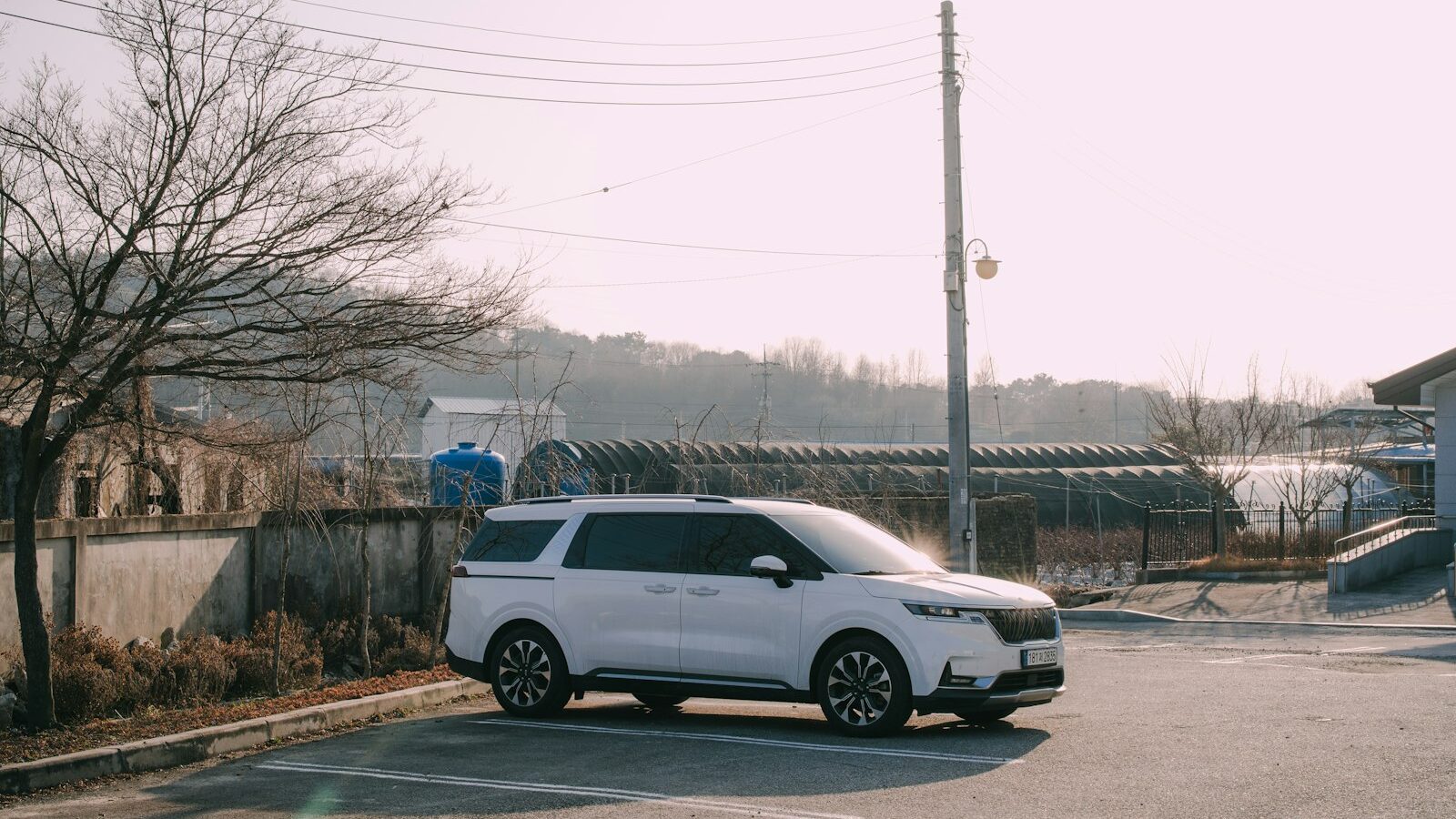
Choosing a family MPV in Singapore usually comes down to one honest question: do you really need all seven seats, or do you need one very flexible car? Growing families, weekend trips across the Causeway, and ferrying grandparents to lunch all push people towards a bigger vehicle. Before you sign anything, it helps to look past the showroom sparkle and think about how your household actually moves through a normal week.
This is a general guide to help you shop sensibly. It is not financial advice, and every family has different needs, so treat the points below as a checklist rather than a verdict.
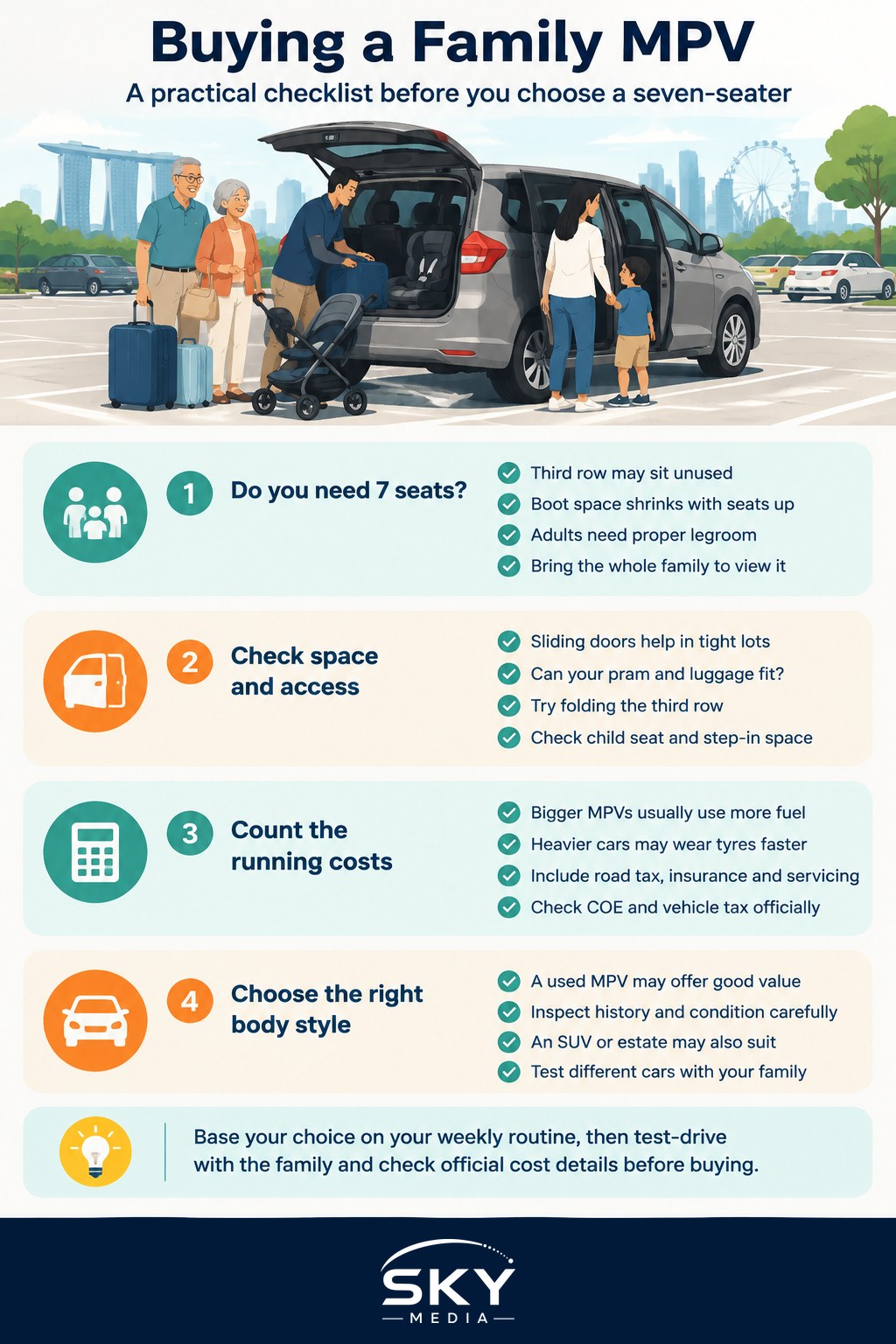
Do You Actually Need Seven Seats
Plenty of buyers are drawn to a seven-seater and then use the third row only a handful of times a year. That is fine, but be clear about the trade-off. Third-row seats often eat into boot space when they are up, and folding them away every time gets tiresome. Ask yourself how often you will carry more than five people at once, and whether a roomy five-seater with a large boot might serve you better.
If you regularly move a full house, do the extended family school run, or travel long distances with luggage, the extra row earns its keep. Think about the people who will sit there too. Adults and older children need proper legroom and easy access, while a rear-facing child seat may only fit comfortably in certain rows. If you can, bring the whole family to a viewing and sit everyone in at once.
Space, Access and Everyday Practicality
An MPV lives or dies on the small details. When you view a car, check these things in person rather than trusting the brochure:
- Sliding doors versus normal doors. Sliding doors are a real bonus in tight HDB carpark lots, where a swinging door can catch the car beside you.
- Boot room with all seats up. Measure whether a pram, a week of groceries, or airport luggage will actually fit.
- Seat folding. Try folding the third row yourself. Some are heavy and awkward.
- Isofix points and seat width for child seats.
- Step-in height for elderly passengers who may struggle with a tall floor.
Getting in and out matters more than you expect. If you help older parents or wrangle toddlers daily, easy access can quietly make the car far more pleasant to own. Our hot, wet climate also means a strong air-conditioning system with rear vents is worth checking, so passengers in the back are not left sweltering in a jam.
Counting the Real Running Costs
A bigger vehicle usually means a bigger appetite. Larger MPVs tend to use more fuel, and heavier cars can be harder on tyres and brakes over time. None of this should scare you off, but it should go into your sums. Look at the full picture, including road tax, insurance, servicing, and depreciation, not just the monthly loan figure.
COE is the elephant in every Singapore car decision. Bigger, more powerful MPVs often fall into a different COE category from smaller family cars, which can affect what you pay. Rather than trusting any number you read online, check current COE details and vehicle tax on OneMotoring and the LTA website before you commit. If you want to understand the moving parts, our guide to the cost of owning a car in Singapore walks through the main line items, and understanding vehicle categories A and B explains how engine size and power can shape your COE.
New, Used or a Different Body Style
You do not have to buy new. A well-kept used MPV can offer a lot of space for the money, though you should inspect it carefully and check its history, since family cars often lead hard lives. If you are weighing your options, new versus used car in Singapore lays out the trade-offs clearly.
It is also worth asking whether an MPV is even the right shape. A large SUV or a spacious estate might suit families who rarely fill the third row but want easier styling or a nicer drive. Test both if you can. Sit in them, load them up, and imagine a rainy Monday morning rather than a quiet showroom.
A Sensible Way to Decide
Take your time and shop with your real routine in mind. Note how many people you carry on a typical week, how much boot space you truly use, and how far you drive. Then match a car to that, not to the biggest badge on the forecourt.
Before you buy, take a proper test drive with the family aboard, inspect any used vehicle thoroughly, and confirm all current COE, road tax and insurance figures with official sources such as OneMotoring, the LTA, and your insurer. A family MPV can be one of the most useful cars you ever own, as long as it fits the life you actually lead rather than the one on the brochure.
Frequently Asked Questions
Is a sliding-door MPV better than a normal-door SUV for a young family? Sliding doors make it easier to load children and car seats in tight carpark spaces without hitting the next car. A SUV may suit you if you rarely use a third row. Compare both by loading your actual family.
Can a seven-seater fit three child seats across the second row? It depends on the width of the seats and the child seats themselves, so test it with your own. Check the Isofix points and measure before buying. Bring the seats to the viewing.
What do I check when buying a used MPV? Ask for service records and the vehicle’s history, inspect sliding doors, seats and air-conditioning, and look for signs of heavy use. Have an independent workshop inspect it. Used family cars often lead hard lives.
Is a seven-seater more expensive to insure and run? It can be, because larger vehicles often use more fuel and may cost more to service and insure. Get quotes from insurers and check road tax with LTA and OneMotoring. Your own costs depend on the model and how you drive.
What alternatives are there to buying a seven-seater? Options include a large five-seater with a big boot, an SUV, an estate, or occasionally renting a larger vehicle for trips. Think about how often you really carry more than five. Occasional rentals can cost less than owning one all year.