

When you start shopping for a car here, the topic of vehicle categories and COE in Singapore quickly comes up, usually in the form of Category A and Category B. These categories decide which pool of Certificates of Entitlement your car competes for, and that can have a real effect on price. Understanding the difference helps you shop smarter and avoid nasty surprises at the showroom.
This is general information to explain how the categories work. It is not financial advice, and the exact rules and figures can change, so always confirm current details with official sources before you buy.
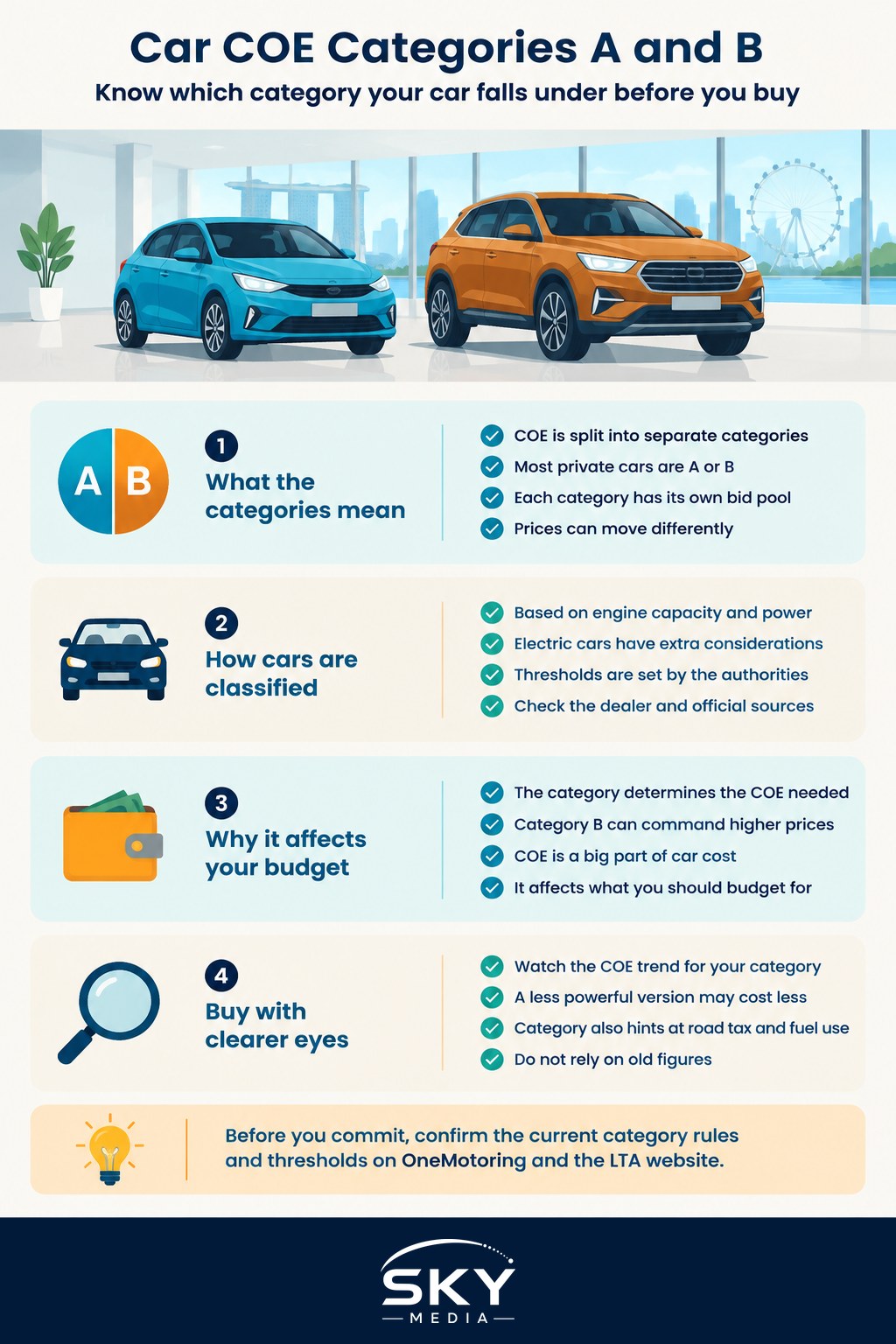
What the COE Categories Are
COE in Singapore is split into several categories, and cars fall mainly into two of them, commonly known as Category A and Category B. Each category has its own separate pool of certificates, and buyers bid within their category. Because the categories are bid for independently, their prices can move differently from one another.
In broad terms, Category A is intended for smaller and less powerful cars, while Category B covers larger and more powerful ones. There are also other categories in the wider system, including one for goods vehicles and buses and an open category, but for most private car buyers the choice comes down to whether a car sits in Category A or Category B. To see how the categories fit into the overall system, our guide to COE explained gives the full picture.
How a Car Is Placed in a Category
The split between Category A and Category B is based on the car’s characteristics, typically things like engine capacity and power output, and there are additional considerations for electric cars given they have no conventional engine. The precise thresholds that separate the two are set by the authorities and can be revised over time, which is exactly why you should never rely on old figures.
What this means in practice is that two cars that look similar can end up in different categories if one is more powerful than the other. A car near a threshold is worth checking carefully, because slipping from one category into another can change which COE it needs. When you are looking at a specific model, ask the dealer which category it falls under, and verify the current category rules and thresholds on OneMotoring and the LTA website.
Why the Category Affects Your Wallet
The category matters because it determines which COE your car requires, and the two categories often carry different prices. Category B, covering larger and more powerful cars, has at times commanded higher COE prices than Category A, though the gap between them changes with demand. Since COE forms such a large share of a car’s total cost in Singapore, the category can meaningfully shift your budget.
This connects directly to how you plan a purchase. A few practical points:
- Budgeting. Knowing the category tells you which COE trend to watch when you plan your spending.
- Model choice. If you are flexible, a slightly less powerful version of a car might sit in a different, potentially cheaper category.
- Running costs. Category is tied to size and power, which also relate to road tax and fuel use, so it hints at broader ownership costs.
If you want to think through the wider expenses, the cost of owning a car in Singapore sets out the main components clearly.
Timing, Categories and Buying Sensibly
Because Category A and Category B prices move on their own schedules, watching the right one matters. There is little point tracking Category B trends if the car you want sits in Category A. Pair this with a sensible approach to when you buy, which our guide to timing your car purchase with COE covers in more depth.
Do not base decisions on any specific COE price or threshold you read second-hand, since these figures change regularly. The reliable move is to check the latest category rules, thresholds and COE results directly on OneMotoring and the LTA website, which are the official sources.
Putting It All Together
Understanding vehicle categories takes a lot of confusion out of car buying. Once you know whether your chosen car sits in Category A or Category B, you know which COE it needs, which price trend to follow, and roughly where it falls on the size and power scale. That makes budgeting far more realistic.
Before you commit to any car, confirm its exact category, the current thresholds, and the latest COE and road tax figures with OneMotoring and the LTA. Armed with that, you can shop with clear eyes and choose a car that fits both your needs and your budget.
Frequently Asked Questions
Which category is a hybrid or electric car in? Electric cars are placed using different considerations from petrol cars because they have no conventional engine, and the rules can change over time. Ask the dealer which category the exact model falls under. Then confirm the current rules on OneMotoring or LTA.
Can the same car model fall into different categories? Yes, different variants of one model can land in different categories if their power or engine specifications differ. A more powerful version may need a different COE from the base version. Always ask about the exact variant you are buying, not just the model name.
Is Category A always cheaper than Category B? Not always, although Category B has at times cost more because it covers larger and more powerful cars. The gap shifts with demand in each category. Check the latest results for both on OneMotoring or LTA rather than assuming.
How do I find out which category my car needs? Ask the dealer for the category in writing, then verify it against the current rules on OneMotoring and LTA. The decision rests on the car’s engine capacity and power, plus special treatment for electric cars. Do this before you pay any deposit.
Is choosing a lower-powered variant just to get a cheaper category worth it? Only if you are happy with the car’s performance and the saving still holds when you compare actual COE results. A cheaper category helps the budget, but a car that feels underpowered may disappoint you for years. Test drive the lower variant before deciding.
Official sources: OneMotoring
Further reading: Understanding COE Categories C, D and E in Singapore