

Gold has a long hold on savers, and many newcomers arrive already comfortable with the idea of keeping some wealth in metal. Singapore is one of the more welcoming places to do it, with established dealers, clear rules and a reputation as a safe hub for precious metals. Buying gold in Singapore is fairly straightforward once you know the formats, the costs and how to store it safely. This is general information, not financial advice. Gold can rise and fall in price, so capital is at risk, and it should be one part of a plan rather than the whole of it. Always check current prices and terms with the dealer.
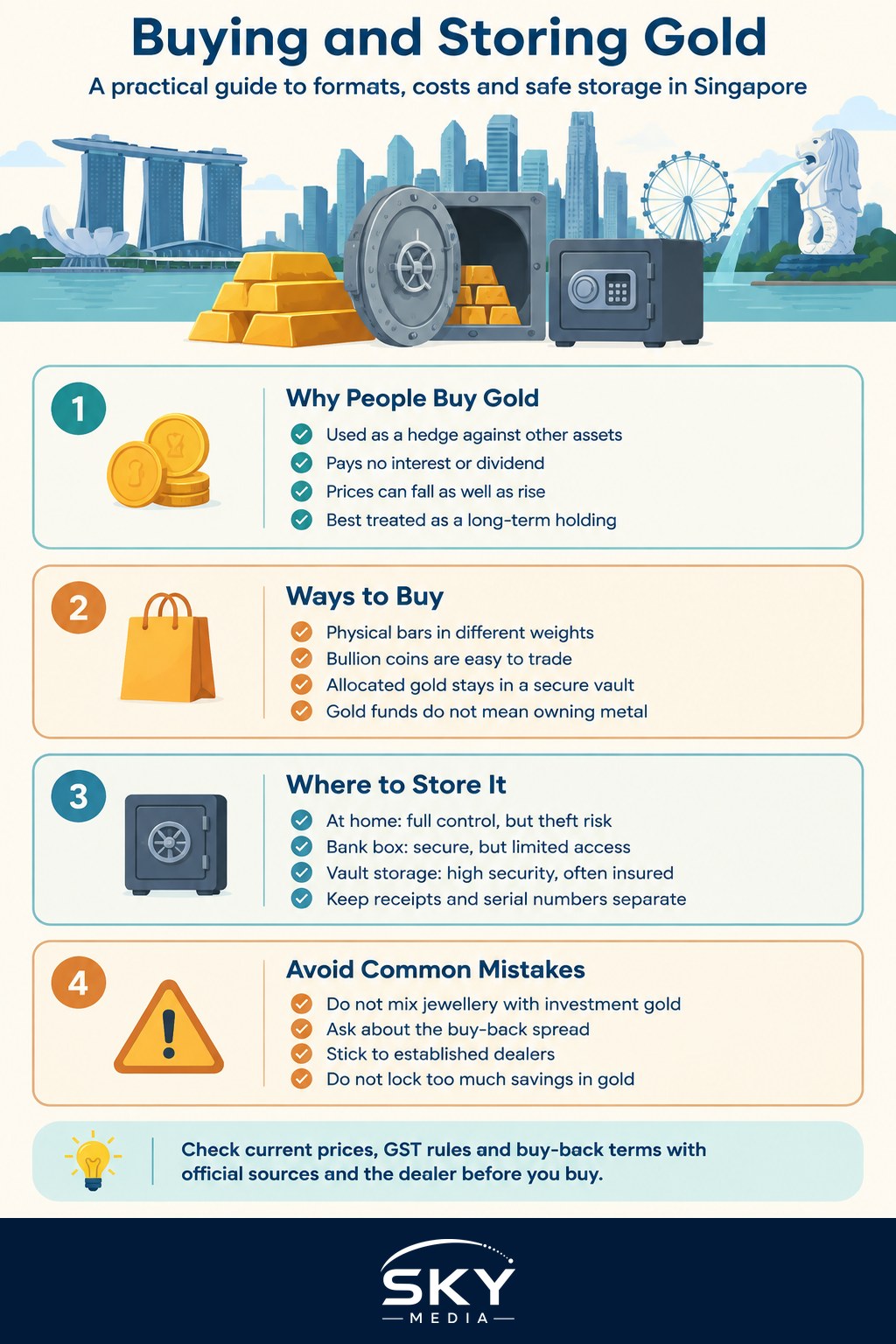
Why People Hold Gold, and What to Expect
Gold is often used as a hedge, a way to hold value that does not move in step with shares or cash. It pays no interest and no dividend, so it earns nothing while it sits. Its appeal is stability of a kind and the comfort of holding something tangible, not growth. That trade-off is worth understanding before you buy.
A few realistic expectations help:
- Prices move. Gold can fall as well as rise, sometimes for years. Do not treat it as a guaranteed store of gains.
- You pay a premium over the spot price. The dealer’s price includes a margin above the raw metal value, and you sell back at a slightly lower price. That spread is a real cost.
- It is a long-term holding for most people. Frequent buying and selling eats into returns through spreads and fees.
Investment-grade gold in Singapore has a helpful advantage: qualifying Investment Precious Metals are exempt from Goods and Services Tax, unlike jewellery or ornamental gold. The exact criteria are set by the tax authority, so confirm what qualifies before assuming a purchase is exempt.
The Main Ways to Buy
There is no single right format. Your choice depends on how much you are investing, how you want to store it and how easily you want to sell later.
- Physical bars. Available in a range of weights, from small grams to larger bars. Bigger bars carry a lower premium per gram but are harder to sell in part.
- Bullion coins. Government-minted coins are widely recognised and easy to trade, though they usually carry a higher premium than bars.
- Allocated or vaulted gold. You own specific metal held for you in a secure vault, sometimes bought online, without taking it home.
- Gold savings accounts or unit trusts. You gain exposure to the gold price without holding metal yourself. These are financial products with their own risks and fees, and some are not the same as owning physical gold.
Stick to reputable, established dealers. Look for membership of recognised industry bodies, refiners accredited by the London Bullion Market Association (LBMA), transparent pricing and clear buy-back terms. If you are weighing gold against other ways to use spare cash, it can sit alongside choices like topping up your CPF for tax relief in Singapore as part of a broader plan.
Storing Gold Safely
Owning gold is easy. Keeping it safe is the part people underestimate. You have three broad options, each with trade-offs.
| Storage option | Upside | Watch out for |
|---|---|---|
| At home | Full control, no ongoing fee | Theft and loss risk, insurance gaps |
| Bank safe deposit box | Secure, private | Availability is limited, annual fee, access hours |
| Professional vault storage | High security, often insured | Ongoing storage fee, you rely on the operator |
If you keep gold at home, be discreet, use a proper safe bolted down, and check whether your home insurance actually covers precious metals, since many policies limit or exclude them. For larger holdings, professional vaulting or a bank box is usually worth the fee for the security and, in many cases, the insurance that comes with it. Keep your receipts, certificates and serial numbers somewhere separate from the gold itself, because you will need them to sell and to prove ownership.
Common Mistakes Newcomers Make
A few avoidable errors trip people up:
- Confusing jewellery with investment gold. Ornamental gold carries high making charges and is not priced for investment. It is not the same as a bullion bar or coin.
- Ignoring the buy-back spread. Always ask what the dealer will pay you to sell it back today. That tells you the true cost of getting in and out.
- Buying from unfamiliar sellers. Online marketplaces and informal sellers carry counterfeit and fraud risk. Stick to established dealers with a physical presence.
- Overcommitting. Gold pays nothing while you hold it. Keeping too much of your savings in metal can leave you short of accessible cash.
- Forgetting the paperwork. Lost certificates and receipts make selling harder and can dent the price you get.
Take your time, compare a couple of dealers and start small while you learn how it works.
Where to Check the Rules and Prices
Because prices, premiums and tax criteria change, always confirm the current position with an authoritative source:
- The Inland Revenue Authority of Singapore (IRAS) publishes the criteria for Investment Precious Metals and the related GST treatment.
- Financial products linked to gold fall under the Monetary Authority of Singapore (MAS), the regulator, and the MoneySense programme offers neutral guidance on investing.
- The dealer or vault operator is your source for live prices, premiums, buy-back terms and storage fees.
Gold can be a steadying part of a savings plan when bought sensibly and stored securely. Treat it as one tool among several, keep enough of your money accessible, and lean on official sources rather than tips when the figures matter.
Explore more: topping up your CPF for tax relief in Singapore, understanding income tax reliefs and deductions in Singapore, and credit card rewards and miles for newcomers in Singapore.
Frequently Asked Questions
How much gold should I hold as a share of my savings? There is no right percentage, and it depends on your goals and risk tolerance. Gold pays no interest and its price can fall for years, so avoid putting too much in it. Keep enough accessible cash, and ask a licensed adviser if you want tailored guidance.
Is it better to buy gold bars or gold coins? Bars usually carry a lower premium per gram, especially larger ones, but are harder to sell in part. Government-minted coins are widely recognised and easy to trade, though the premium is often higher. Choose by budget and how you plan to sell.
How do I check that a gold dealer is legitimate? Look for an established dealer with a physical presence, transparent pricing and clear buy-back terms, and refiners accredited by the London Bullion Market Association. Avoid informal online sellers, which carry counterfeit and fraud risk, and keep every receipt and certificate.
Do I pay tax when I sell gold at a profit? Singapore does not generally tax capital gains, but whether your activity could be treated as a trade depends on the facts. Check IRAS for the latest guidance, and speak to a tax professional if you buy and sell frequently or in large amounts.
Is gold jewellery a good way to invest in gold? Usually not. Jewellery carries making charges and is priced as an ornament, so you rarely recover that cost on resale. Bullion bars or coins are priced for investment. Enjoy jewellery for its beauty, and buy bullion if value storage is the goal.
Further reading: Gold and Commodities: A Beginner’s Guide