
Gold gets most of the attention, but silver has its own following among Singapore investors. It is far cheaper per ounce, so you can start small, and it has a long history as both money and an industrial metal. If you want to buy silver in Singapore, though, you need to understand how it differs from gold: wider dealer spreads, more storage space, sharper price swings and specific GST rules. This guide walks through the practical side.
This is general information, not financial advice. Precious metal prices can fall as well as rise, and silver can be especially volatile. Consider your own goals and, if needed, speak to a licensed financial adviser.
Why People Hold Silver
Investors buy physical silver for a few common reasons:
- Diversification. Precious metals do not always move with shares or bonds.
- Tangible ownership. You hold the metal itself, not a promise from a company.
- Lower entry price. A single silver coin costs a fraction of a gold coin of the same weight.
- Industrial demand. Silver is used in electronics, solar panels and medical products, so demand is linked to manufacturing as well as investment.
That industrial link is a double-edged sword. Silver prices can rise and fall more sharply than gold during economic cycles, and it pays no interest or dividends. Most people who hold it treat it as a small part of a broader portfolio rather than the main event.
Bars, Coins and Paper Silver Compared
| Option | What you get | Pros | Watch out for |
|---|---|---|---|
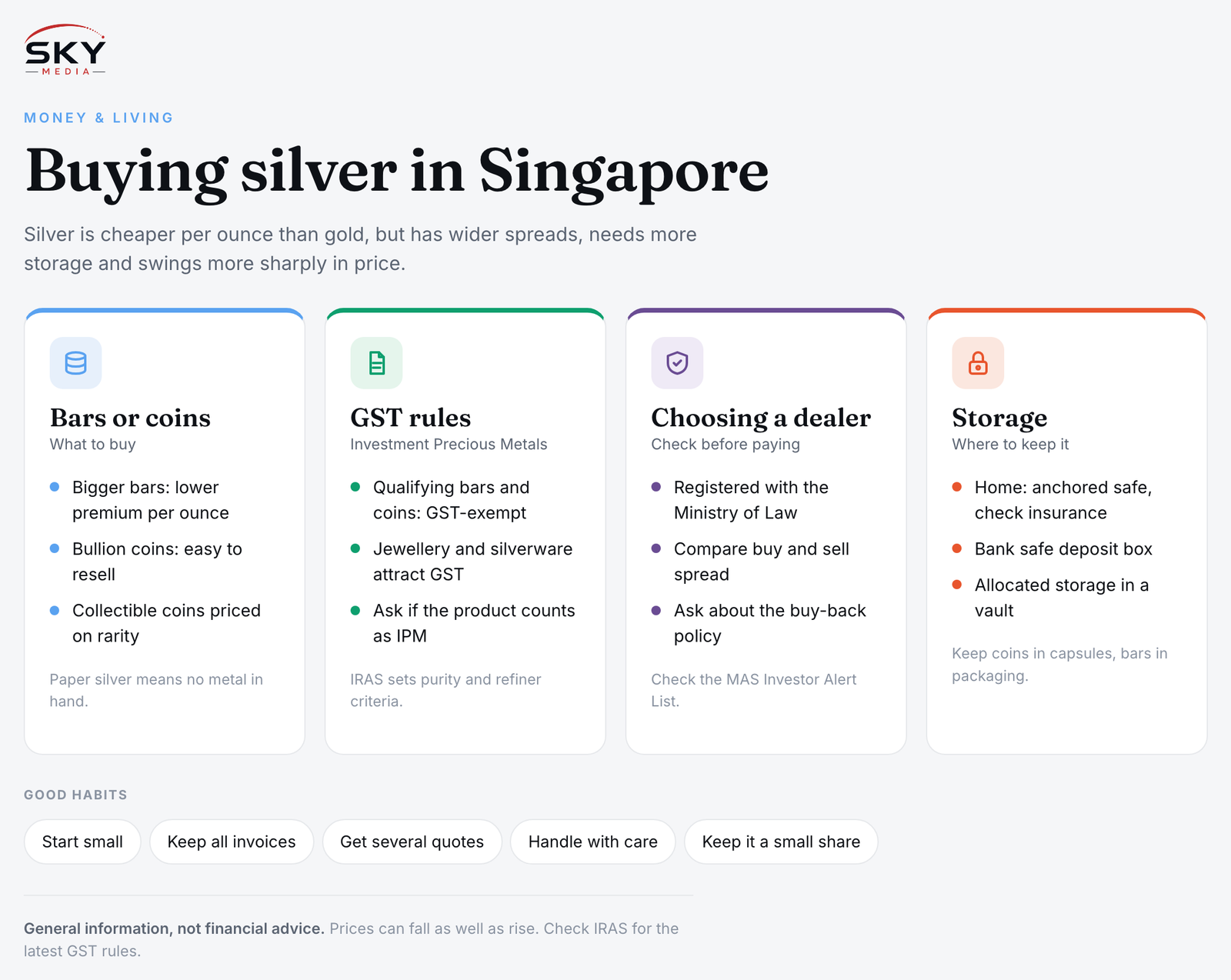
| Silver bars | Bars from small sizes to large kilo bars | Lower premium per ounce for larger bars | Bulky to store, harder to sell in part |
| Bullion coins | Government-minted coins of known weight and purity | Widely recognised, easy to resell, divisible | Higher premium than bars |
| Collectible or numismatic coins | Limited editions, proof coins, older coins | Rarity can add value for collectors | Priced on rarity, not metal; may attract GST |
| Paper silver (accounts, funds) | Exposure to silver price without holding metal | No storage, easy to trade | Counterparty and fund risks; no physical metal in hand |
For pure investment, many buyers favour widely recognised bullion coins or bars from well-known refiners, which are easier to resell to dealers. If you enjoy coins as objects, that is a different hobby; our piece on collecting stamps and coins covers that side.
How GST Applies to Silver in Singapore
Singapore exempts qualifying Investment Precious Metals (IPM) from GST. Under the rules set by IRAS, the Inland Revenue Authority of Singapore, gold, silver and platinum that meet specific purity and form requirements, such as bars, wafers and certain coins from recognised refiners or mints, can be sold without GST.
In practice:
- Investment-grade silver bars and qualifying bullion coins of the required purity are generally GST-exempt.
- Silver jewellery, silverware and decorative items are not IPM and attract GST.
- Collectible coins and lower-purity items may not qualify and could attract GST.
The detailed criteria, including purity levels and the accepted refiners, are set out on the IRAS website and can change. Before buying, ask the dealer whether the specific product is treated as IPM and check that the invoice reflects this.
Choosing a Dealer
Singapore has a range of precious metal dealers, from specialist bullion shops to banks and online sellers. Dealers in precious stones and precious metals must be registered with the Ministry of Law under anti-money laundering rules, so check that a dealer is registered before you hand over money.
What to compare:
- Buy and sell spread. The difference between what the dealer charges you and what it would pay to buy back the same item. Silver spreads are usually wider than gold, so price moves need to be bigger before you profit.
- Premium over spot price. Small bars and coins carry higher premiums per ounce than larger bars.
- Buy-back policy. Does the dealer buy back what it sells, and on what terms?
- Product sourcing. Prefer products from recognised refiners and mints with clear markings.
- Payment and identity checks. Large purchases may require identification under anti-money laundering rules; this is normal.
Be wary of offers that sound too good, such as silver below market price, guaranteed returns or “storage schemes” promising high yields. Check the MAS Investor Alert List for unregulated entities, and remember that genuine dealers will not pressure you to decide immediately.
Storage: Home, Safe Deposit Box or Vault
Silver is bulky. The same dollar amount of silver takes up much more space than gold, so storage needs planning.
- At home. Convenient but risky. Use a well-anchored safe and do not advertise your holdings. Check whether your home contents insurance covers bullion, as many policies limit or exclude it.
- Bank safe deposit box. Availability is limited and there are often waiting lists. Contents are usually not insured by the bank, so ask about separate cover.
- Professional vaults. Some dealers and specialist vault operators offer allocated storage, where specific bars are held in your name. Read the agreement carefully: check whether storage is allocated or unallocated, how it is insured, what fees apply and how you can withdraw.
Handle silver with care. Silver tarnishes over time, and while tarnish does not change the metal content, scratches, dents or missing packaging can reduce what a dealer pays. Keep coins in their capsules and bars in their original packaging with any certificates. Unlike damaged notes, which you can exchange through official channels, bullion has no such safety net.
Selling and Record Keeping
- Keep all invoices showing what you paid, when and from whom.
- Get quotes from more than one dealer when selling, as buy-back prices vary.
- Expect the dealer to inspect items and possibly test them.
- Gains from personal investment in precious metals are generally not taxed in Singapore, but trading frequently or as a business can change that. Check with IRAS if you are unsure.
A Sensible Approach for First-Time Buyers
Start small, perhaps with a few widely recognised bullion coins, so you learn how buying, storing and pricing work before committing more. Decide in advance what share of your savings you are comfortable holding in a volatile metal, and keep emergency savings and CPF-related planning separate. Silver can be a useful diversifier, but it works best as one piece of a balanced plan.
Frequently Asked Questions
Is silver GST-free in Singapore? Qualifying investment-grade silver bars and bullion coins of the required purity are generally GST-exempt as Investment Precious Metals. Silver jewellery, silverware and collectible coins may attract GST. Ask the dealer about the specific product, and check the IRAS website for current criteria.
Why is the buy-sell gap wider for silver than gold? Silver spreads are usually wider than gold, so price moves need to be bigger before you profit. Small bars and coins also carry higher premiums per ounce than larger bars. Compare spreads, premiums and buy-back terms across dealers before buying.
Does home insurance cover silver bars kept at home? Many home contents policies limit or exclude bullion, so check the policy wording or ask the insurer. At home, use a well-anchored safe and do not advertise your holdings. Bank safe deposit box contents are usually not insured by the bank either.
Are gains from selling silver taxed in Singapore? Gains from personal investment in precious metals are generally not taxed in Singapore, but trading frequently or as a business can change that. Check with IRAS if you are unsure, and keep invoices showing what you paid, when and from whom.
How do I tell if a silver dealer is legitimate? Dealers in precious metals must be registered with the Ministry of Law under anti-money laundering rules, so confirm registration before paying. Be wary of silver below market price, guaranteed returns or high-yield storage schemes, and check the MAS Investor Alert List.
Further reading: Gold and Commodities: A Beginner’s Guide