
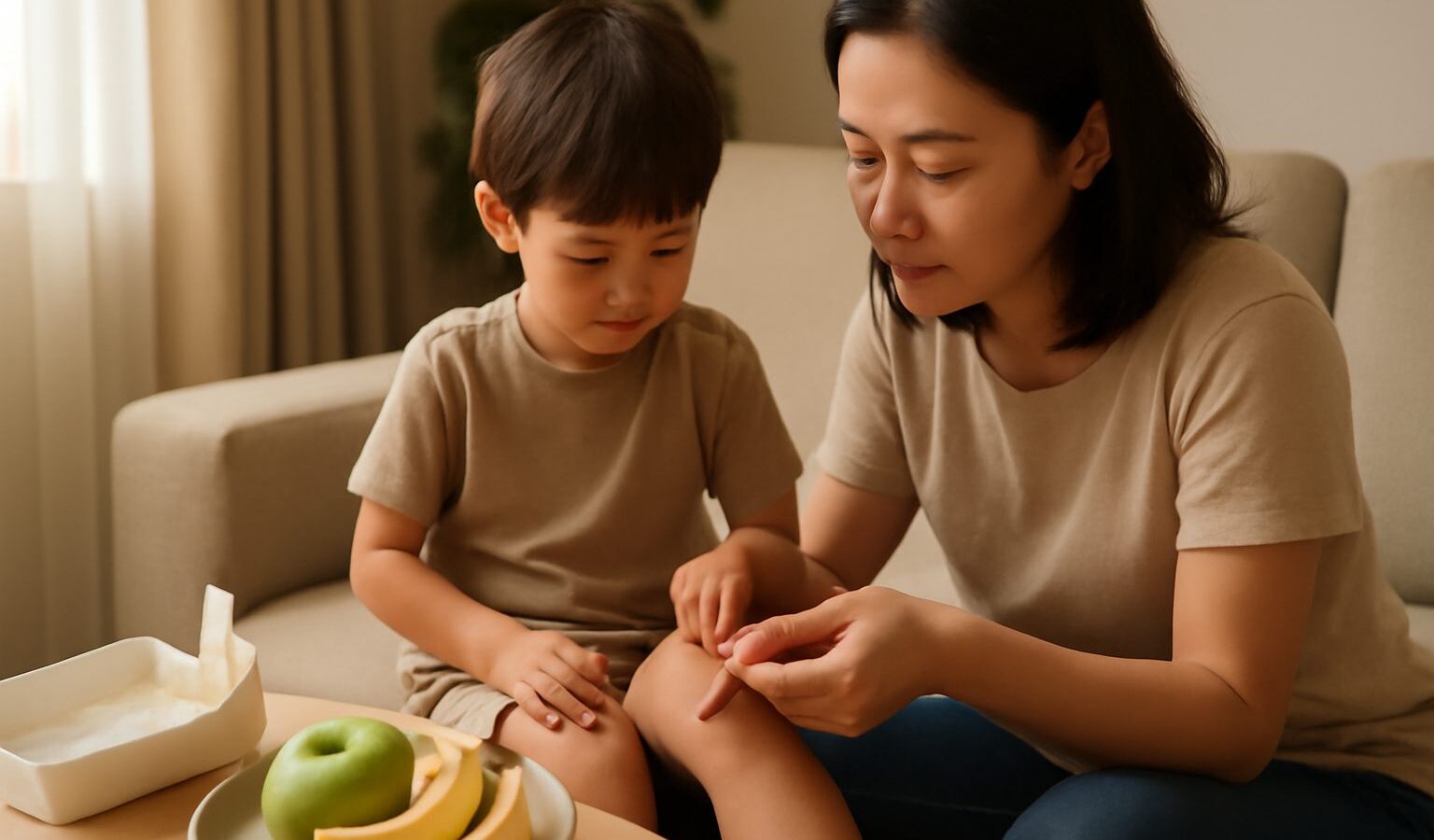
Scraped knees and grazed palms are practically a rite of passage for active children, from tumbles at the playground to falls off a bicycle at the void deck. Most are minor and heal well with simple care at home. Knowing how to handle child cuts and grazes in Singapore calmly and hygienically means you can clean the wound properly, keep it protected, and spot the rare occasion when it needs more than a plaster. This is general first-aid information, not medical advice. For anything serious, deep, or worrying, seek medical help, and for emergencies call 995 or go to A&E.
Simple First Aid for Minor Wounds
For a small cut or graze where your child is otherwise well, a calm, step-by-step approach works best. First, reassure your child, as a gentle, steady manner helps far more than fussing. Wash your own hands if you can before touching the wound.
The general steps are:
- Stop any bleeding by pressing gently on the wound with a clean cloth or gauze for a few minutes. Most minor cuts stop bleeding fairly quickly.
- Clean the wound by rinsing it under clean running water to wash away dirt, grit, and sand, which is common after a fall outdoors. Gently pat the surrounding skin dry.
- Cover the wound with a clean plaster or sterile dressing to keep it protected and clean, particularly for younger children who touch everything.
- Change the dressing if it gets wet or dirty, and keep the area clean while it heals.
In our hot, humid weather, children sweat and dressings can loosen, so check the wound daily and replace the covering as needed. A minor graze often heals within a week or so. Try not to pick at scabs, as they are part of the natural healing process. Keeping the wound clean and covered is usually all that a small cut or graze needs.
It is also worth keeping a simple, well-stocked first-aid kit at home and in your bag, with plasters in a few sizes, sterile gauze, and a clean cloth. Our guide to family first aid and emergency preparedness covers what to include, and childproofing your home in Singapore can help reduce the tumbles in the first place.
Watching for Infection
Because our climate is warm and humid, wounds can sometimes become infected as they heal, so it helps to keep an eye on how a cut or graze is coming along. Signs that a wound may be getting infected, and that you should see a doctor, include:
- Increasing redness, swelling, warmth, or pain around the wound, especially if it spreads.
- Pus or a cloudy discharge, or an unpleasant smell.
- The wound not healing, or seeming to get worse after a few days.
- Red streaks spreading out from the wound.
- Your child developing a fever or feeling generally unwell.
If you notice any of these, book an appointment with your doctor, who can assess the wound and advise on treatment. Infected wounds are treatable, but they do need proper attention rather than waiting to see if they improve. Do not apply any medicine or ointment beyond simple first aid without professional advice.
When to Seek Medical Help
Most cuts and grazes are minor, but some need more than home first aid. See a doctor or go to a clinic or A&E if:
- The cut is deep, gaping, or has edges that do not come together, as it may need closing.
- Bleeding is heavy or does not stop after pressing firmly for several minutes.
- The wound is on the face or near the eye, or it is large.
- There is dirt, glass, or grit you cannot rinse out, or something is stuck in the wound.
- The cut was caused by a dirty or rusty object, an animal or human bite, or a puncture, as these carry a higher infection risk.
- You are unsure whether your child’s tetanus protection is up to date, which a doctor can check.
For serious bleeding that will not stop, a very deep wound, or any situation where your child is badly hurt, call 995 or go straight to A&E. When you are weighing up where to go for a less urgent injury, our guide to when to take your child to A&E vs GP can help you decide.
A Practical Wrap-Up
For everyday cuts and grazes, the routine is reassuringly simple: stay calm, stop the bleeding, clean the wound under running water, cover it, and keep it clean while it heals. Watch for signs of infection in the days that follow, and seek medical help for deep, dirty, or serious wounds, or if anything worries you. A little preparation and a stocked first-aid kit mean you can handle most childhood scrapes with confidence.