

The samoyed is one of the most striking dogs you can meet, a smiling, snow-white cloud of fluff bred to work in the freezing Arctic. That beauty is exactly why owning a samoyed in Singapore demands honesty from the start. This is a heavy double-coated northern breed built for the cold, and our steady heat and high humidity are genuinely hard on it. If you already share your home with one, or are seriously considering it, this guide covers the cooling, grooming, exercise and health awareness that keep a samoyed comfortable here. It is general information, not veterinary advice, so please see a licensed vet who knows your dog for anything specific.
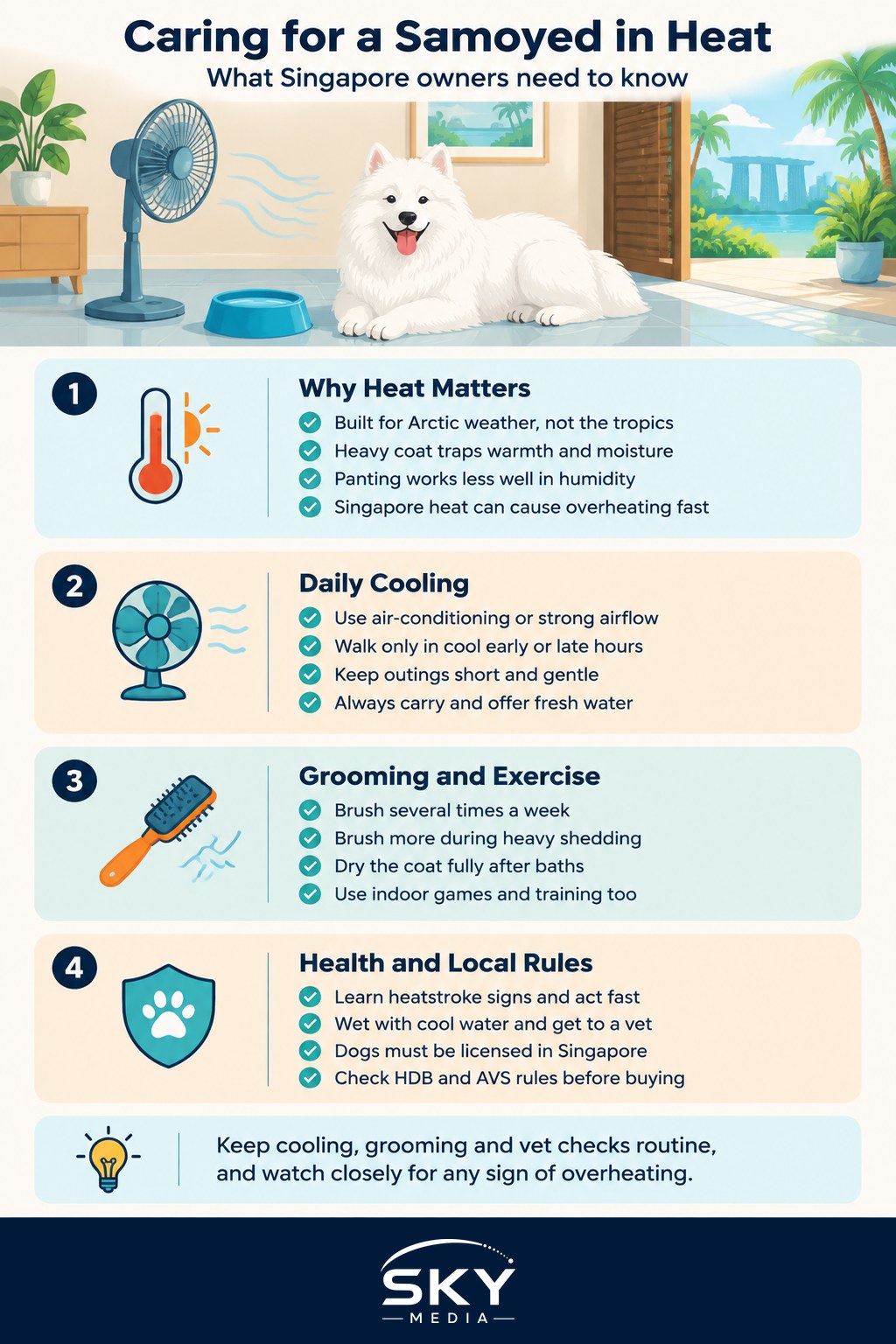
Be Honest: A Northern Breed in the Tropics
Samoyeds were developed to pull sleds and herd reindeer in sub-zero temperatures. Their thick double coat, a dense insulating undercoat beneath a longer outer coat, traps warmth against the body. That is wonderful in the Arctic and a serious liability in Singapore, where the air is warm and heavy with moisture almost every day of the year.
A double-coated dog cannot shed heat easily. Dogs cool mainly by panting, and in our humidity that panting works less well because moisture-laden air slows evaporation. The result is a breed that struggles in this climate and is at real risk of overheating. Be honest with yourself before committing: a samoyed is a demanding dog to keep here, needs a home that can keep it genuinely cool, and is not suited to an owner who cannot provide that. This is a serious, long-term responsibility, not a fashion choice.
Keeping a Samoyed Cool
If a samoyed shares your home, heat management is the single most important part of daily care. Build your whole routine around keeping the dog cool.
- Keep the dog in air-conditioning or strong airflow during the hot daytime hours, and give access to cool tiled floors and shade.
- Walk only in the coolest parts of the day, very early morning or late at night, and keep outings short and gentle.
- Do the pavement test with the back of your hand before every walk, and turn back at the first sign of hard panting.
- Always carry water, offer it often, and keep fresh water available at home at all times.
- Consider a cooling mat, and never over-exercise the dog in the heat.
Two rules are absolute. Never leave a samoyed in a parked car, not even for a moment with a window cracked, because the interior becomes an oven within minutes and is especially deadly for a heavily coated dog. And never assume a fan alone is enough on a very hot, humid day.
Do not shave the double coat in an attempt to cool the dog. The coat also insulates against heat and protects the skin from sun, and shaving can interfere with how it regrows and how the dog regulates temperature. Ask your vet or a groomer experienced with double coats before making any drastic decision.
Grooming, Exercise and Diet
The samoyed coat needs serious, regular grooming. Brush several times a week, and more during heavy seasonal shedding, to remove loose undercoat and prevent mats close to the skin, which trap heat and moisture and can cause skin problems in our humidity. Dry the coat completely after any bath. Professional grooming from someone who understands double coats is a real help.
Samoyeds are intelligent, energetic and were bred to work, so they need mental stimulation and gentle exercise, which is a genuine challenge when the safe outdoor window is so narrow. Use the cool hours for walks, and provide indoor enrichment and training games to keep the mind busy without overheating the body.
Feed measured meals of good-quality food and keep the dog lean, as extra weight makes heat even harder to handle. Some human foods are toxic to dogs, including chocolate, grapes and raisins, onion and garlic, caffeine and xylitol, so keep them away and change any diet gradually with your vet. Avoid invented nutrition figures.
| Situation | What you can manage | Straight to an emergency vet |
|---|---|---|
| Mild panting that settles quickly in cool air | Rest in air-conditioning, offer water | Not needed unless it worsens |
| Heavy panting that will not slow after cooling | Begin cooling, watch closely | Yes, phone ahead and go |
| Bright red or bluish gums, thick drool | Start cooling on the way | Yes, this is urgent |
| Stumbling, vomiting, collapse or seizure | Cool while travelling | Yes, immediately, do not wait |
Health, Rules and Choosing Responsibly
Learn the signs of heatstroke and treat it as the emergency it is: frantic or laboured panting, a bright red or bluish tongue and gums, thick ropey drool, wobbliness or confusion, vomiting, or collapse. Move the dog into cool air at once, wet the coat with cool, not iced, water over the belly and armpits, keep air moving with a fan, and get to a vet even if the dog seems to recover, because internal damage can appear hours later.
Watch for other red flags that mean get to a vet or an emergency clinic now: trouble breathing, collapse, refusing food or water, seizures, or a bloated hard abdomen. Keep up regular check-ups, and never rely on internet medicines, dosages or invented figures.
On the practical side, dogs in Singapore must be licensed, and HDB restricts which breeds and how many dogs are allowed. Check the current HDB-approved list and the rules from AVS, the Animal and Veterinary Service under NParks, before bringing any dog home. Given how demanding this breed is here, think very carefully about whether your home and lifestyle truly suit it, avoid impulse buying, consider adopting a dog better matched to our climate, and choose only a responsible, AVS-licensed source.
A samoyed gives affectionate, spirited company, but in Singapore it depends completely on you to manage the heat. Keep it cool, keep grooming up, keep walks to the coolest hours, and keep an emergency vet’s number handy. For anything about your own dog’s health or fitness for exercise in the heat, talk to a licensed vet in person.
Explore more: keeping pets cool in Singapore’s heat, caring for a Siberian husky in Singapore’s heat, emergency vet care in Singapore and choosing a dog breed for Singapore.
Further reading: Caring for an Italian Greyhound in Singapore · Caring for an Alaskan Malamute in Singapore’s Heat · Caring for a Chow Chow in Singapore’s Heat