
Intelligent, elegant and devoted, the Shetland sheepdog, or Sheltie, is a small herding dog with a big brain and a beautiful double coat, and a shetland sheepdog in Singapore needs an owner who understands both its energy and its climate challenges. Often mistaken for a miniature rough collie, the Sheltie was bred to work the cold, windswept Shetland Islands, which explains its thick double coat and its keen, busy mind. That heritage matters a great deal in our tropical heat. This honest guide covers temperament, coat and heat care, exercise, common health considerations and the local rules, so you can decide whether this is the right dog for your home. Every dog is an individual, and your own licensed vet is always your best source of advice.
Is a Shetland sheepdog right for your home?
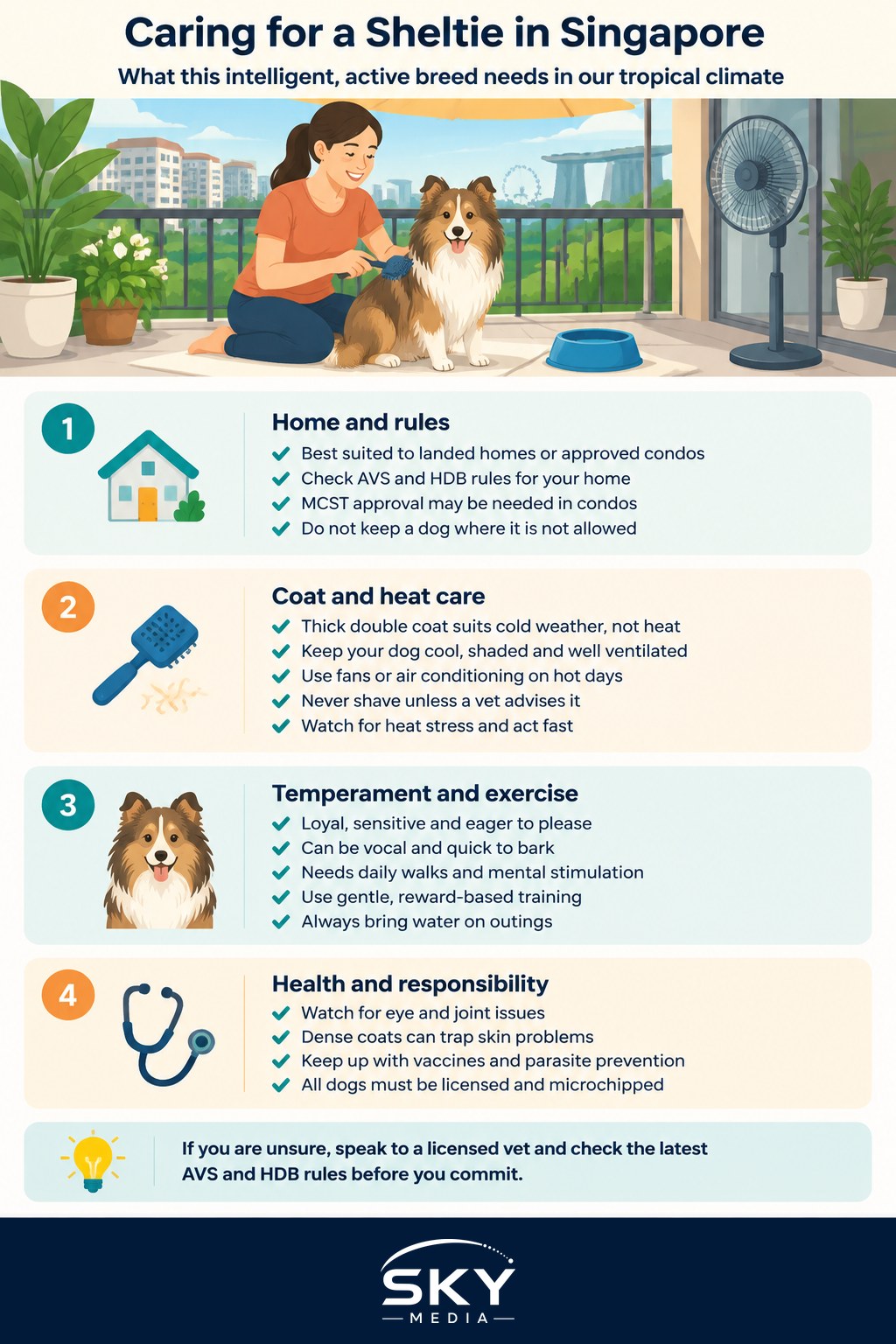
Start with space and rules. Active herding breeds like the Sheltie are generally better suited to landed homes or a condominium where you have the management or MCST’s approval, rather than a typical flat, and larger or more active dogs are often not on the HDB-approved list. Always check the current AVS (Animal and Veterinary Service, under NParks) and HDB rules for your specific home before committing, and confirm what is permitted using the HDB-approved dog breeds list rather than assuming. Never keep a dog in a home where it is not allowed.
Shelties are also known to be vocal. Their herding instinct makes them alert and quick to bark at movement and noise, which needs early, patient training to keep manageable in close living. If you cannot commit to training, grooming and daily engagement, this is not the breed for you.
The double coat and heat care
This is the heart of Sheltie care in Singapore. The breed carries a thick, double coat built for cold northern weather, which makes our heat and humidity a genuine, ongoing challenge. Double-coated breeds struggle to cool down here, so managing the environment is not optional.
Keep your Sheltie in cool, shaded, well-ventilated spaces, use fans or air conditioning on hot days, provide cool floors and constant access to fresh water, and schedule any activity for the coolest parts of the day. Do not shave the double coat unless a vet advises it, as the coat also helps regulate temperature and protect the skin. Instead, brush regularly and thoroughly, because that heavy coat mats easily and traps heat and moisture, and book professional grooming to keep it healthy. Learn the warning signs of heat stress, including heavy panting, drooling, bright red gums, wobbliness or collapse, and treat suspected heatstroke as an emergency by getting to a vet at once. Never leave a dog in a parked car. See keeping pets cool in Singapore’s heat for more.
Temperament and exercise
Shelties are typically loyal, sensitive, eager to please and highly trainable, which makes them a joy for owners who enjoy training. They bond closely with their family, can be reserved with strangers, and thrive on having something to do. A bored, under-exercised Sheltie may bark, pace or become anxious.
They need daily walks plus mental stimulation such as training games, puzzle feeders and scent work to satisfy that clever herding brain. Because they are so sensitive, gentle reward-based methods bring out their best. Keep exercise to the cooler hours given the coat, and always bring water.
Care at a glance
| Need | What to expect |
|---|---|
| Size and home | Small to medium and active, suits landed or condo homes with approval |
| Rules | Check AVS and HDB, often not on the approved list, get MCST approval if applicable |
| Coat | Thick double coat, heavy brushing, do not shave, high heat risk |
| Energy and mind | Active and very intelligent, needs daily exercise and mental work |
| Watch closely | Barking and herding instinct, manage with early training |
Common health considerations
Every breed has predispositions, though responsible breeding or adoption and good care reduce the risks, and every dog is an individual. Shelties are known to be prone to certain eye conditions and some joint issues, among others, and in our climate skin problems under a dense coat are worth watching. This is general information, not a diagnosis. Only a licensed vet can assess your dog, so keep up with vaccinations, parasite prevention, dental care and routine check-ups. See a vet promptly if anything seems wrong, and treat trouble breathing, collapse, not eating or drinking, seizures, a bloated hard abdomen or suspected heatstroke as an emergency. Our notes on common dog health issues are a useful primer.
A responsible decision
A Shetland sheepdog is a wonderful, affectionate and clever companion for the right owner, but its double coat and energy make it a demanding choice in our climate. Be honest about your space, your rules, the grooming, the heat management and the training this breed needs. All dogs must be licensed and microchipped, and sterilisation is encouraged. Please also consider adoption, and weigh it up with adopting vs buying a pet. If you can genuinely meet its needs, a Sheltie will reward you with years of loyal, loving companionship.
Frequently Asked Questions
Why does my Sheltie bark so much? Shelties are alert herding dogs, quick to bark at movement and noise. Early, patient training and daily mental work reduce it, which matters in close living where neighbours hear every bark.
Is a Sheltie the same as a miniature rough collie? No, though they look alike. The Sheltie is a separate breed developed in the cold Shetland Islands, and its thick double coat reflects that heritage. A reputable source can explain the differences, and your vet can advise on care that suits the Sheltie specifically.
Can I shave my Sheltie for the heat? Not unless a vet advises it. The double coat also helps regulate temperature and protects the skin, so regular thorough brushing and keeping the dog in cool spaces works better.
What mental games suit a Sheltie? Training games, puzzle feeders and scent work keep that clever herding brain busy. A bored, under-exercised Sheltie may bark, pace or turn anxious, so daily engagement is a must. Rotate the games so they stay fresh, and keep sessions gentle and reward-based for this sensitive breed.
Which health problems should Sheltie owners watch for? Shelties are known to be prone to certain eye conditions and some joint issues. A dense coat can also hide skin problems in humid weather, so keep up routine vet check-ups.
Further reading: Caring for a Border Collie in Singapore