
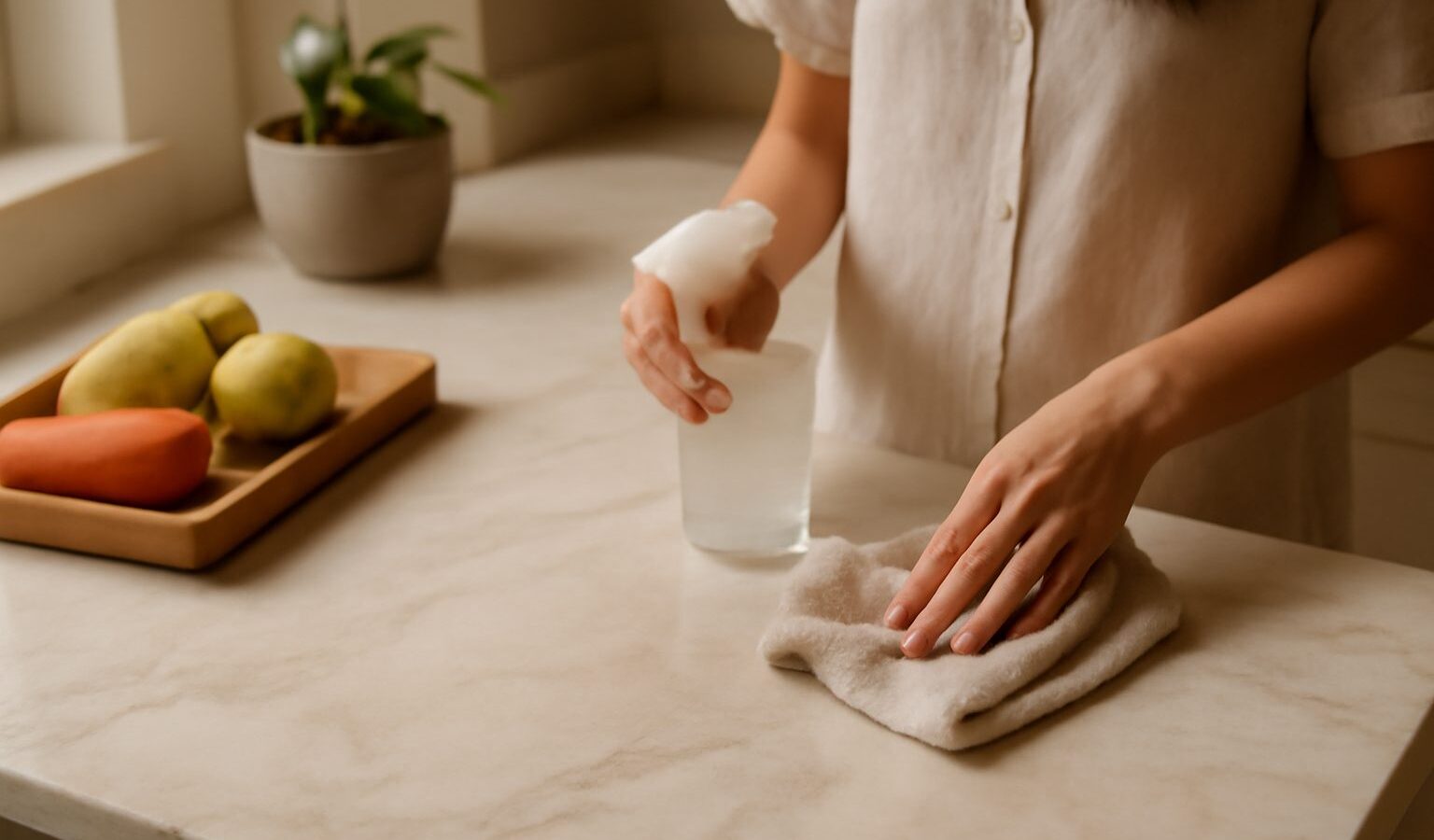
A marble or natural stone countertop gives a kitchen or vanity that cool, luxurious finish that few other surfaces match, but stone is more sensitive than it looks. Good marble countertop care in Singapore is really about understanding what your stone can and cannot handle, then building a few simple habits around it. Marble, granite, and engineered quartz all behave differently, and our warm, humid climate adds its own challenges with moisture and mould. The good news is that keeping stone beautiful does not require expensive products or fuss, just the right cleaning routine, gentle daily habits, and prompt attention when spills happen.
Know Your Stone First
Before you clean anything, work out what you actually have, because the wrong approach can dull or mark a surface permanently. The three most common worktop materials in Singapore homes behave very differently.
- Marble is a natural, porous stone that is soft and reactive. It stains easily and etches, meaning it develops dull, rough spots, whenever it meets anything acidic such as lemon, vinegar, wine, or tomato. It needs sealing and gentle care.
- Granite is a natural stone too, but much harder and denser. It resists heat and scratches well, though it is still porous and benefits from periodic sealing to keep out oil and water stains.
- Engineered quartz (brands such as Caesarstone and Silestone) is a man-made mix of ground stone and resin. It is non-porous, does not need sealing, and shrugs off most stains, but the resin can scorch under very high heat.
If you are unsure, ask your renovation contractor or supplier what was installed, or check the invoice from your kitchen fabricator. Knowing whether your surface is sealed and porous or non-porous decides your entire cleaning routine.
Daily and Weekly Cleaning
The single most important rule for stone is to wipe spills immediately, especially anything acidic or brightly coloured. On porous marble and granite, a spill left to sit is a spill soaking in. For everyday cleaning, warm water and a soft microfibre cloth handle most jobs. When you need more, use a few drops of pH-neutral dish soap or a cleaner made specifically for natural stone.
What you must avoid matters just as much:
- No vinegar, lemon, or any acidic cleaner on marble or limestone, as these etch the surface.
- No abrasive scourers, scouring powders, or magic-eraser pads, which scratch and dull polished stone.
- No generic bathroom or all-purpose sprays containing bleach or ammonia, which can strip sealant over time.
Dry the surface with a clean cloth after washing so mineral marks from our hard water do not build up. Once a week, give the whole worktop a proper wipe-down and check for any dull patches, ring marks, or spots that need attention.
Sealing and Protecting Natural Stone
Sealing is what keeps porous marble and granite resistant to stains. A sealer soaks into the stone and slows the rate at which liquids penetrate, buying you time to wipe a spill before it marks. Most natural stone worktops are sealed on installation, but the sealer wears down with use and cleaning, so it needs refreshing periodically.
A simple way to test whether your stone needs resealing is the water drop test: place a few drops of water on the surface and wait about fifteen minutes. If the water beads up, the seal is working. If it soaks in and darkens the stone, it is time to reseal. How often you need to do this depends on the stone and how heavily the worktop is used, so treat any interval as a rough guide rather than a rule, and follow the instructions on your chosen sealer.
Engineered quartz does not need sealing at all, which is one reason it is so popular in Singapore kitchens. For marble in a busy family kitchen, some owners accept that a natural patina will develop over time and simply enjoy the lived-in look, while others keep it pristine with diligent sealing and coasters under everything.
Choosing the Right Surface for Singapore Homes
If you are still deciding what to install, or comparing options during a renovation, it helps to weigh how each material copes with real daily use. Prices vary widely by stone, slab, and fabricator, so confirm current costs with your supplier rather than relying on any fixed figure.
| Material | Stain and etch resistance | Sealing needed | Best for |
|---|---|---|---|
| Marble | Low, etches with acids and stains easily | Yes, reseal periodically | Vanities, baking areas, low-traffic looks |
| Granite | Good, but porous to oil and water | Yes, occasional resealing | Busy family kitchens wanting natural stone |
| Engineered quartz | High, very forgiving | No | Heavy-use kitchens and low-maintenance homes |
| Sintered stone | Very high, heat resistant | No | Modern kitchens wanting a hardy surface |
Think about how you cook and clean before you commit. A keen home baker who loves the look of marble may happily maintain it, while a busy household with young children may prefer the low fuss of quartz or sintered stone.
Tackling Stains, Etching, and Tropical Damp
Even with care, accidents happen. For an oil or grease stain on natural stone, a poultice can help: a paste of baking soda and water, or a shop-bought stone poultice, is spread over the mark, covered, and left to draw the stain out before being wiped away. Water rings and light etch marks on polished marble sometimes respond to a specialist marble polishing powder, but deep etching or dullness usually needs a professional stone restorer to hone and repolish the surface.
Our climate adds a specific worry. In humid kitchens and bathrooms, the silicone sealant joints and the wall behind a stone backsplash can grow mould, and trapped moisture under a poorly sealed worktop can stain from below. Keep the area well ventilated, run an exhaust fan while cooking, wipe down splashes, and check the silicone seams now and then. If mould appears on grout or sealant rather than the stone itself, clean it promptly before it spreads. For anything involving the stone surface you are unsure about, or for professional honing and resealing, ask your fabricator or a stone-care specialist rather than experimenting with harsh chemicals.
Simple Habits That Keep Stone Looking New
Most damage to stone worktops is slow and preventable. Build a few easy habits and your surface will stay handsome for years:
- Use chopping boards; never cut directly on stone, which blunts knives and scratches the surface.
- Set down coasters and trivets for cups, bottles, and hot pans, especially on marble and quartz.
- Keep acidic ingredients and coloured liquids off bare stone, and wipe drips fast.
- Do a monthly once-over for dull spots, worn sealant, or mould at the seams.
Where to buy supplies is easy: pH-neutral stone cleaners, sealers, and polishing powders are sold at hardware shops, home stores such as Courts and Harvey Norman, and online. Treat your countertop gently and it will reward you with that clean, cool, natural beauty that made you choose stone in the first place.
Explore more
Stone care sits alongside the rest of your kitchen and bathroom upkeep. If mineral marks are dulling your surfaces, our guide to removing hard water stains and limescale will help you keep taps and stone bright. For the grout and silicone around your worktop and backsplash, read cleaning tile grout and bathroom surfaces. And to stop damp cupboards from turning stale, see how to go about removing musty smells and odours at home.