
In concert halls, community centres and temple precincts across the island, the sound of South Indian classical music rises in intricate melody and driving rhythm. This is Carnatic music, one of the great classical traditions of the world, and in Singapore it thrives as both an art form and a living link to South Indian heritage.
Carnatic music singapore audiences enjoy is built on centuries of theory and devotion, yet it remains vibrant, improvisatory and deeply human. To listen closely is to hear a conversation between melody, rhythm and the emotions they carry.

What Carnatic Music Is and What It Means
Carnatic music is the classical music tradition of South India, distinct from the Hindustani tradition of the north though sharing common roots. It rests on two great pillars. The first is raga, a melodic framework of notes and characteristic phrases that gives each piece its mood and identity. The second is tala, the cyclical rhythmic structure that organises time. A musician improvises and elaborates within these frameworks, so that every performance is at once faithful to tradition and freshly created in the moment.
Much of the repertoire is devotional, with compositions in languages such as Tamil, Telugu, Sanskrit and Kannada that praise deities and express spiritual longing. The tradition venerates its great composers, whose songs form the backbone of concerts to this day. Because of this, a Carnatic performance is often as much an act of devotion and cultural continuity as it is a display of musical skill.
The voice holds a central place. Vocal music is considered the heart of the tradition, and instruments are often described as following or imitating the voice. Yet the instruments of Carnatic music are magnificent in their own right, and they give the tradition much of its distinctive colour. Those interested in the related classical dance of the same cultural world may enjoy our guide to Bharatanatyam and Indian dance in Singapore, which is often performed to Carnatic accompaniment.
The Instruments and How the Music Is Played
Several instruments are especially associated with Carnatic music. The veena is a large plucked string instrument with a deep, resonant tone, long regarded as one of the most revered instruments of the tradition and closely tied to South Indian culture and iconography. The violin, adopted from the West and adapted to Indian technique and tuning, has become indispensable, its expressive sliding notes making it ideal for following the subtleties of raga.
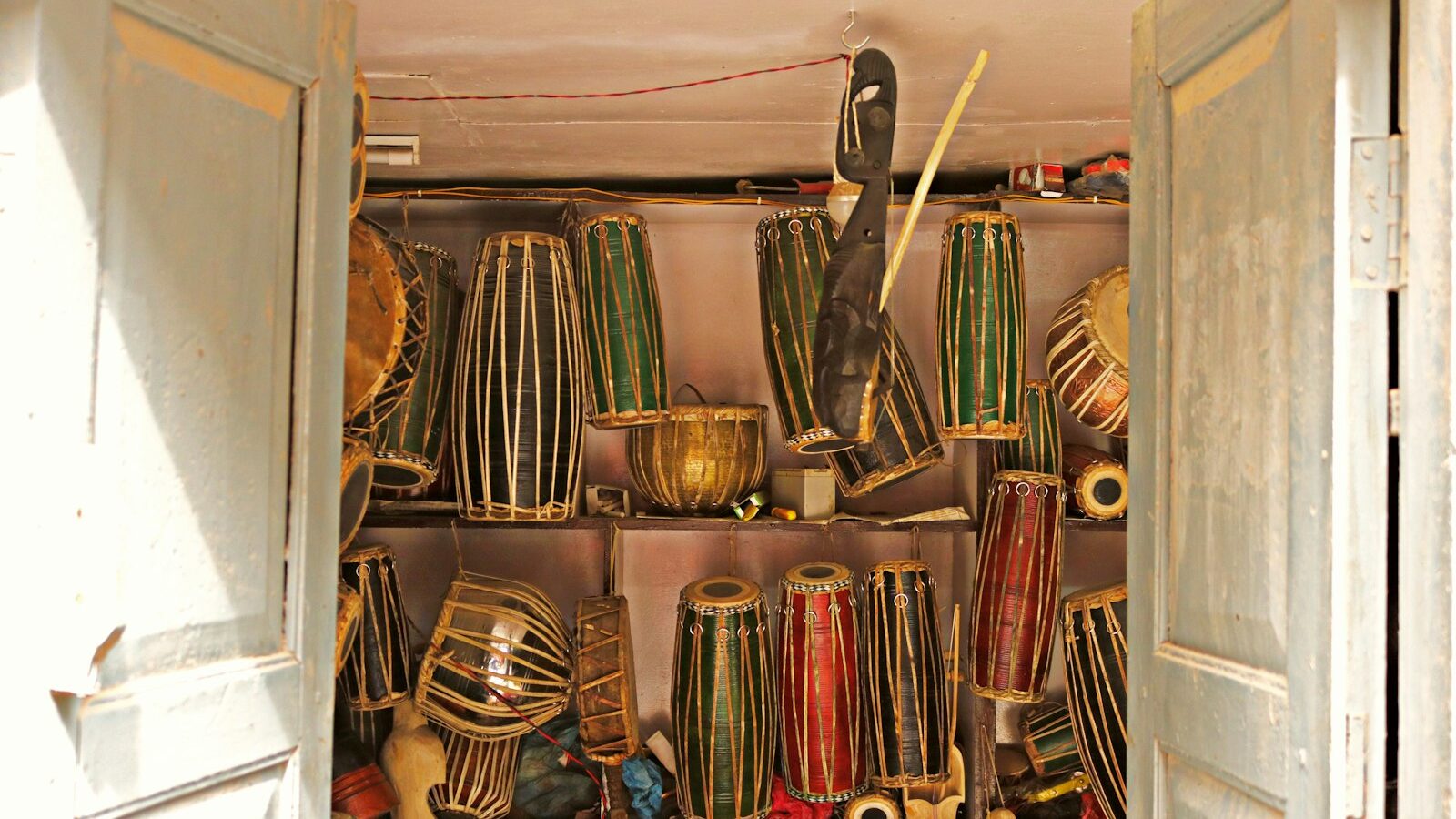
For rhythm, the mridangam takes pride of place. This double headed barrel drum, played with the hands, provides the intricate percussive foundation of a concert, and a skilled mridangam player engages in lively dialogue with the main performer. Other percussion such as the ghatam, a clay pot, and additional instruments may join to enrich the rhythmic texture. The flute and the nadaswaram, a powerful wind instrument often heard at temple and wedding ceremonies, also carry the Carnatic tradition.
In performance, a typical concert unfolds as a sequence of compositions of varying length and complexity, interspersed with improvisation. A performer may begin by slowly unfolding a raga without rhythm, exploring its character, before moving into composed songs and rhythmic elaboration. Percussionists are given space for extended solos in which the cycles of tala are explored with dazzling invention. Throughout, the audience follows the tala by hand, marking the beats, so that listeners are quietly part of the music. To place Carnatic music within the island’s broader soundscape, see our overview of traditional music in Singapore.
Its Place in Singapore’s Heritage
Carnatic music arrived in Singapore with South Indian migrants and has been nurtured here for generations. It forms an important strand of the island’s Indian cultural life, sustained through music schools, cultural associations, temple and community events, and public concerts. Festivals and recitals bring both established artists and young learners to the stage, and visiting musicians from India help keep local practice connected to the wider tradition.
For many families, learning Carnatic music is a way of passing on heritage, language and devotion to the next generation. Children begin lessons in voice or instrument at a young age, and dedicated students may progress to public performance. In this way the tradition remains not a museum piece but a living practice, renewed each time a new voice takes up an old song.
How to See or Learn About It
Newcomers can experience Carnatic music at concerts and cultural events, particularly around major festivals and at venues that host Indian classical performances. Temples and community organisations often present recitals, and these offer a welcoming introduction.
For those wishing to learn, music schools and private teachers across Singapore offer instruction in voice, veena, violin, mridangam and other instruments. Because teachers, schools and concert schedules change over time, it is best to look for current cultural organisations, music academies and heritage programmes rather than rely on any single name. With patient listening and, for some, dedicated study, the depth and beauty of Carnatic music reveal themselves as one of Singapore’s living classical treasures.
Further reading: Indian Garland Making and Flower Heritage