
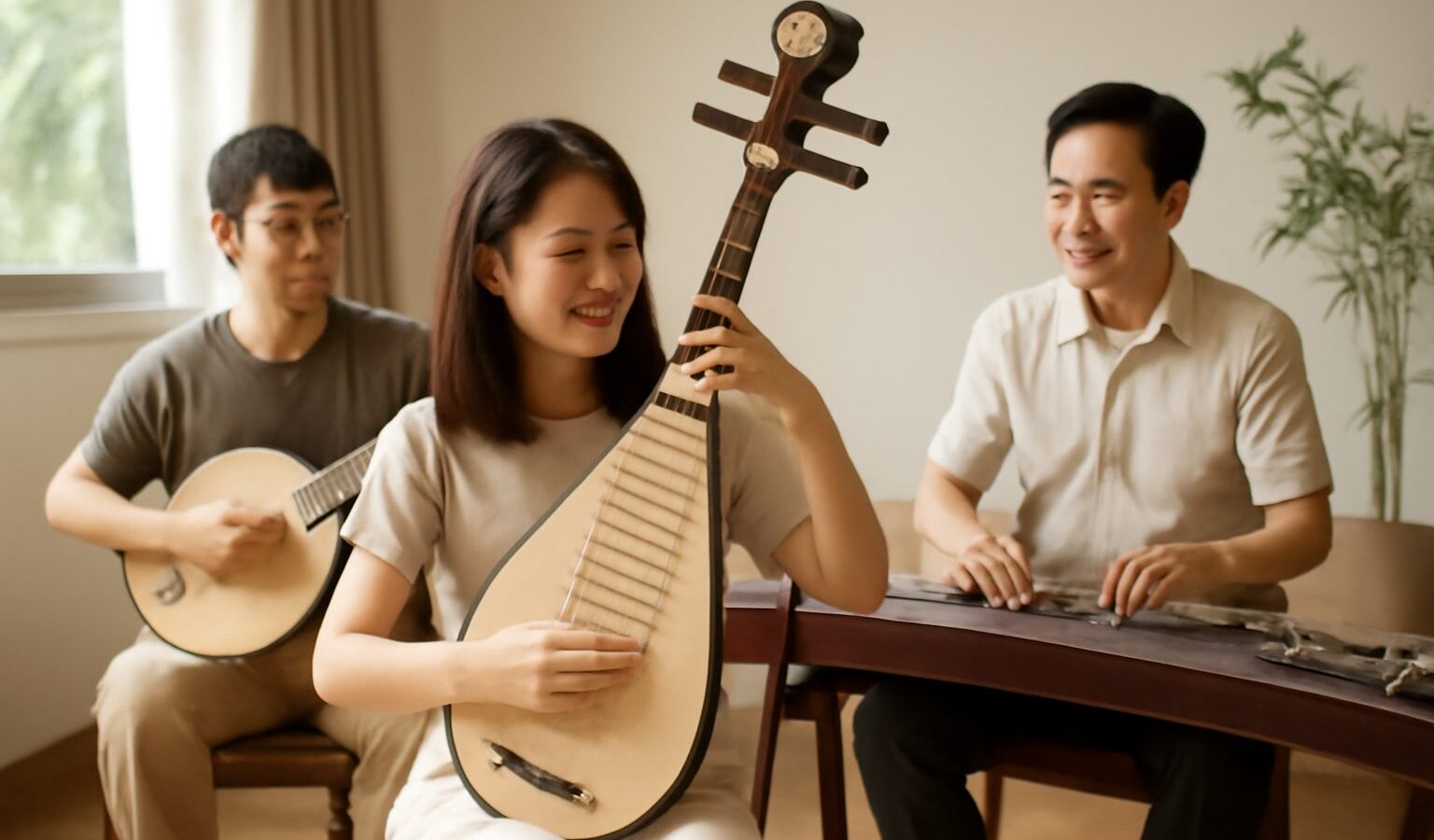
The soulful cry of the erhu, the meditative depth of the guqin, the bright ring of the pipa: traditional Chinese instruments carry the sound of home. If you have moved to Singapore from the mainland, joining a chinese music group singapore can be a heartfelt way to keep that music alive, make friends and enjoy a rewarding hobby. This guide offers a warm, practical look at the instruments, how to find groups, and how to begin learning as an adult, even if you have never played before.
Music is one of the most joyful bridges between cultures, and Singapore has a strong appreciation for Chinese instrumental traditions. From large community orchestras to small ensembles and one to one lessons, there are welcoming paths for players of every level.
Getting to Know the Instruments
Chinese music offers a wonderful variety of instruments, each with its own character. Understanding a few of them helps you choose where to start.
The erhu, a two stringed bowed instrument, is famous for its expressive, singing tone. It is popular among beginners and features in almost every Chinese orchestra. The guqin, a seven stringed zither, has a soft, contemplative sound and a history stretching back thousands of years, long associated with scholars and quiet reflection. The pipa, a pear shaped lute, produces bright, agile notes and dazzling fast passages. The dizi, a bamboo flute, brings a clear, airy voice, while the guzheng, a larger plucked zither, offers flowing, harp like melodies.
If you dream of playing in a group, the erhu, dizi and plucked instruments such as the pipa and guzheng all feature in the Chinese orchestra. The guqin is more often played solo or in small, intimate settings, prized for personal practice and meditation. Think about the sound that moves you most, since a genuine love of the instrument’s voice will keep you motivated through the early lessons.
A Quick Comparison Table
| Instrument | Family | Character | Good for |
|---|---|---|---|
| Erhu | Bowed strings | Expressive, singing | Beginners, orchestra |
| Guqin | Plucked zither | Soft, meditative | Solo, reflection |
| Pipa | Plucked lute | Bright, agile | Solo, orchestra |
| Dizi | Bamboo flute | Clear, airy | Melody, orchestra |
| Guzheng | Plucked zither | Flowing, graceful | Solo, ensemble |
Finding a Group in Singapore
Singapore has a lively scene for Chinese instrumental music, and there are several friendly routes in.
Community clubs and centres run by the People’s Association often host Chinese orchestra groups and instrument classes, which tend to be affordable and open to beginners. Clan associations and Chinese cultural organisations, many with deep roots in Singapore, sometimes run ensembles, interest groups and performances, especially around festivals such as Chinese New Year and Mid-Autumn. These can be a lovely way for newcomers to meet others who share the same language and traditions.
Schools, universities and alumni groups frequently have Chinese orchestras, and some welcome community members or run public workshops. Private music schools and independent teachers offer lessons on individual instruments, which suit those who prefer a structured, personal approach. To find current options, check community centre notices, ask at Chinese bookstores and cultural shops, or look out for concert and recruitment announcements from local ensembles.
When choosing where to learn, consider whether you want the social energy of a large orchestra or the focus of one to one lessons. Many players do both, taking private lessons to build skill while joining an ensemble for the fun of playing together. Do not hesitate to attend a rehearsal as a guest or try an introductory class before committing.
Learning as an Adult
It is never too late to begin. Many adults take up an instrument in their thirties, forties and beyond, and Chinese instruments are well suited to patient, steady learners. You do not need to read music beforehand, since most teachers introduce notation gradually, often using the numbered system common in Chinese music.
Start by renting or borrowing an instrument if you can, so you can be sure of your interest before buying. Beginner erhu and dizi are relatively affordable, while a good guqin or guzheng is a larger investment, which is another reason to try before you buy. A basic set of accessories, such as rosin for the erhu bow or a tuner, will help you practise well.
Set gentle, realistic goals. Short daily practice of even fifteen to twenty minutes brings faster progress than occasional long sessions. Expect some early squeaks and stumbles, which every learner experiences, and treat them with humour. Recording yourself now and then lets you hear your own improvement over the months.
The social side is a real reward. Rehearsing with a group builds friendships and a sense of belonging, and performing together, even at a small community concert, brings a shared thrill that practising alone cannot match. For newcomers finding their feet in Singapore, a music group can quickly become a warm, familiar circle.
Making Music a Part of Your Life
Once you have chosen your instrument and found your group, a few habits help the hobby flourish. Keep your instrument somewhere accessible and cared for, away from harsh sun and damp, since Singapore’s humidity can affect wood and strings. Learn the basic maintenance your teacher recommends, such as loosening a bow or wiping down strings after playing.
Immerse yourself in the music you love by listening to recordings and attending concerts, which trains your ear and deepens your appreciation. Over time you may explore related traditions, from Chinese opera to folk songs of your home region, enriching both your playing and your connection to your heritage.
Above all, enjoy the journey. Whether you take up the singing erhu, the reflective guqin or the bright pipa, joining a chinese music group singapore offers music, friendship and a comforting link to home. Pick the sound that speaks to your heart, find a welcoming group, and let the practice unfold one gentle note at a time.
Explore more
Chinese Tea Culture in Singapore
Chinese Calligraphy and Cultural Hobby Groups
Mid-Autumn Festival in Singapore