
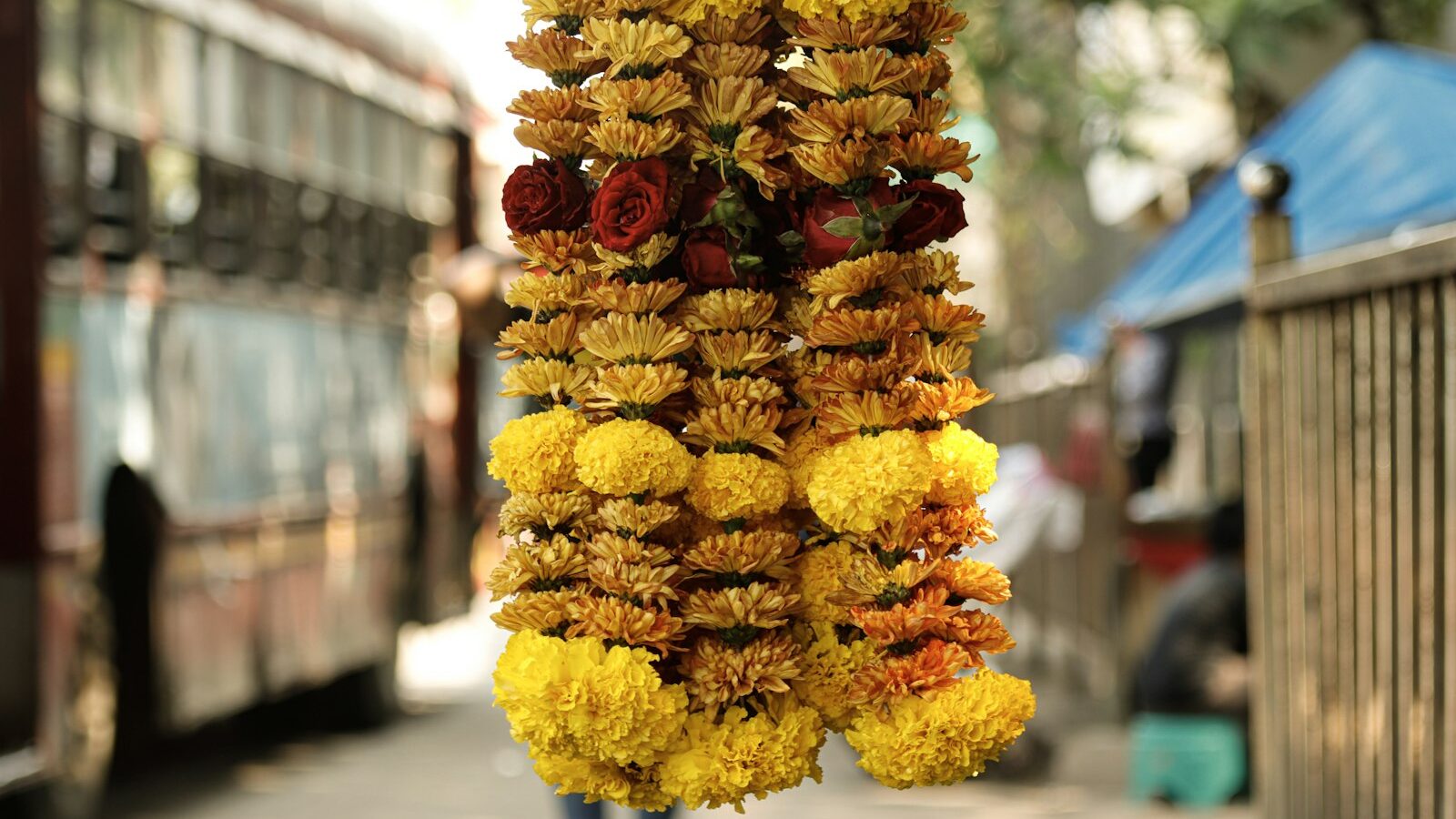
Step into Little India in the early morning and one of the first things you notice is the scent. Long ropes of jasmine, marigold and rose hang in shop doorways, and nimble fingers work through mounds of fresh blooms, threading them one by one into fragrant garlands. This is indian garland making, a craft that is at once everyday and deeply sacred. The finished garlands adorn deities in temples, welcome honoured guests, crown brides and grooms, and grace festivals throughout the year. Behind their simple beauty lies real skill and a heritage that stretches back many centuries.
To appreciate indian garland making singapore visitors admire in Little India, it helps to understand what these garlands are, what they mean, how they are made, and where they belong in our shared culture.
What Flower Garlands Are
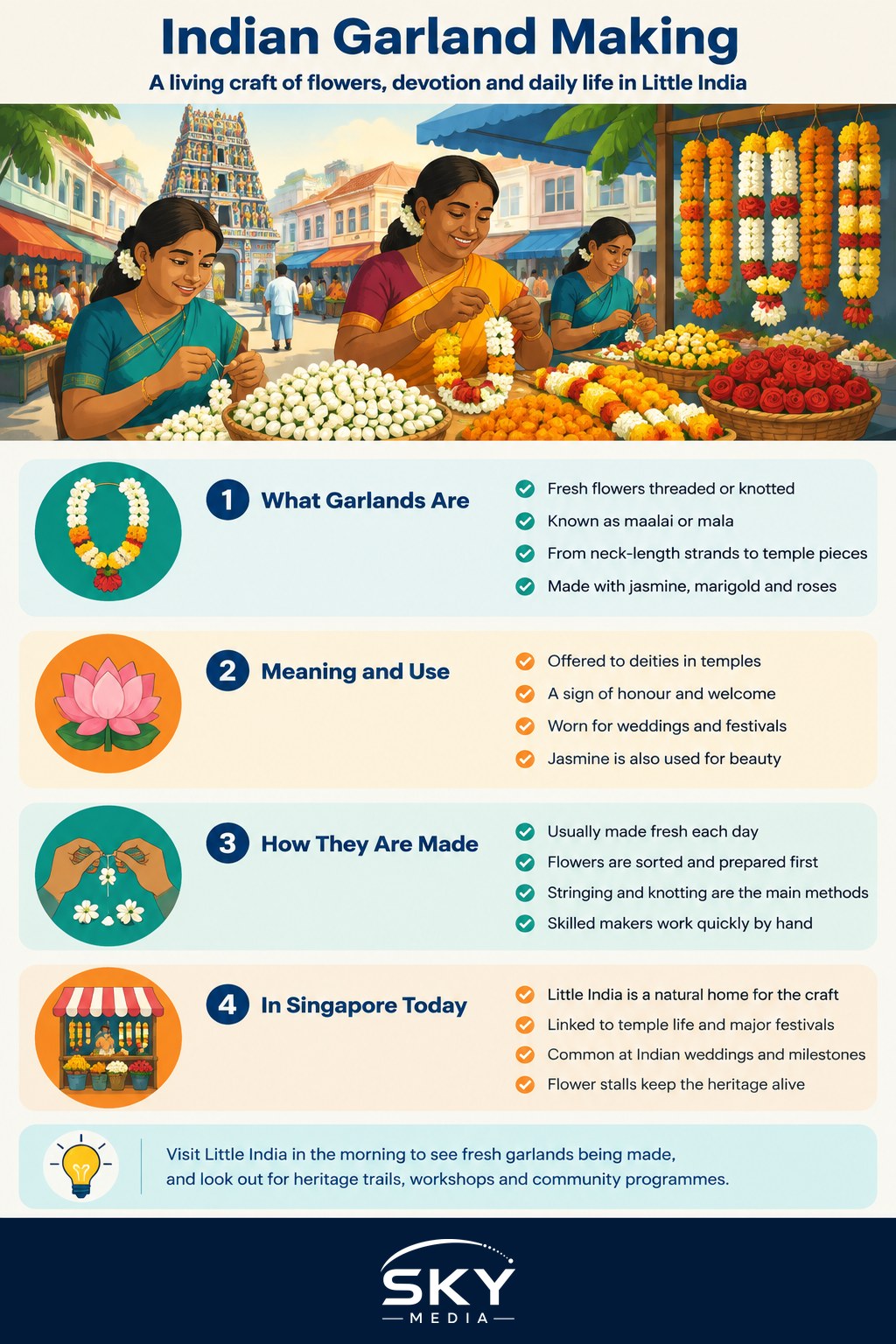
An Indian flower garland, often called a maalai in Tamil or a mala more broadly, is a length of fresh flowers threaded or knotted together, usually into a loop or a long strand. Garlands range from small, simple strings worn around the neck to elaborate temple pieces several metres long, layered and looped into rich patterns.
The flowers used are chosen for fragrance, colour and symbolism. Jasmine is prized above all for its sweet scent and its delicate white buds, which open slowly through the day. Marigold, in glowing orange and yellow, is hardy, bright and considered auspicious. Roses add colour and softness, while other blooms and fragrant leaves are woven in for contrast. Different occasions call for different flowers, and skilled makers know which combinations suit a wedding, a temple offering or a festival.
Origins and Cultural Meaning
The offering of flowers is one of the oldest and most heartfelt gestures in Indian culture. In Hindu worship, flowers are among the simplest and purest gifts a devotee can present to the divine. A garland placed on a deity, or received back from a temple as a blessing, carries deep spiritual meaning. To garland a person is to show honour, welcome and respect, which is why guests, elders and newly married couples are so often draped in flowers.
Colour and fragrance both matter. The rising scent is felt as an offering in itself, and bright hues signal celebration and auspiciousness. Jasmine is also worn simply for beauty, tucked into the hair as a small daily pleasure. In these ways the garland links the sacred and the ordinary, the temple and the home. It shares this spirit of ritual craft with other South Asian traditions kept alive here, much like the batik and traditional textiles of the region carry their own layered meanings.
How Garlands Are Made
Garland making is patient handwork, usually done fresh each day because the flowers are perishable. The maker begins by sorting and preparing the blooms, removing stems, separating buds and grading them by size. The classic method uses a length of banana fibre, cotton thread or fine string as the base.
There are two main techniques. In stringing, flowers are threaded onto the line one after another, much like beads. In knotting, each flower or small cluster is tied to the base thread with a quick twist, so that the blooms sit close together in a dense, even rope. A practised maker works with remarkable speed, the fingers moving in a steady rhythm while the eyes judge colour and spacing. For grand temple and wedding garlands, several strands are combined and shaped into loops, tassels and repeating patterns, sometimes finished with a decorative motif at the base. It is demanding work, often carried out in the cool of early morning so the flowers stay fresh.
Its Place in Singapore’s Heritage
In Singapore, garland making found a natural home in Little India, where flower stalls and garland makers cluster near the temples they serve. The craft is inseparable from the rhythm of temple life, from daily prayers to great festivals such as Deepavali, Thaipusam and Pongal, when demand for flowers soars. Garlands are essential at Indian weddings and are offered at other happy milestones too.
This flower heritage is part of the wider tapestry of communities and traditions that make up the nation, and caring for it belongs to the same effort as preserving Singapore heritage more broadly. The living, working flower stalls of Little India are among the most sensory heritage experiences the island offers.
How to See and Learn It Today
The most rewarding way to experience the craft is a visit to Little India, ideally in the morning when garland makers are at work and the flowers are freshest. You will see strands of jasmine and marigold being measured out for temple orders and passersby alike. Around major festivals the whole district fills with colour and fragrance.
If you wish to learn more, look out for current heritage trails, cultural workshops and community programmes that showcase traditional crafts, and support the flower vendors and garland makers who keep the practice alive. You might also enjoy our wider look at preserving Singapore heritage. To watch a plain thread become a fragrant garland is to see devotion and artistry twined together in a single, beautiful strand.
Frequently Asked Questions
Which flowers are used in Indian garlands and why? Jasmine, marigold and roses are the mainstays, chosen for fragrance, colour and symbolism. Jasmine is prized for its sweet scent and delicate buds, marigold is hardy, bright and considered auspicious, and roses add softness. Makers pick combinations to suit a wedding, temple offering or festival.
What is the difference between stringing and knotting a garland? In stringing, flowers are threaded onto a line one after another, much like beads. In knotting, each flower or small cluster is tied to the base thread with a quick twist, so the blooms sit close together in a dense, even rope. The base is often banana fibre or cotton thread.
What is the best time of day to watch garland makers in Little India? Go in the morning, when garland makers are at work and the flowers are freshest. Much of the work happens in the cool of early morning to keep blooms fresh. Around festivals such as Deepavali, Thaipusam and Pongal, the whole district fills with colour and fragrance.
Why are garlands made fresh every day? Flowers are perishable, so a garland made today will not look or smell its best for long. Makers sort and prepare the blooms each day, removing stems and grading buds by size. Fresh flowers also matter because their scent is felt as an offering in itself.
What does it mean when a guest or couple is garlanded? Garlanding a person shows honour, welcome and respect. That is why guests, elders and newly married couples are so often draped in flowers. In Hindu worship, a garland on a deity or one received back from a temple also carries deep spiritual meaning as a blessing.