
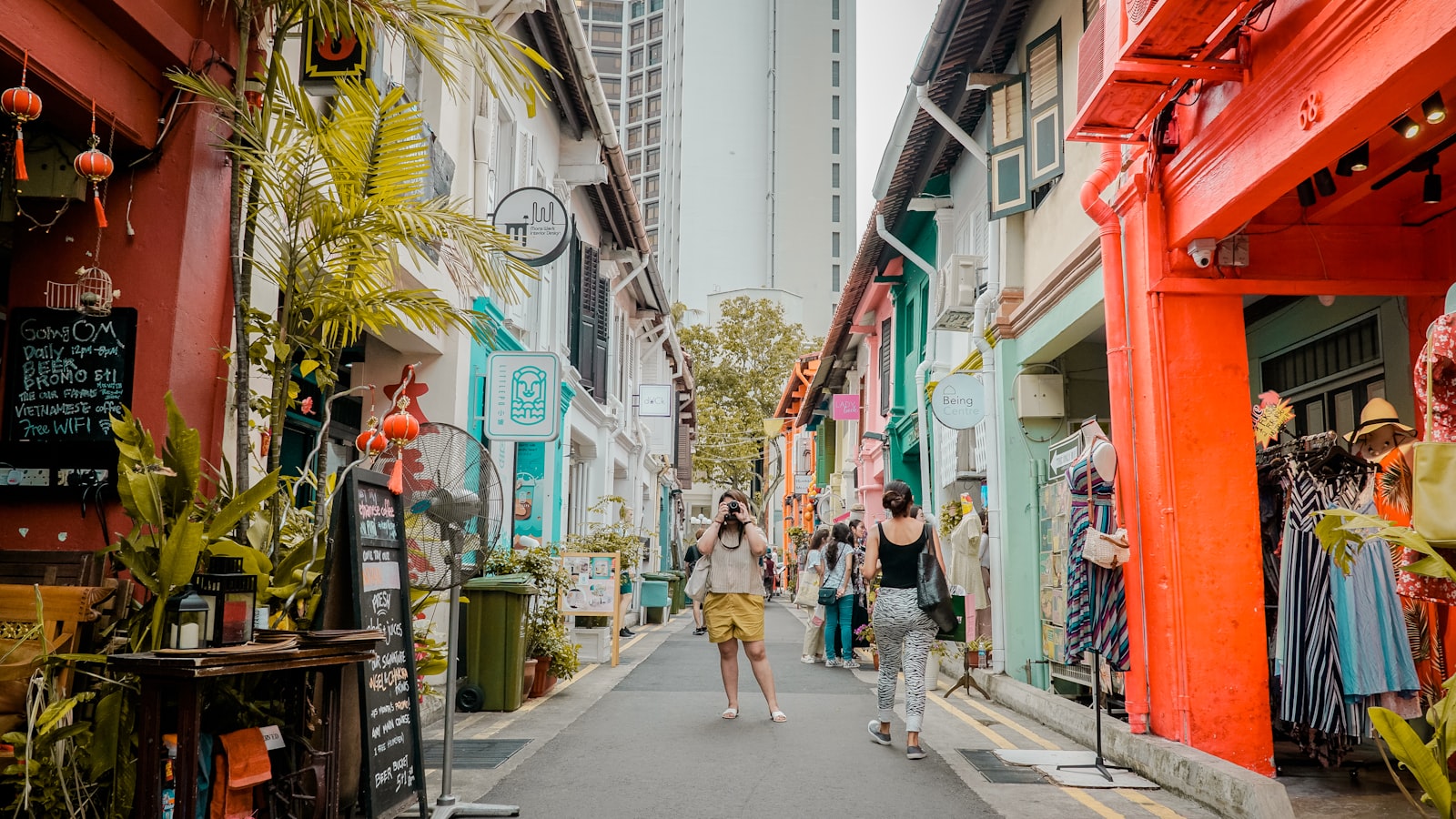
Some landmarks are grand buildings, and others are simply passages that everyone knew. Change Alley Singapore belongs to the second kind. This narrow lane near the waterfront was once one of the most famous shopping and money-changing routes in the region. This guide tells its heritage story, from a crowded bazaar to the modern link that carries its name today.
History and Significance
Change Alley earned its reputation as a bustling artery of trade in the heart of the commercial district. The name points to its most celebrated function: it was a place to change money. Sailors, travellers and traders arriving from many countries needed to convert their currencies, and the alley’s money changers were ready to oblige, calling out rates and haggling with the confidence of long practice.
Money changing was only part of the appeal. The lane became a dense bazaar packed with small stalls and shops selling all manner of goods, from textiles and watches to souvenirs and curiosities. Its narrowness was part of the charm, forcing crowds to squeeze past one another in a lively press of buyers, sellers and browsers. Bargaining was expected, and a shopper who paid the first price asked was thought to have missed the point.
For visitors arriving by sea and stepping ashore nearby, Change Alley offered an immediate, vivid taste of the city’s commercial energy. It sat close to the waterfront and the surrounding financial streets, making it a natural first stop for anyone with foreign money to change and time to spend. In this way the alley became more than a shortcut; it was a destination and a shared memory for generations.
Its fame spread well beyond the island, so that many travellers knew the name Change Alley before they ever set foot in Singapore. That reputation is central to its significance. It was one of the places that gave the city its early image as a cosmopolitan trading crossroads.
Because the surrounding district has been redeveloped over the years, the exact form and boundaries of the historic alley have changed. Anyone seeking precise dates or details should consult verified heritage sources, as those particulars deserve careful checking.
What It Was and What It Is Now
In its heyday, Change Alley was an open-air lane crammed with independent traders, a place of noise, colour and negotiation. It thrived on foot traffic between the waterfront and the commercial streets, and its character came from the sheer density of small businesses operating cheek by jowl.
As the central business district was rebuilt with modern towers, the old open lane could not survive unchanged. The area around Raffles Place and the waterfront was transformed, and the informal bazaar of the past gave way to a more ordered cityscape. Yet the name and the idea of Change Alley were not discarded. A pedestrian link carrying the name continues to connect parts of the district, preserving the memory of the historic route even as its form has modernised.
Today the passage functions as a covered walkway and retail link that threads between buildings in the area, keeping alive the notion of Change Alley as a place to pass through and perhaps to shop. The exact shops, layout and connections change over time, so it is sensible to check current details before setting out to explore.
Then and Now at a Glance
The table offers a broad comparison of the lane across its life. Treat it as a general sketch rather than a precise record.
| Aspect | As the Old Bazaar | As the Modern Link |
|---|---|---|
| Character | Crowded open-air lane | Covered pedestrian walkway |
| Famous for | Money changing and bargaining | Connection and convenience |
| Traders | Many small independent stalls | Ordered modern retail spaces |
| Atmosphere | Noisy, colourful, informal | Sheltered and contemporary |
Heritage Value
The heritage value of Change Alley rests less on architecture and more on memory and meaning. It stands for a way of doing business that defined the early city: personal, informal and endlessly negotiable. In an age of fixed prices and digital payments, the idea of a lane where you haggled for a better rate feels like a window into a different world.
The alley also embodies Singapore’s identity as a meeting point of peoples and currencies. The very act of changing money speaks of a place where travellers from everywhere converged, and where trade knew no single language. That cosmopolitan spirit is part of the nation’s founding character, and Change Alley made it tangible.
Finally, there is value in the survival of the name. By carrying Change Alley forward into a modern link, the city keeps a thread of continuity for a district that has otherwise been almost entirely rebuilt. The name itself becomes a small monument to what once stood there.
Why It Still Matters
- It preserves the memory of the old bazaar culture of bargaining and money changing.
- It reflects Singapore’s early identity as a crossroads of travellers and currencies.
- It keeps a familiar name alive in a much-changed financial district.
- It offers a story that connects the modern city to its trading past.
Walking It Today
To appreciate Change Alley now, walk its modern route while imagining the older lane that inspired it. Picture the stalls, the calling of rates and the crowds pressing through in search of a deal. That act of imagination is the real reward. For confirmed dates, boundaries and the fuller history, turn to reliable heritage resources, as those specifics merit proper verification.
A Respectful Closing
Change Alley Singapore reminds us that heritage is not always housed in stone and columns. Sometimes it lives in a name and a memory, in the recollection of a lane where the world came to change its money and strike a bargain. Walk its modern successor with that story in mind, and a simple passageway becomes a link to the city’s vivid trading soul.
Explore more: Civic District History · Singapore Lost Buildings and Landmarks · The Singapore River Story