
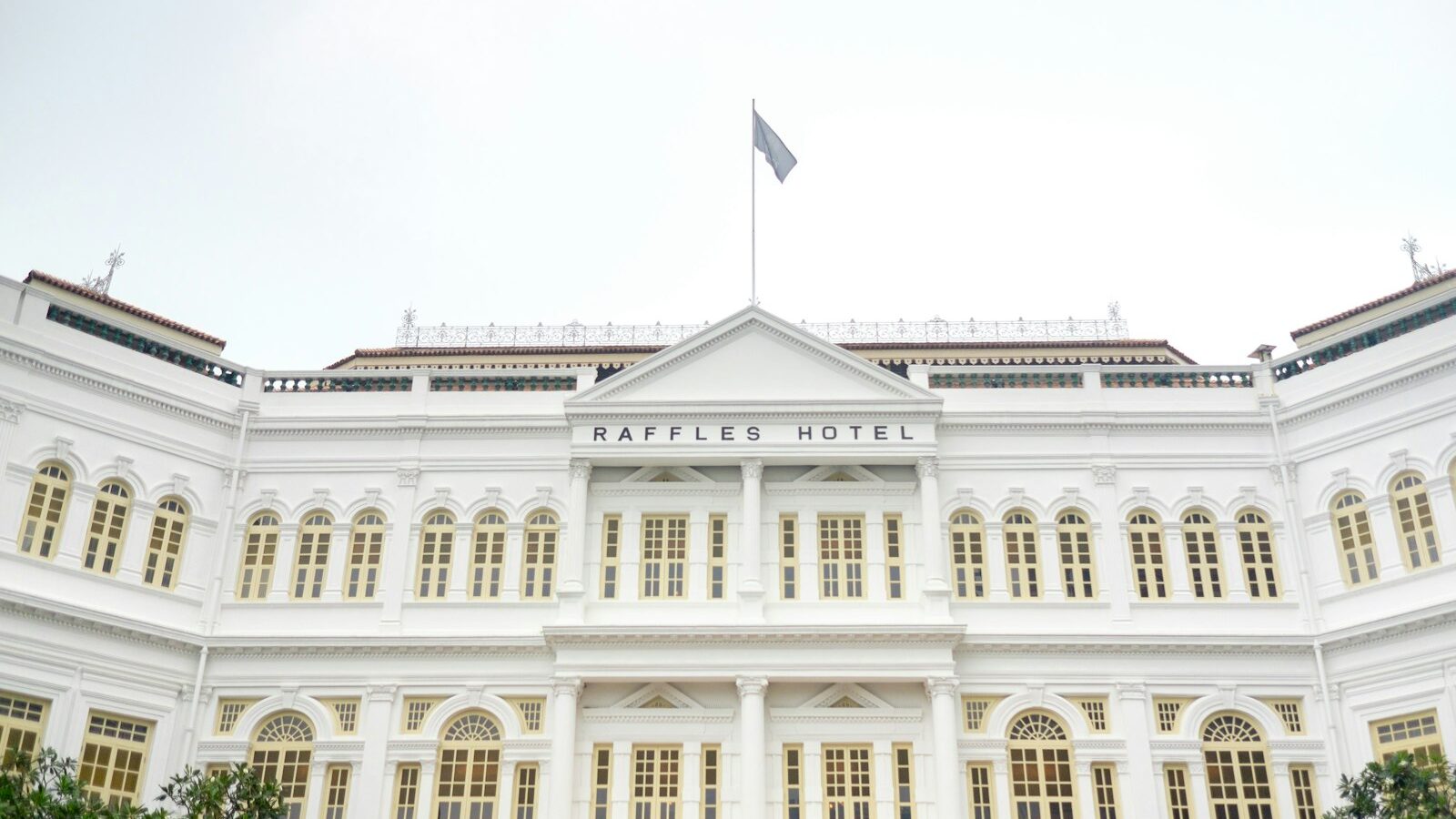
Few buildings carry the romance of the tropics quite like Raffles Hotel. Tracing Raffles Hotel history in Singapore means following the story of the whole city, from a young colonial port to the confident global hub it is today. Its long white verandahs, travellers’ palms and cool marble lobby have welcomed writers, statesmen and curious visitors for well over a century. This guide walks through the hotel’s origins, its architecture, what to look out for on a visit, and why it remains one of the nation’s most treasured landmarks.
Origins of a Grand Colonial Hotel
Raffles Hotel takes its name from Sir Stamford Raffles, the figure long associated with the founding of modern colonial Singapore. The hotel itself was established by the Sarkies brothers, Armenian hoteliers who also ran famous properties elsewhere in the region. They began modestly, in a seafront bungalow near the Esplanade, and expanded as Singapore’s fortunes as a trading port grew.
Through the late nineteenth and early twentieth centuries, the hotel added wings, dining rooms and its landmark main building, becoming the address for arriving passengers stepping off steamships at a time when air travel did not exist. Its position near the waterfront, close to the civic district, placed it at the heart of colonial social life. For the exact chronology of its expansions and ownership changes, the hotel’s own heritage material and the National Heritage Board are the authorities to consult.
Architecture and Design
The Raffles you see today is a fine example of the tropical colonial style, adapted for heat and humidity long before air conditioning. Wide verandahs, tall shuttered windows, high ceilings and generous corridors were all designed to draw in breezes and offer shade. The main building presents an elegant white facade, framed by cast iron and timber detailing, set back behind a lush tropical garden.
Inside, the hotel is built around courtyards and a grand lobby finished in polished marble and dark timber. Travellers’ palms, frangipani and other tropical planting soften the architecture and give the grounds their signature calm. The overall effect is neither purely European nor local, but a distinctive hybrid that came to define grand hospitality across Southeast Asia.
Recognising its importance, the authorities gazetted Raffles Hotel as a national monument, placing its historic fabric under protection. Later restoration works aimed to conserve the original character while updating the building for modern guests. Conservation status means the exterior and key interiors are safeguarded, so the hotel remains recognisably itself even as it evolves.
What to See and Experience
You do not need to be a guest to appreciate the hotel. The public areas, arcades and grounds reward a slow wander, and several features have become attractions in their own right.
- The lobby and grand staircase, a cool retreat of marble, timber and colonial elegance.
- The Long Bar, the spot most closely associated with the Singapore Sling, the pink cocktail that has become a symbol of the city. Its history is best confirmed through the hotel itself.
- The shopping arcade, home to boutiques and a heritage gallery telling the hotel’s story.
- The tropical courtyards and gardens, planted with travellers’ palms and framed by white colonnades.
- The doormen in traditional uniform, a long standing sight that has become part of the hotel’s image.
The table below sets out the main areas at a glance to help you plan your time.
| Area | What it offers | Why it matters |
|---|---|---|
| Grand lobby | Marble halls and colonial interiors | The classic first impression of the hotel |
| Long Bar | Cocktails in a heritage setting | Linked with the Singapore Sling story |
| Shopping arcade | Boutiques and a heritage gallery | Learn the hotel’s history as you browse |
| Courtyards and gardens | Tropical planting and quiet corners | The green heart of the property |
Cultural Significance
Raffles Hotel is more than a place to stay. Over the decades it became a stage for Singapore’s social history, a meeting point for travellers crossing the region, and a name known far beyond the island. It has appeared in countless travel accounts and has long been linked, in popular imagination, with a golden age of leisurely journeys by sea.
For Singaporeans, the hotel is a point of pride and a familiar landmark in the civic district, standing alongside the museums, theatres and government buildings that tell the national story. For visitors, it offers a tangible connection to the colonial port that grew into a modern city. Its survival, in a place famous for rapid redevelopment, reflects a deliberate choice to conserve heritage that carries meaning across generations.
The hotel also sits within a wider landscape of conserved civic landmarks. Reading it alongside neighbouring monuments helps make sense of how the district as a whole has been protected and repurposed, blending old architecture with contemporary use.
Visiting Raffles Hotel
Raffles Hotel stands in the civic and Beach Road area, within easy reach of the City Hall and Esplanade neighbourhoods. It is well served by the MRT network and by public buses, and it sits within walking distance of the Padang, the Esplanade waterfront and several national institutions, making it easy to fold into a longer heritage walk.
A few practical notes for a respectful visit:
- Dress smartly. As a grand hotel, certain venues have dress expectations, so it is worth checking before you go.
- Public areas are welcoming, but remember this is a working hotel with paying guests, so keep photography considerate.
- For dining, the Long Bar, afternoon tea or any tour, check availability, timings and prices directly through the hotel’s official website, as these change and should not be assumed.
Whether you come for a drink, a meal, a browse through the arcade or simply to admire the architecture, Raffles offers a window into Singapore’s past that few other places can match. Approach it as a piece of living heritage, and it repays the visit.
Explore More
To continue exploring the civic district, walk over to The Fullerton, the former General Post Office now reborn as a grand hotel by the river. From there it is a short stroll to the Asian Civilisations Museum at Empress Place, and up the slope to Fort Canning Hill, layering the city’s colonial, cultural and ancient stories into a single afternoon.