
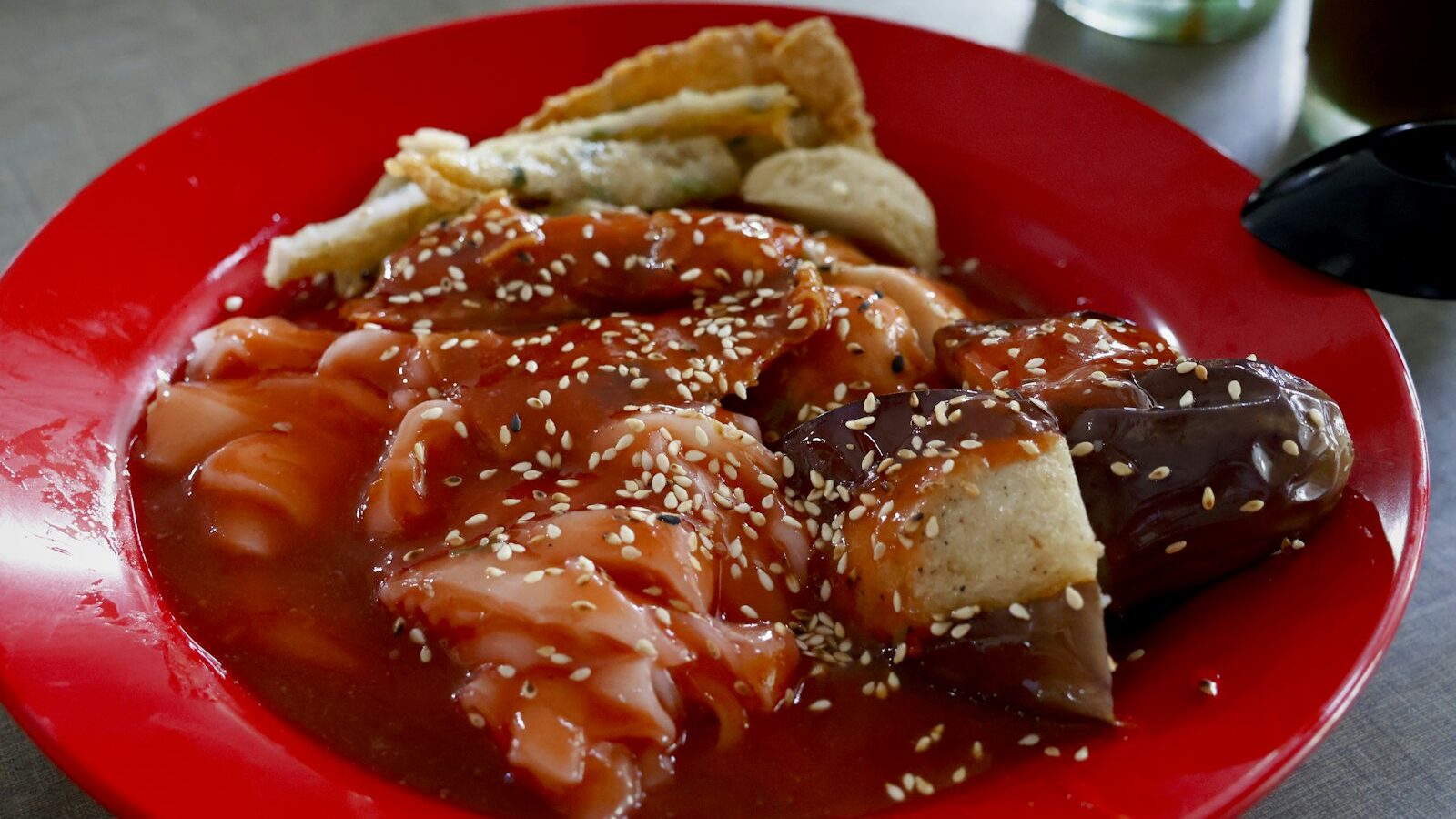
Few breakfast dishes are as quietly satisfying as chee cheong fun. Silky sheets of steamed rice batter, rolled up and cut into bite sized pieces, then dressed with a glossy sauce. The name translates loosely as pig intestine noodle, a nod to the tubular shape of the rolls rather than any actual offal. For many people in Singapore, a plate of chee cheong fun singapore hawkers make each morning is comfort food, cheap, warm, and easy to share.
This guide walks through what the dish is, where it comes from, the main styles you will meet, and how to pick a good version.
What Chee Cheong Fun Is and Where It Comes From
Chee cheong fun has roots in Cantonese cooking from the Guangdong region of southern China. The heart of the dish is a thin rice noodle sheet, made by steaming a runny batter of rice flour and water, sometimes with a little tapioca or wheat starch for bounce. Once set, the delicate sheet is rolled or folded, then cut into short lengths.
In its homeland the dish split into two broad traditions, and both travelled to Singapore with generations of immigrants. The first is the plain rolled version, served without filling and dressed with sauce. The second is the dim sum style, where the sheet is steamed around a filling such as char siew, prawn, or beef, and served in a light soy based liquid. In Singapore you will find both, though they sit in slightly different settings.
The local plain version became a hawker and coffeeshop favourite because it is affordable, filling, and quick. It sits comfortably alongside other morning staples, and you will often spot it near stalls selling other classics on any list of must try hawker food in Singapore.
The Main Styles You Will Meet
There are a few recognisable styles, and knowing them helps you order what you actually want.
The Singapore and Malaysia street style is the plain rolled noodle, cut into pieces and doused in a sweet sauce. This sauce is the signature, usually a mix based on sweet sauce and light soy, sometimes with a touch of sesame oil. A generous scatter of toasted sesame seeds goes on top, and fried shallots or a spoon of chilli may be offered. Some stalls add a smear of sweetened bean sauce or a hoisin type glaze, which gives the dish its familiar dark, sticky finish.
The Hong Kong or dim sum style is lighter and cleaner. Here the rice sheet is often thinner and more slippery, wrapped around a filling, and served in a shallow pool of seasoned soy. You tend to meet this version in dim sum houses, tea houses, and some coffeeshops that specialise in steamed items.
A third style leans on savoury toppings rather than filling. The plain rolls are served with additions such as dried shrimp, spring onion, or a drizzle of chilli oil, sitting somewhere between the two traditions.
Textures differ too. A good sheet should be tender and just slightly springy, never rubbery or gummy. Freshly steamed batches have a fragile, almost custard like quality that machine made, pre packed rolls rarely match.
How It Is Made and Served
Making chee cheong fun by hand is a patient job. The cook pours a thin layer of rice batter onto a cloth or a flat tray, then steams it for a short time until it firms into a sheet. That sheet is peeled off, rolled up, and set aside. The best stalls steam in small batches through the morning so the rolls stay soft.
Service is simple. The rolls are cut, plated, and finished with sauce and garnishes to order. Because the noodle itself is mild, the sauce does much of the talking, which is why regulars often have a favourite stall based on its sauce alone.
You will typically find the plain street style at hawker centres, coffeeshops, and morning markets, often near stalls doing porridge, you tiao, or soya bean drinks. The dim sum style shows up in tea houses and steamed food stalls. If you are still learning the ropes of ordering, our notes on how to order at a hawker centre in Singapore cover the small etiquette points that make it smoother.
How to Eat and Order It
Ordering is easygoing. For the street style, you can usually ask for more or less sweet sauce, and request chilli on the side if you like heat. Some people enjoy it plain with just sesame and a little soy, letting the noodle shine. The rolls are soft, so chopsticks or a fork both work, and each piece is meant to be eaten in one or two bites.
It pairs well with other breakfast items. A plate alongside a bowl of porridge or a soft boiled egg set makes a relaxed morning meal. Because the dish is light, many treat it as a starter or a side rather than a full meal on its own.
What to Look For in a Good Version
A good plate comes down to the sheet and the sauce. The noodle should be freshly steamed, soft, and slightly slippery, holding together without falling apart or turning stodgy. Look for rolls that are thin and even rather than thick and doughy.
The sauce should be balanced, sweet but not cloying, with enough savoury depth to keep you coming back. Toasted sesame should smell fragrant, and any chilli should be freshly made rather than watery. If a stall steams to order and the rolls arrive warm and tender, you are usually in good hands.
Chee cheong fun rewards a little exploration, since every stall tunes its sauce differently. Try a few, note which balance you prefer, and check current listings and recent reviews before making a trip, as stalls and opening hours change over time. For more morning ideas, browse our wider hawker centres guide for Singapore and keep discovering the small dishes that make local breakfasts so good.