
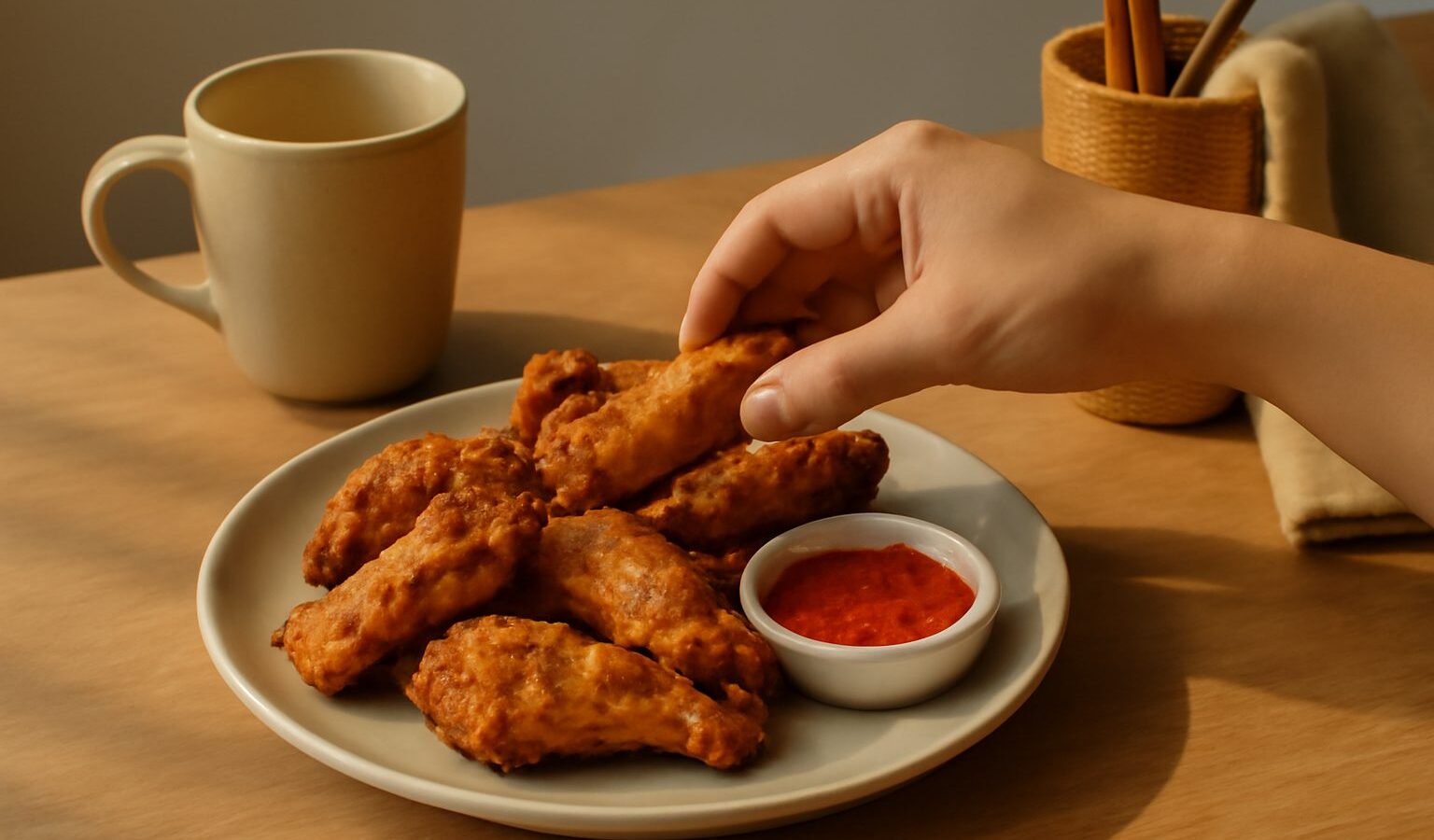
Few plates land on a zi char table with as much anticipation as har cheong gai. This is prawn paste chicken, and if you have ever pulled a still-steaming wing from a shared platter and felt the shatter of its crust against a deep, savoury tang, you already understand why it endures. Har cheong gai is the sort of dish that turns a casual dinner into an occasion, the kind of thing you order first and finish last, gnawing at the bones because nothing that good should go to waste.
At its heart, har cheong gai is fried chicken with a secret. That secret is fermented prawn paste, a pungent, umami-rich condiment made from tiny shrimp that have been salted and left to mature until they carry a savoury depth quite unlike anything else in the kitchen. Rubbed into the chicken and left to marinate, the paste seasons the meat all the way through, so the flavour is not just on the surface but woven into every bite.
What Makes Har Cheong Gai Special
The magic is in the marinade. Cooks blend fermented prawn paste with aromatics such as garlic, ginger, sometimes a splash of Shaoxing wine, a little sugar to round things off, and often an egg or a touch of oyster sauce to help the coating cling. The chicken, usually cut into wings and mid-joints, or sometimes boneless chunks, sits in this mixture for a few hours or overnight. The longer it rests, the more the prawn paste works its way in.
Then comes the fry. The marinated pieces are dusted in flour or a light batter and dropped into hot oil, sometimes twice, so the outside crisps into a golden, craggy shell while the inside stays juicy. Done well, the result is a crust that crackles audibly, a fragrant hit of the sea, and meat that is tender and deeply seasoned. Done poorly, it can turn greasy or taste flatly of salt, which is why the balance of the marinade matters so much.
The aroma is part of the pleasure. Fermented prawn paste is famously divisive when raw, funky and sharp, but frying transforms it into something rounded and moreish. That alchemy, from pungent condiment to golden treat, is exactly what makes har cheong gai so beloved across coffee shops and zi char stalls.
Where You Typically Find It
Har cheong gai is a staple of the zi char scene, those bustling stir-fry stalls found in coffee shops and hawker centres where families order plate after plate to share. It is a Cantonese-influenced dish, and you will spot it on almost any zi char menu worth its salt, often listed simply as prawn paste chicken. It also appears at seafood restaurants and some cze char specialists who have built a reputation around getting the crunch just right.
A quick note for halal diners. Har cheong gai as traditionally prepared is not halal, as it is served at non-halal zi char and Chinese eateries, and the frying oils and kitchen are not certified. If you keep halal, look instead for certified halal fried chicken options, of which Singapore has many excellent versions. Do check current information for any specific stall, as menus and certifications change.
A word on allergens too. Fermented prawn paste is a shellfish product, so anyone with a shellfish allergy should give har cheong gai a firm miss and let their server know.
How to Enjoy It Properly
Har cheong gai is best eaten hot, within minutes of frying, when the crust is at its crispest. Eat it with your hands. This is finger food at its most honest, and no fork will ever get you as close to the bone. A squeeze of lime or a dab of chilli lifts the richness, though many purists insist the chicken needs nothing at all.
It shines as part of a spread. Order it alongside steamed rice, a plate of greens, and a soup, and you have a balanced meal. It pairs beautifully with the other big hitters of the zi char table, and a cold drink cuts through the fry nicely.
Here is a quick guide to what separates a great plate from a mediocre one.
| What to look for | Sign of a good version | Sign to be wary of |
|---|---|---|
| Crust | Crackly, golden, shatters cleanly | Soggy, pale or oily |
| Prawn paste flavour | Deep, savoury, rounded | Overly salty or barely there |
| Meat | Juicy and tender throughout | Dry or bland inside |
| Aroma | Fragrant and moreish | Sharp, raw or fishy |
| Freshness | Served piping hot | Sitting cold under a lamp |
A Little Heritage
Har cheong gai draws on the Cantonese love of frying and the region-wide use of fermented seafood condiments, a thread that runs through so much of southern Chinese cooking. Fermented prawn paste, sometimes called har cheong, has been used for generations to season everything from stir-fries to dipping sauces, prized for the way a small amount lifts a whole dish. Some cooks trace the pairing of prawn paste with fried chicken to Hong Kong kitchens, while others point to the broader Cantonese diaspora across the region. Wherever it began, the idea took firm root in Singapore and Malaysia, where zi char culture gave it the perfect home. Today it sits comfortably among the classics of the local Chinese table, a dish that feels both familiar and a little special every time it appears.
The beauty of it is how a single humble ingredient does so much heavy lifting. There is no long list of components, no elaborate technique beyond a good marinade and a careful fry. It is proof that thoughtful use of one bold flavour can carry an entire dish, which is perhaps why so many home cooks attempt their own version, chasing that coffee-shop crunch in their own kitchens.
A Dish Worth Ordering First
Part of the joy of har cheong gai is its unpretentiousness. This is not fine dining. It is a homely, generous plate of fried chicken with a soul, the product of a fermented condiment that generations of cooks have learned to coax into gold. Whether you are new to it or a lifelong fan, the ritual is the same, order it fresh, eat it hot, and do not be shy about the bones.
Once you have found a version you love, you will understand why regulars order it the moment they sit down. It is a small, crunchy reminder of how good simple food can be when someone cares enough to get the details right.