

Planning Chicago from Singapore brings you to one of America’s most rewarding and underrated cities, a place where soaring architecture meets a vast freshwater lakefront and a food scene that runs from deep-dish pizza to fine dining. Sitting on the shore of Lake Michigan in the American Midwest, Chicago has the grand scale of a major metropolis without the relentless intensity of the coasts, and it wears its history of jazz, blues and bold building proudly. For Singaporeans who love design, museums and walkable cities, it makes a superb standalone trip or a memorable stop on a wider US itinerary.
This guide covers why Chicago is worth your time, when to visit, the highlights you should not miss, how to get there and get around, and who the city suits best.
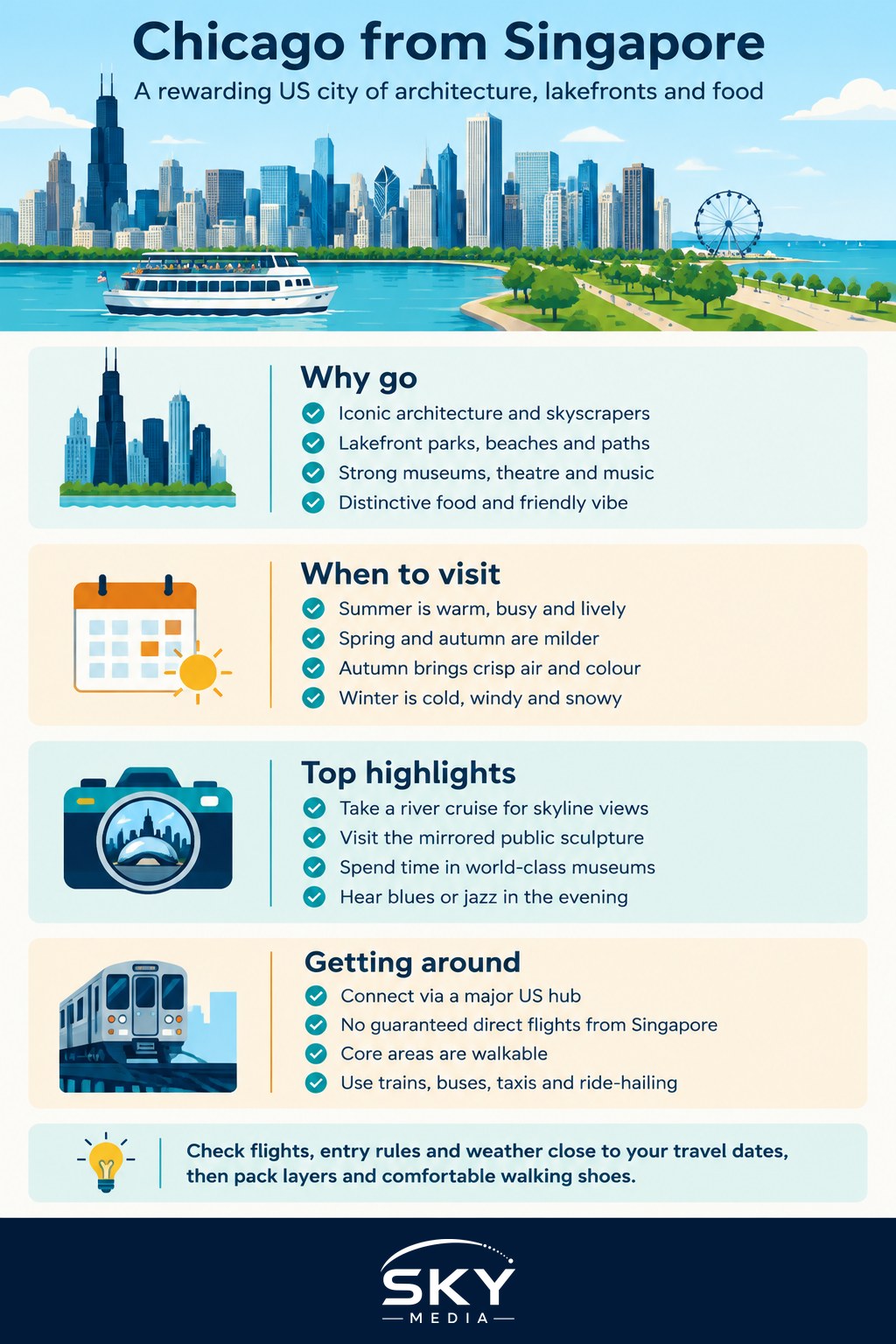
Why go to Chicago
Chicago is, above all, a city of architecture. It was here that the modern skyscraper was pioneered after a great fire cleared the way for reinvention, and the skyline that resulted is one of the finest anywhere. A river winds right through the downtown core, and cruising it while a guide narrates the buildings is one of the best introductions to any city in the world. Landmark towers, elegant bridges and bold modern additions crowd the banks, and the whole ensemble is designed to be admired.
The lakefront is the city’s other great asset. Miles of parks, beaches and paths trace the edge of Lake Michigan, which is so large it reads like a sea, and locals treat the shore as a shared back garden for cycling, running and lounging in summer. Grand public parks near downtown mix landscaped gardens with striking public art and open-air music, giving the centre a green, sociable feel that surprises first-time visitors.
Then there is the culture. Chicago is a heavyweight for museums, theatre and live music, with roots in blues and jazz that still fill clubs today. Add a hearty, distinctive food scene and famously friendly Midwestern manners, and you have a city that consistently exceeds expectations.
When to visit
Chicago has four genuine seasons, and they differ enormously, so timing shapes your whole trip. Summer is the crowd favourite, with warm days, festivals, packed beaches and the lakefront at its liveliest, though it is also the busiest and priciest period. Late spring and early autumn offer mild, pleasant weather and thinner crowds, and autumn in particular brings crisp air and colour to the parks.
Winter is the wild card. The city is famously windy and can be bitterly cold with snow, which suits travellers who enjoy festive lights, cosy interiors and quieter museums, but demands serious warm clothing. Here is a simple seasonal comparison to help you plan.
| Season | Weather | What stands out | Crowds |
|---|---|---|---|
| Summer | Warm to hot | Beaches, festivals, lakefront buzz | Busy, peak |
| Autumn | Crisp and mild | Colour in the parks, comfortable walking | Moderate |
| Winter | Cold, often snowy | Festive lights, quiet museums | Quieter |
| Spring | Cool, warming | Fresh energy, blossoms, fewer crowds | Moderate |
Coming from Singapore’s steady warmth, a Chicago winter is a real adjustment, so if you dislike the cold aim for the warmer half of the year and pack layers for cool evenings regardless.
Highlights not to miss
Start with the architecture. A river cruise sets the scene, after which you can ride to a high observation deck for a sweeping view, walk the bridges and admire the mix of historic and contemporary towers up close. The city’s famous mirrored public sculpture and its surrounding park are essential stops, endlessly photogenic and free to enjoy.
Chicago’s museums are world class and varied, spanning fine art, natural history, science and industry, all deserving a proper half day each. Music lovers should seek out a blues or jazz club in the evening to hear the sound the city helped shape. And no visit is complete without the food. Deep-dish pizza is the signature, a knife-and-fork affair with a buttery crust and layers of cheese and sauce, but the city also does excellent hot dogs its own way, plus a serious contemporary dining scene. Save room and pace yourself.
How to get there and get around
There are no guaranteed direct flights from Singapore, and services change, so the reliable approach is to connect through a transpacific gateway or another major US hub and continue to Chicago’s main airport. Check current flights and connections close to your travel dates, and factor in the time difference and jet lag when planning your first day. Because the United States requires travel authorisation for many visitors, confirm entry requirements, including whether you need an ESTA or a visa, through official US channels and Singapore’s MFA travel advisories well before you fly.
Around the city, Chicago is refreshingly walkable in its core, and the public transport network of trains and buses, including the elevated loop that circles downtown, covers most of what visitors want to see. Ride-hailing and taxis fill the gaps, and the lakefront paths are ideal for cycling in warm weather. Allow extra time in winter, dress for the wind off the lake, and keep a transit card handy for easy hops between neighbourhoods.
Who it suits and budget
Chicago suits architecture and design fans, museum lovers, foodies and anyone who enjoys a big city that is still easy to navigate on foot. It works well as a three or four night stay, long enough to cruise the river, tour a couple of museums, eat well and explore a few distinct neighbourhoods. Families will find plenty of hands-on museums and open space, while couples can pair rooftop views with jazz and fine dining.
Budget is flexible, from hostels and casual eats to boutique hotels and tasting menus. As always, avoid locking in fixed figures far ahead and check live prices when you plan, as rates rise sharply in peak summer and around major events. Bring comfortable walking shoes, layered clothing for changeable weather, and an appetite, and you will find Chicago one of the most satisfying American cities to visit from Singapore.