
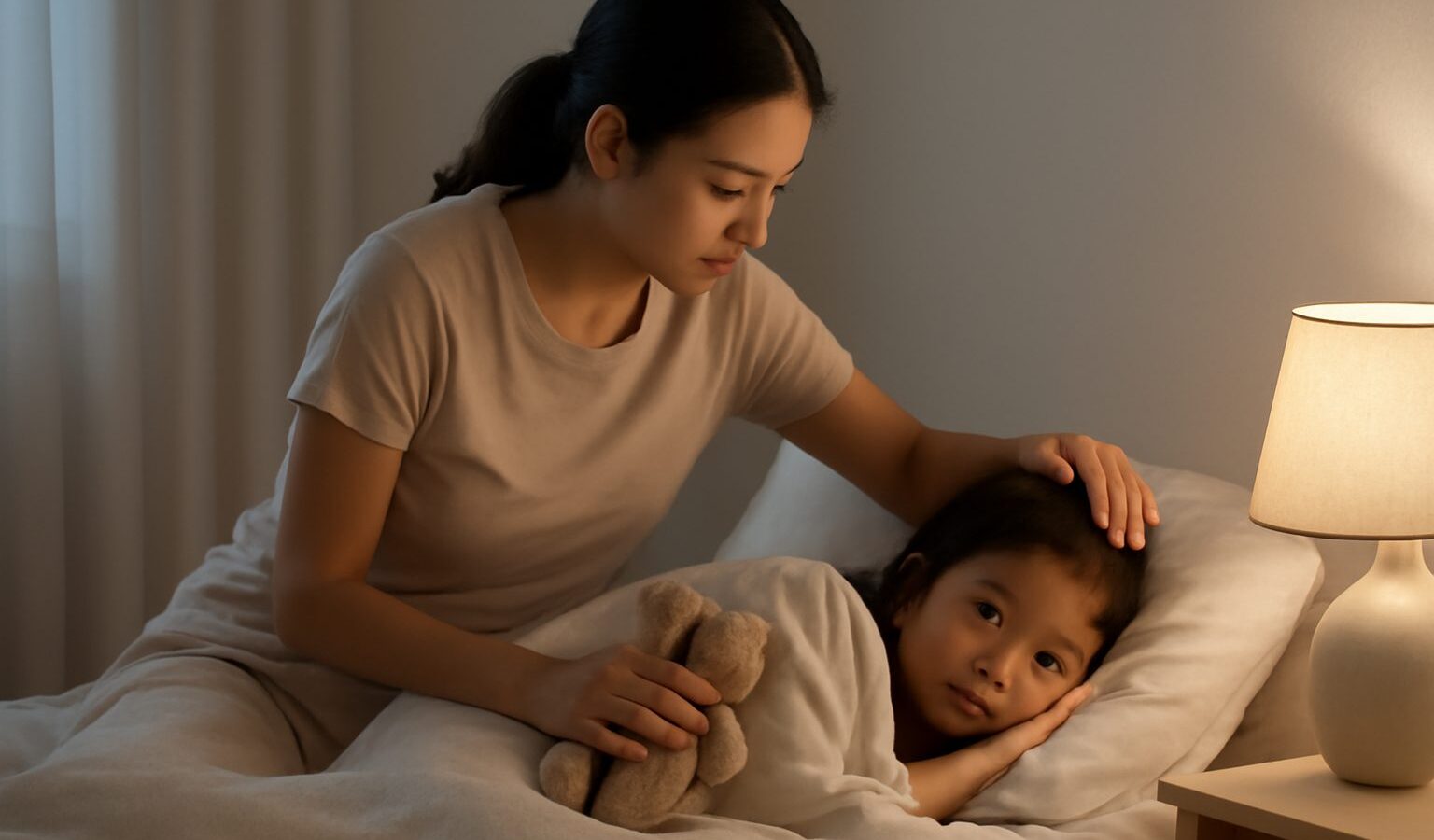
Few things wear down a household like a nightly bedtime standoff. A child who is scared to sleep alone may cry, call out repeatedly, appear at your bedside at 2am, or simply refuse to let you leave the room. Parents end up exhausted, and the child goes to school tired too.
This is one of the most common bedtime challenges for children from preschool through the early primary years, and it usually improves with a calm, consistent plan. This guide focuses on that single problem: why it happens, how to respond in the moment, and how to move step by step towards your child falling asleep on their own.
Why Children Become Scared to Sleep Alone
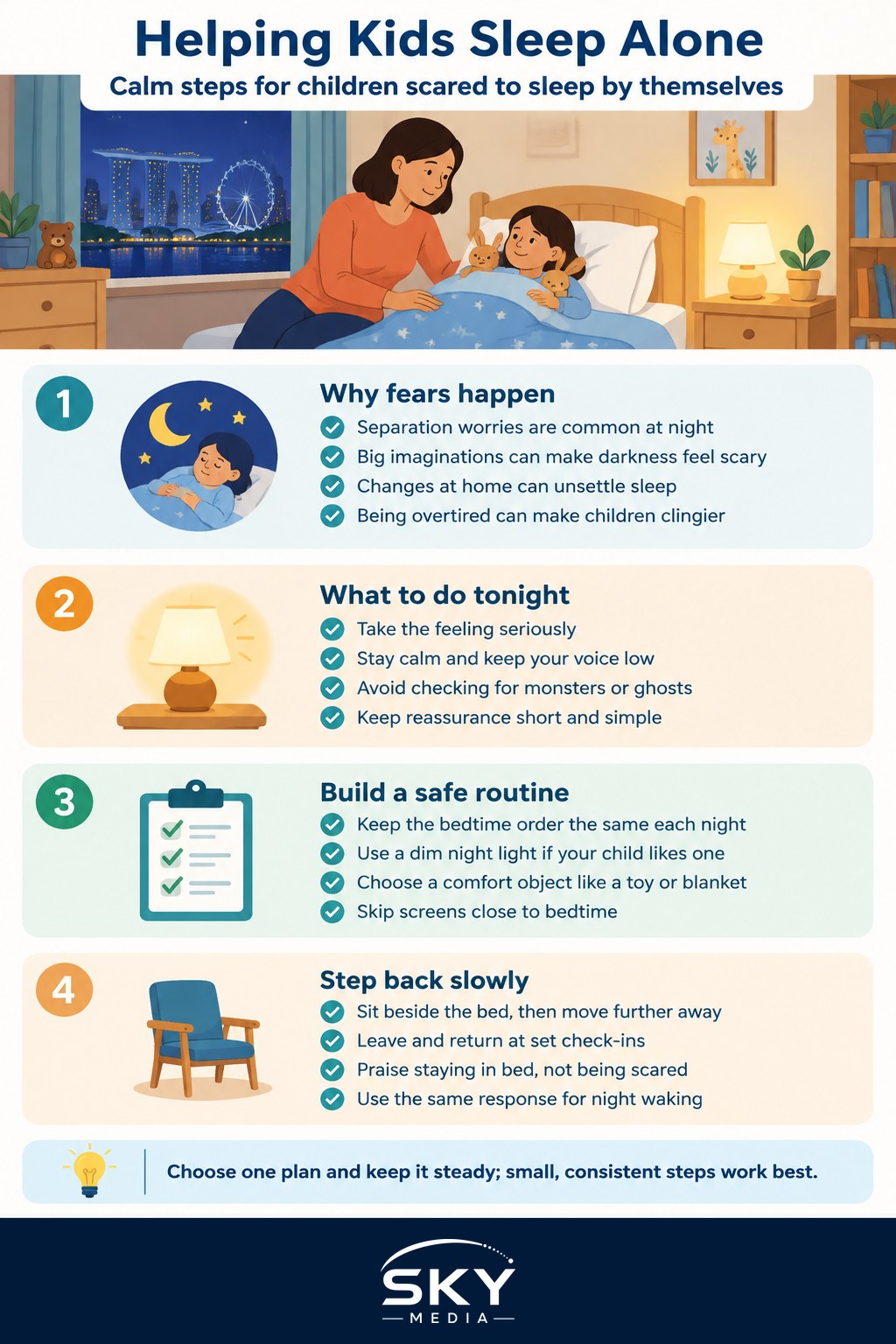
Fear of sleeping alone is a normal part of development. As children’s imaginations grow, they become better at picturing things that might happen in the dark, and less able to reason them away.
Common triggers include:
- Separation worries. Night is the longest stretch a young child spends apart from parents.
- Imagination and new information. A scary scene in a show, a ghost story from a classmate or a news item overheard from adults can stick.
- Changes at home. Moving house, a new sibling, a parent travelling for work, a helper leaving or starting school can unsettle sleep.
- Learned habits. If a parent has always stayed until the child falls asleep, the child may simply not know how to fall asleep any other way.
- Being overtired. Late bedtimes can make children more clingy and anxious at night, not less.
In many Singapore homes, co-sleeping or room-sharing is common and perfectly reasonable. The goal here is not to force independence on a set timetable, but to help children who need or want to sleep on their own feel safe doing it.
How to Respond in the Moment
What you do at 9pm when your child says “I’m scared” shapes how the fear develops.
- Take the feeling seriously. “That sounds scary” helps more than “There’s nothing to be scared of”.
- Stay calm and boring. A quiet voice and minimal fuss tell your child that night time is safe.
- Avoid confirming the fear. Checking under the bed for monsters can suggest that monsters might be there. Instead, say calmly that the room is safe and you are nearby.
- Keep reassurance short. Long negotiations tend to keep children awake and make bedtime later each night.
- Do not use the bedroom as punishment, and avoid threats such as “if you come out again I’ll close the door”. Fear of punishment adds to fear of the dark.
Build a Bedtime Routine That Feels Safe
A predictable routine signals to the body and mind that sleep is coming. It also gives an anxious child a sense of control.
A simple routine might be: bath, pyjamas, brush teeth, two books, a short chat, lights down. Keep the order the same every night and aim to start at roughly the same time.
Helpful touches:
- A dim night light in a warm colour, if your child likes one.
- A comfort object such as a soft toy or a small blanket.
- A comfortable room. Many Singapore families use aircon or a fan at night, so check the room is neither too cold nor stuffy, and that noise from the corridor or traffic is not startling.
- No screens close to bedtime. Exciting games and videos can make it harder to wind down, as covered in our article on gaming and sleep. Choose calm books instead.
- A worry slot earlier in the evening. Ten minutes after dinner to talk about anything on their mind can stop worries surfacing only once the lights go off.
A Gradual Plan to Help Them Sleep Alone
Most children respond best to small, steady steps rather than a sudden change. One widely used approach is gradual withdrawal, sometimes called the chair method, where a parent moves a little further away over several nights.
| Stage | What the parent does | What the child practises |
|---|---|---|
| 1 | Sits beside the bed until the child is asleep, with little talking | Falling asleep without being held or patted |
| 2 | Moves the chair halfway to the door | Feeling safe with a parent nearby but not touching |
| 3 | Sits by the open door | Settling with a parent in view |
| 4 | Sits just outside the door, out of sight but audible | Knowing a parent is close without seeing them |
| 5 | Says goodnight, leaves, and checks back briefly at set intervals | Falling asleep alone, trusting the parent will return |
Stay at each stage for a few nights, or longer if your child needs it, and only move on when they seem settled. If a stressful week comes along, it is fine to step back one stage.
Two techniques make the plan work better:
- Promised check-ins. Tell your child, “I’ll come back to check on you in five minutes,” and do it, even if they are calm. Over time, lengthen the gap. Children relax when they trust you will come back.
- Praise and small rewards. A sticker chart for staying in bed, with a modest reward after several nights, can motivate many children. Reward effort, such as staying in bed, rather than “not being scared”.
Teaching Your Child Ways to Calm Themselves
Children feel braver when they have something to do with their fear.
- Slow breathing. Practise “smell the flower, blow out the candle” during the day so it is easy to use at night.
- A happy place. Help them imagine a favourite spot, such as the beach or a grandparent’s home, in detail.
- Brave talk. Short phrases like “I am safe, Mummy is nearby” can be practised together.
- Books about bedtime fears. Stories in which a character overcomes the same fear can help children talk about their own.
Good sleep also helps children concentrate and remember what they learn during the day, as explained in our guide to sleep and learning. That is a useful reason to stay patient through the process.
Handling Night Waking and Visits to Your Room
Many children manage to fall asleep alone but then wake and come to find you. Decide on your response in advance and be consistent.
- Walk your child back to bed calmly with minimal conversation.
- Offer a brief tuck-in and the same reassuring phrase each time.
- Expect a few nights of repeated returns before it settles.
Nightmares are different from general fear. If your child wakes upset from a bad dream, comfort them fully, then help them settle back in their own bed when they are calm.
When to Seek Extra Help
Bedtime fears usually ease within a few weeks of a consistent approach. Speak to your family doctor, a paediatrician or the school counsellor if:
- The fear is intense, getting worse or affecting daytime life
- Your child seems anxious about many things, not only bedtime
- Sleep problems are paired with loud snoring, breathing pauses or frequent night terrors
- A specific event, such as an accident or loss in the family, seems to have triggered the fear
This article is general information and not medical advice. A professional can check for underlying issues and suggest support suited to your child.
With patience, a steady routine and small steps, most children who are scared to sleep alone learn that their room is a safe, comfortable place to rest.
Further reading: Gentle Sleep Training For Toddlers