
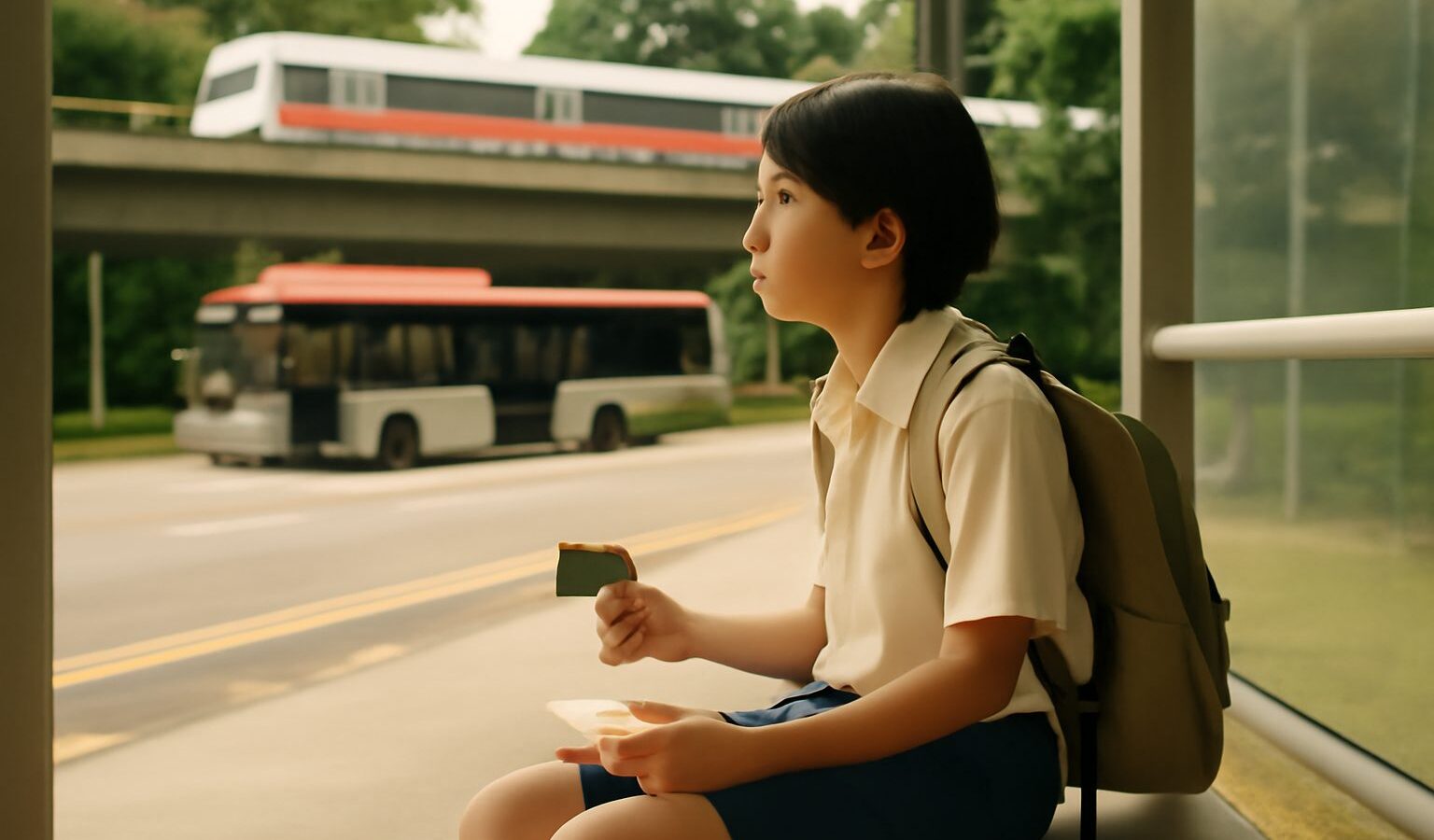
Sooner or later, most families here face the question of a child taking public transport alone in Singapore. Maybe secondary school is coming and the new campus is two bus rides away, or your child simply wants to meet a friend at the library without you hovering. Singapore’s transport network is well signposted, busy and generally safe, which makes it a good place to learn. The trick is not to start on a rushed school morning. The school holidays, with no timetable pressure and plenty of daylight hours, are the ideal window to build the skill step by step.
This guide is about growing independence, not about travelling together with toddlers. It covers how to tell whether your child is ready, how to run practice trips over a few holiday weeks, and the safety rules worth agreeing before the first solo journey.
Signs Your Child Is Ready for Solo Trips
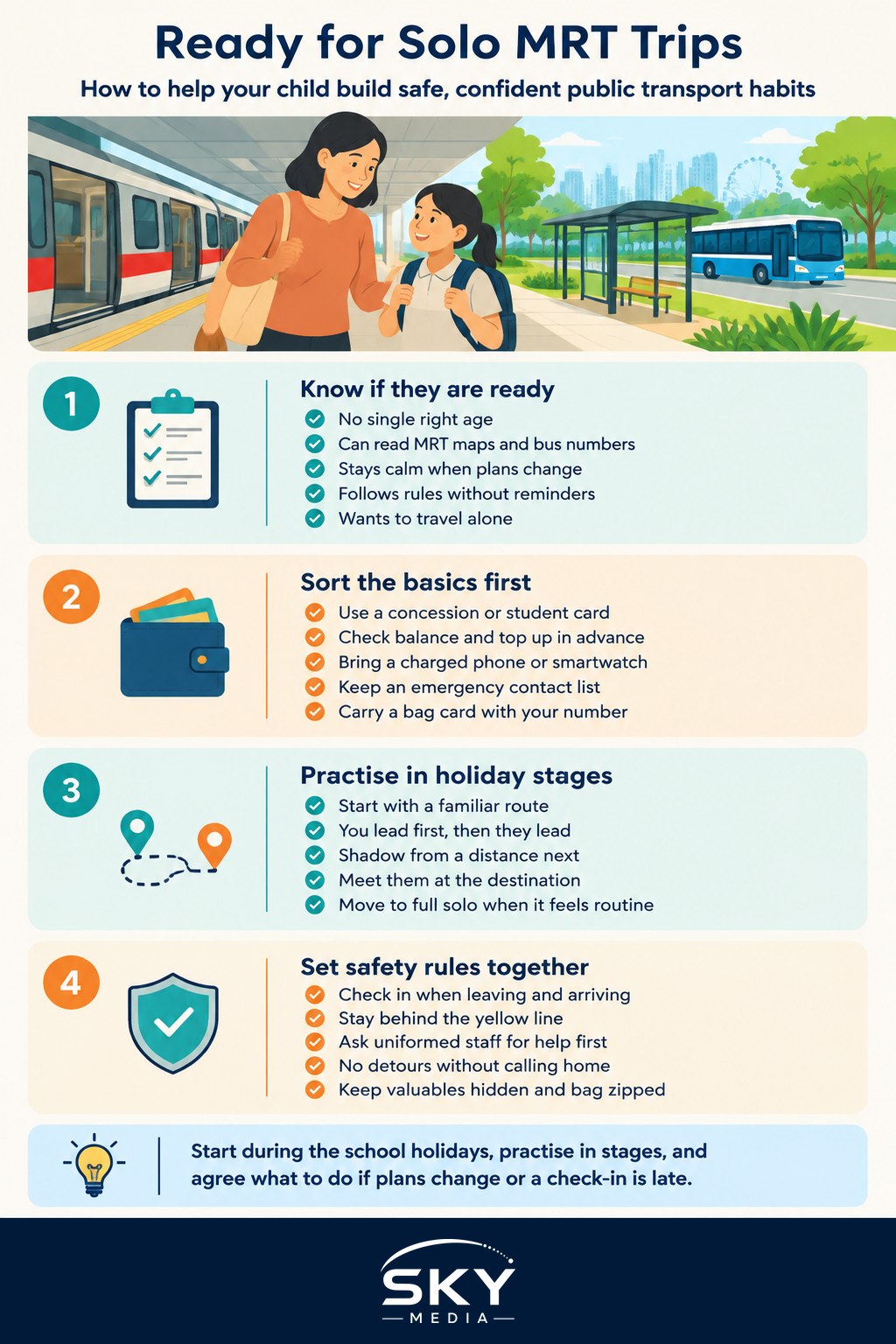
There is no single “right” age. Some children are confident at ten, others are happier waiting until they are older, and both are fine. Readiness is about skills and temperament, not birthdays. Look for these signs:
- They can read the network. Your child can find their station on an MRT map, knows which line colour and direction to take, and can read bus stop numbers and service numbers.
- They handle small surprises calmly. If a lift is out of order or a bus is full, do they pause and think, or panic?
- They follow agreed rules without reminders. Children who reliably text when they arrive at a friend’s home are more likely to stick to travel rules too.
- They can speak up. Asking a station staff member or bus captain for help needs a little confidence. Practise this with them.
- They want to do it. A child who is keen will pay more attention than one being pushed.
If several of these are not there yet, that is useful information, not a failure. Spend this holiday building the missing skills and try again next break.
Getting the Basics Sorted Before the First Practice Run
A few practical things make solo travel smoother.
Fare card. Children and students in Singapore can use concession cards that give lower fares, and primary and secondary school students usually get a student concession card through their school. Eligibility, how to apply and how to top up can change, so check the current details with SimplyGo or TransitLink before relying on them. Make sure your child knows how to check their balance and top up at a ticket machine or service point. Our guide to using SimplyGo for public transport explains how card-based travel works today.
Phone or watch. A basic phone or a child smartwatch lets them call you. Set up a short list of emergency contacts and teach them how to share their location if you use that feature as a family. Keep it charged and in a zipped pocket.
Route knowledge. Pick one or two fixed routes first, such as home to a grandparent’s flat or home to the neighbourhood library. Familiar routes come before ambitious ones.
ID and a written contact. A small card in their bag with a parent’s phone number is a useful backup if the phone battery dies.
A Practice Plan Across the School Holidays
The holidays give you time to move in stages. Each stage should feel a little easy before you move on.
- You lead, they watch. Ride the route together while you narrate: which exit, which bus stop, where to tap, when to press the bell.
- They lead, you follow. Your child plans the trip and makes every decision. You stay silent unless they are about to do something unsafe. Ask them afterwards what they noticed.
- You shadow from a distance. Sit in a different carriage or a few rows back on the bus. Your child travels “alone” while you are close by.
- Meet at the destination. They travel alone and you wait at the other end, at a set time and a set spot.
- Full solo trip. They travel alone, text when they leave and when they arrive, and you stay reachable.
Run each stage two or three times, ideally at different times of day so they see both quiet mid-morning trains and busier late-afternoon ones. Avoid starting solo trips during peak hours, when crowds make everything harder.
Here is how the stages compare.
| Stage | What your child does | What you do | Move on when |
|---|---|---|---|
| You lead | Watches and asks questions | Plans, explains each step | They can describe the route back to you |
| They lead | Plans and navigates | Follows silently | They make no major mistakes over two trips |
| Shadowing | Travels as if alone | Rides nearby, out of sight | They handle a small hiccup without looking for you |
| Meet at destination | Travels fully alone | Waits at the agreed spot | They arrive on time and calm |
| Full solo | Travels and checks in | Stays reachable by phone | It feels routine for both of you |
Safety Rules to Agree Before They Go
Agree a short set of rules together and write them down. Children follow rules better when they helped shape them.
- Check in at both ends. A quick message when leaving and arriving. Agree what you will do if a check-in is late, so nobody panics unnecessarily.
- Stand behind the yellow line and never rush through closing train or bus doors. There is always another train.
- Ask uniformed staff first. If lost or worried, go to the station control room or speak to the bus captain. In a shop or mall, a staffed counter is a good second choice.
- No detours. Stick to the agreed route. Any change, even a friend’s suggestion, needs a call home first.
- Keep valuables out of sight and keep the bag zipped and in front on crowded trains.
- Trust your feelings. If someone makes them uncomfortable, they can move carriages, get off at the next station, or go to staff. They do not need to be polite to someone who is bothering them.
Keep the tone calm. The aim is confidence, not fear. Most journeys are uneventful, and children who feel prepared are less anxious. A quick read of MRT and bus etiquette in Singapore together also helps them feel at ease with how things are done on board.
What to Do When Things Go Wrong
Practise the “what if” moments at home, as a game rather than a lecture.
- Missed stop: get off at the next station or stop, cross to the other side or find a bus going back, and message home.
- Lost card or phone: go to the station control room or tell the bus captain. Staff can explain how to report the loss and how lost items are usually traced.
- Train disruption: listen to announcements, follow staff instructions, and call home before taking any alternative route. Read what to do during an MRT or bus disruption with your child so they know free bridging buses and alternative services may be arranged.
- Feeling unwell: sit down, tell staff, and call you.
Role-play each scenario once or twice. When a real hiccup happens, your child will recognise it and know the first step.
Building on the Holiday Momentum
Once solo trips feel routine, keep the skill going after the holidays. Let your child handle a weekend trip to a relative’s home or an enrichment class, then gradually add new routes. Review the rules every few months, especially when they get a new phone or change schools.
Be honest about your own nerves, too. Many parents find the first solo trip harder than their child does. Remember that every independent journey builds problem-solving, time management and confidence, skills that matter well beyond the MRT map. If your child seems very anxious about travelling alone, slow down and talk to their form teacher or school counsellor, who can help with worries that go beyond the commute.
Further reading: Can You Leave Your Child Home Alone in Singapore? · Do You Need a Consent Letter to Travel Alone With Your Child?