
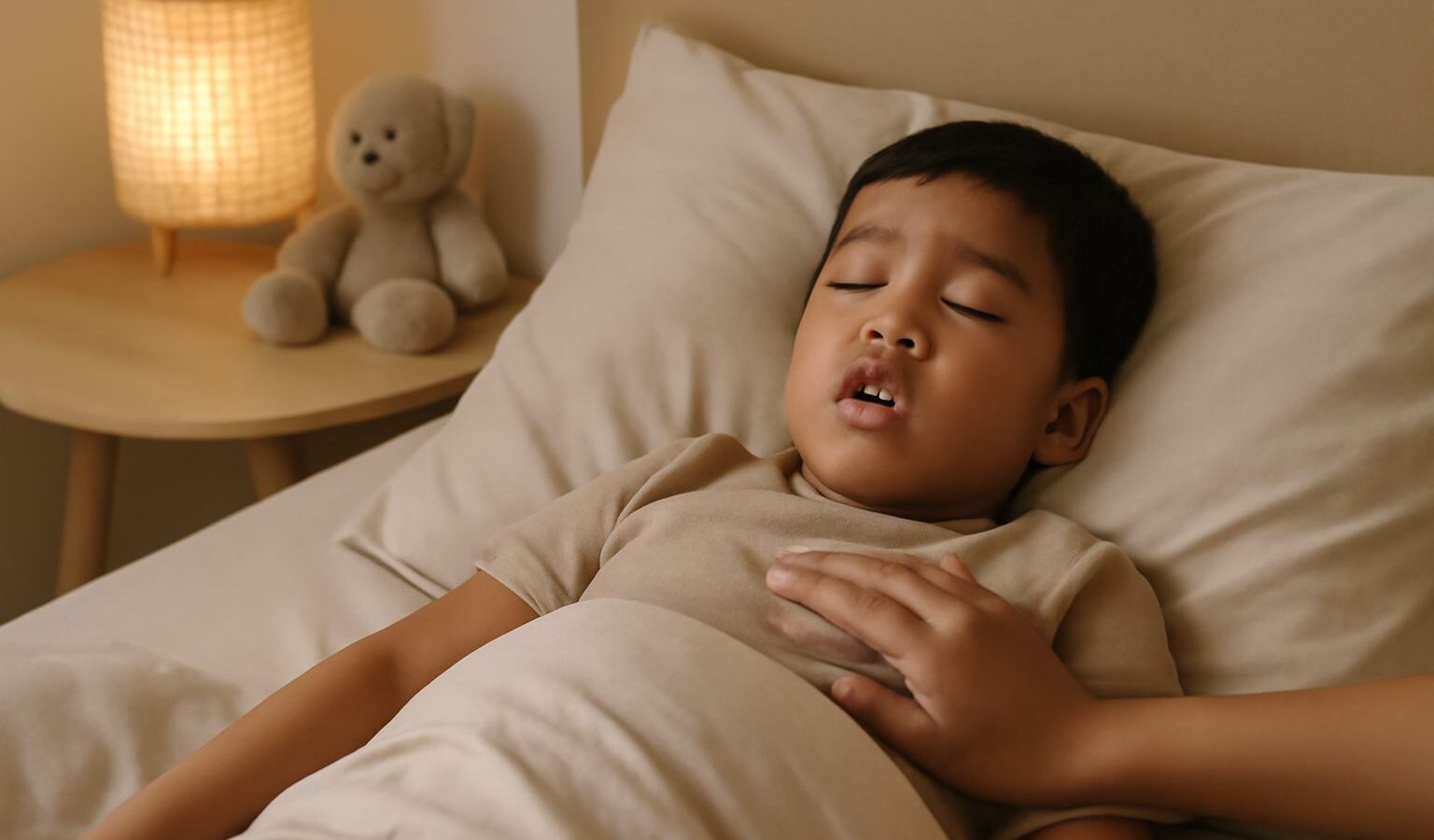
Few sounds are as endearing, or as worrying, as a child breathing heavily in their sleep. Many little ones snuffle and snore now and then, especially with a blocked nose, and most of the time it settles on its own. But loud, regular snoring can sometimes point to a problem worth checking. This guide to childrens snoring in Singapore explains what tends to be harmless, what deserves a closer look, and how to help your child sleep well. It is general information only and not a substitute for medical advice, so please speak to a doctor or paediatrician about your own child.
Why Children Snore
Snoring happens when air cannot move freely through the nose and throat during sleep, so the soft tissues vibrate. In children, a very common reason is simply a cold or a blocked nose. In our warm, humid climate, coughs, colds, and runny noses circulate all year round, and a child who never usually snores may do so for a few nights while unwell. This kind of short-lived snoring usually clears as the cold gets better.
Other common contributors include:
- Enlarged tonsils or adenoids, the small pads of tissue at the back of the throat and nose, which are larger in many young children.
- Allergies and a stuffy nose, which are widespread in Singapore. Dust mites thrive in our humidity, and haze or indoor irritants can make things worse.
- Sleeping position, as some children snore more on their back.
- Being unwell, tired, or breathing through the mouth for other reasons.
Occasional, soft snoring, particularly during a cold, is very common and usually nothing to worry about. It is loud, persistent snoring, or snoring with other symptoms, that is worth discussing with a doctor.
When Snoring May Be a Problem
Snoring becomes more significant when it is loud and happens most nights, or when it comes with pauses in breathing. If you notice your child seeming to stop breathing for a moment, gasping, choking, or struggling for breath during sleep, that is a sign to see a doctor. This pattern can be linked to a condition where breathing is briefly interrupted during sleep, which can affect how rested a child feels.
Other things to watch for and mention to your doctor include:
- Snoring that is loud and happens on most nights, not just when your child has a cold.
- Long pauses in breathing, gasping, or choking sounds during sleep.
- Very restless sleep, unusual sleeping positions, or heavy sweating at night.
- Mouth breathing during the day, a constantly blocked nose, or frequent throat and ear infections.
- Daytime tiredness, trouble concentrating, crankiness, or behaviour changes that seem out of character.
- Bedwetting that starts again after your child was previously dry at night.
If any of these ring true, it is sensible to see a doctor or paediatrician for a proper assessment. Poor sleep can quietly affect a child’s mood, learning, and growth, so it is worth taking seriously rather than waiting and hoping. A doctor can examine your child, ask about their sleep, and decide whether any further checks or referrals are needed. Only a professional can diagnose the cause and recommend the right treatment, so please do not try to self-diagnose from an article. For any breathing emergency, such as a child who is severely struggling to breathe or turning blue, call 995 or go to A&E immediately.
Helping Your Child Sleep Better
While a doctor sorts out any underlying cause, good sleep habits help every child rest more comfortably. A steady bedtime routine, a cool and dark room, and a consistent wake-up time all support deeper sleep. In our climate, keeping the bedroom comfortable and not too hot can make a real difference, and managing dust mites by washing bedding regularly may help children who snore because of allergies.
Try to keep screens out of the bedroom and switched off well before bed, as the wind-down time matters just as much for children as it does for adults. If your child is congested from a cold, gentle measures your doctor or pharmacist suggests can ease things, but avoid giving any medicine without proper advice.
For more on building healthy sleep foundations, see our guides to baby sleep and routines and childrens sleep problems and insomnia. If your child’s snoring comes with frequent colds, our piece on managing your child’s cough and cold may also be useful, and if allergies seem to play a part, managing childhood allergies and eczema is worth a read.
A Practical Wrap-Up
Most childhood snoring is mild, comes and goes with colds, and needs no treatment. What matters is knowing the difference between that and the louder, persistent snoring that keeps happening, especially if it comes with pauses in breathing, gasping, or daytime tiredness. If in doubt, trust your instincts as a parent and book an appointment. A doctor can reassure you or find the cause, and better sleep is one of the kindest things you can help your child achieve.