
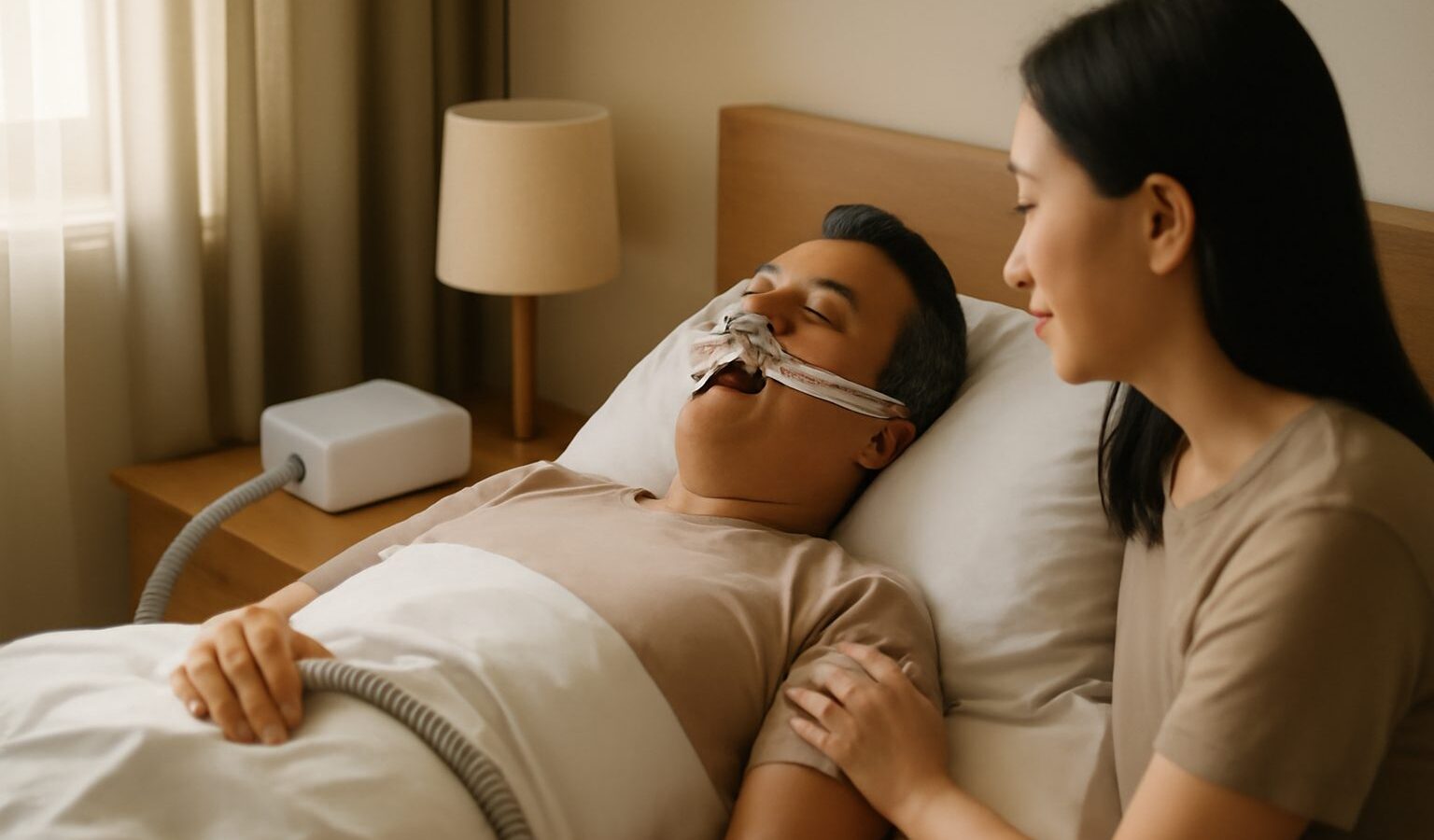
Snoring is so common that we treat it as a household joke rather than a health matter. Yet for some people, loud nightly snoring is a clue to something more serious happening while they sleep. Sleep apnea in Singapore is more widespread than many realise, and it often goes undiagnosed for years because the person affected is fast asleep and simply does not know. Understanding the difference between ordinary snoring and a condition that needs treatment can protect your energy, your mood and even your heart. This is general information, not a diagnosis, so please see a doctor for your own situation.
Snoring Versus Sleep Apnea
Snoring happens when air moves past relaxed tissues at the back of the throat and makes them vibrate. Plenty of people snore now and then, especially after alcohol, when tired, or when lying on their back. On its own, gentle snoring is usually harmless, if annoying for whoever shares the room.
Obstructive sleep apnea is different. Here the airway does not just narrow, it repeatedly collapses or gets blocked, so breathing pauses for short spells through the night. The body briefly rouses to reopen the airway, often with a gasp or snort, then settles again. This can happen many times an hour without the person ever fully waking. The result is fragmented, shallow sleep even after a full night in bed.
The tricky part is that heavy snoring and apnea can look similar from the outside. That is why the warning signs matter.
Signs Worth Taking Seriously
Because you are asleep when it happens, the clues often come from a partner or family member, or from how you feel during the day. Common signals include:
- Loud, chronic snoring, often interrupted by gasping, choking or silent pauses.
- A bed partner noticing that you seem to stop breathing at times.
- Waking unrefreshed no matter how long you slept.
- Strong daytime sleepiness, dozing off at your desk, on the MRT, or worse, while driving.
- Morning headaches, a dry mouth or a sore throat on waking.
- Trouble concentrating, low mood, or feeling irritable.
- Needing to pass urine several times a night.
Not everyone with these signs has sleep apnea, and not everyone with apnea snores loudly. But a cluster of them, especially witnessed pauses in breathing plus heavy daytime sleepiness, is a strong reason to get checked.
Why It Matters for Your Health
Untreated sleep apnea is not only about feeling tired. When breathing keeps stopping and starting, oxygen levels dip and the body stays in a stressed, alert state through the night. Over time this is linked to higher blood pressure, heart problems, and poorer control of conditions such as diabetes. The daytime sleepiness also raises the risk of accidents at work and on the road, which is a real safety concern for drivers and anyone operating machinery.
There is a hopeful side to this. Sleep apnea is treatable. Once it is properly diagnosed and managed, many people describe feeling like a different person, with more energy, clearer thinking and better mood. That is a strong reason not to ignore the signs.
Snoring Versus Apnea at a Glance
| Feature | Simple snoring | Possible sleep apnea |
|---|---|---|
| Breathing | Noisy but steady | Pauses, gasping or choking noises |
| How you feel by day | Usually fine | Very sleepy, foggy, low energy |
| Effect on sleep quality | Mild | Fragmented, unrefreshing |
| Health risk | Generally low | Linked to heart, blood pressure, safety |
| What to do | Basic self-help may help | See a doctor for proper assessment |
Treat this table as a prompt to seek advice, not as a way to rule apnea in or out yourself. Only a doctor can do that.
Things That Can Help, and Getting Assessed
Some general habits can ease mild snoring and support treatment. Keeping to a healthy weight, since extra weight around the neck narrows the airway, sleeping on your side rather than your back, limiting alcohol close to bedtime, and treating a blocked nose can all make a difference. Good sleep habits overall help too. These steps are supportive, but they are not a substitute for proper assessment when apnea is suspected.
If sleep apnea seems likely, a doctor may arrange a sleep study, which measures your breathing and oxygen through the night, at a clinic or sometimes at home. Based on the results, treatment might include a CPAP machine that keeps the airway open with gentle air pressure, a dental device, lifestyle changes, or in some cases surgery. The right approach depends on your situation, so let a qualified doctor guide it rather than buying gadgets online or self-treating. Do not start any device or supplement on your own without medical advice.
When to See a Doctor or Seek Urgent Help
Book a visit to your GP or polyclinic if you or your family notice loud snoring with pauses or gasping, if you feel persistently sleepy during the day, or if you catch yourself nodding off while driving or at work. Your doctor can assess you and refer you to a sleep specialist if needed. Do not wait for it to “sort itself out”, because the effects build quietly over years.
Some situations need urgent care. Call 995 or go to A&E immediately if someone stops breathing and does not start again, is unresponsive, has blue lips, or is in severe breathing distress. Sudden, severe chest pain or signs of a stroke also need emergency help right away. And if drowsiness ever puts you at risk behind the wheel, stop driving and rest.
The Takeaway
Snoring may be common, but relentless snoring paired with gasping and daytime exhaustion is worth taking seriously. Getting checked is straightforward, treatment works, and the payoff in energy and long-term health is significant. If any of the warning signs sound familiar, make that appointment.
Explore more
Good routines support any treatment, so start with our guide to building better sleep habits in Singapore. If constant daytime tiredness is your main worry, our tips on beating afternoon fatigue and low energy may help you spot the cause. And when everyday bugs disrupt your rest, see managing the common cold and flu.