
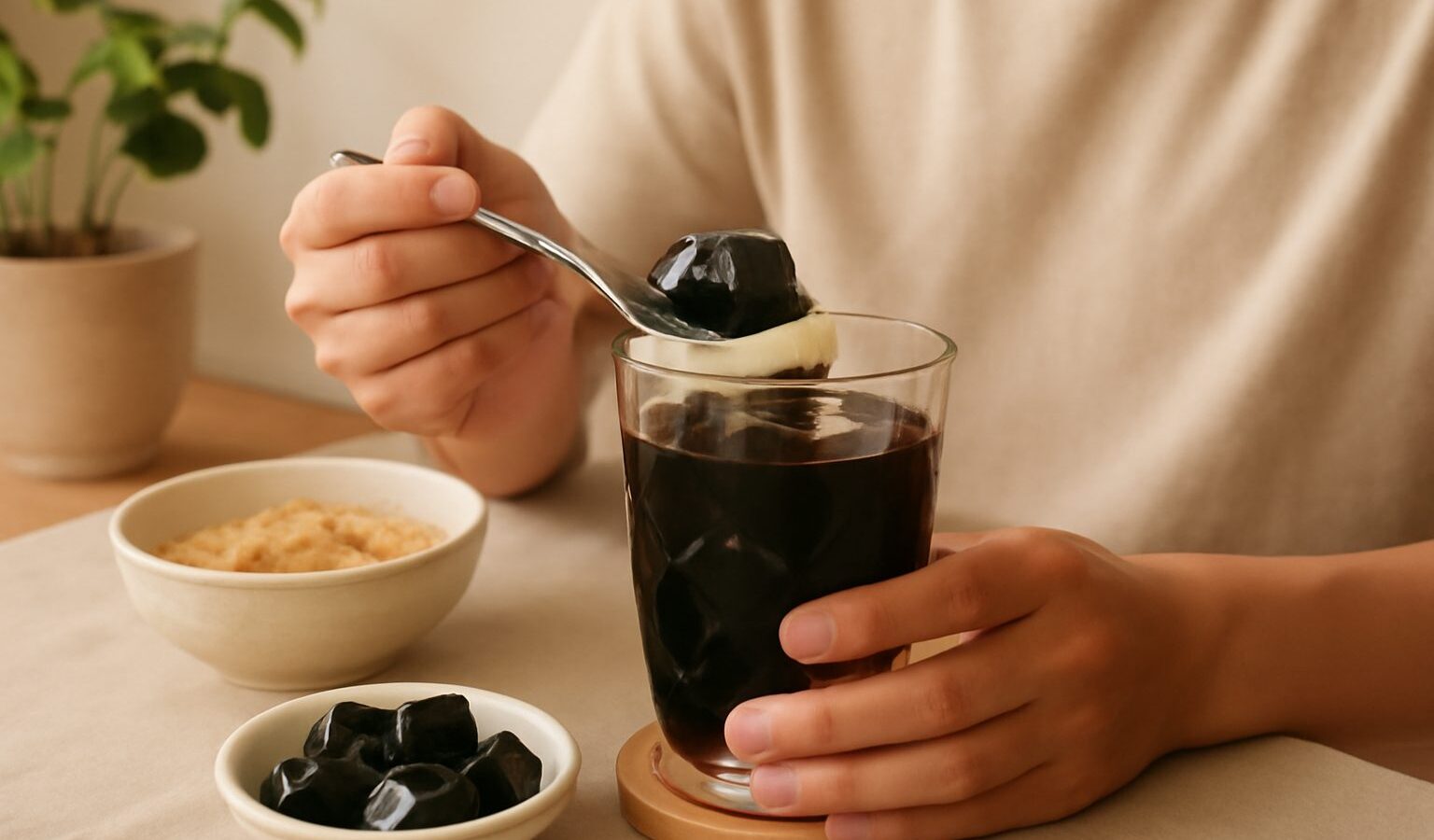
Grass jelly is one of those hawker staples that many people in Singapore grew up with but rarely think about. Those glossy black cubes, known locally as chin chow, turn up in iced drinks, in ice kachang, floating in soya bean milk and in warm bowls of dessert. If you have wondered what grass jelly in Singapore is actually made of, why older relatives call it “cooling”, and how best to order it, this guide covers the essentials.

What Grass Jelly Is Made From
Despite the name, grass jelly does not come from lawn grass. It is made from a herb in the mint family, commonly called mesona or Chinese mesona, which grows in southern China, Taiwan and parts of Southeast Asia. Its Chinese name, 仙草 (xian cao), means roughly “immortal herb” or “fairy grass”. “Chin chow” is the Hokkien pronunciation you will hear at hawker centres.
The traditional method goes like this:
- The stalks and leaves of the plant are dried, sometimes aged, which deepens the flavour.
- The dried herb is boiled for a long time, often with a pinch of alkali, to draw out a dark brown liquid.
- Starch, such as tapioca, rice or corn starch, is mixed in and the liquid is heated until it thickens.
- It is poured into trays and left to set into a firm, slightly wobbly jelly that is almost black.
Most commercial grass jelly today is made from powdered grass jelly mix or sold ready-made in cans and tubs, rather than brewed from the dried herb. Traditional versions tend to have a stronger herbal, slightly bitter and smoky taste, while mass-produced ones are milder.
On its own, grass jelly tastes faintly herbal with a hint of bitterness and almost no sweetness. That is why it is almost always served with sugar syrup, milk or other sweet ingredients.
The “Cooling” Belief
In Traditional Chinese Medicine (TCM) thinking, foods are often described as “heaty” or “cooling”. Grass jelly is firmly in the cooling group, alongside foods like barley water, chrysanthemum tea and luo han guo. Many families reach for a bowl of chin chow on a hot afternoon, after eating deep-fried or spicy food, or when someone feels they have a sore throat or “too much heat” in the body.
It helps to understand this as a cultural and traditional food belief, not a medical claim. Grass jelly is a refreshing, light, low-fat food, and a cold glass of it certainly feels good in Singapore’s weather. But it is not a treatment for any illness, and the sugar syrup it is served with adds up. If you are managing a health condition such as diabetes, treat sweetened grass jelly drinks like any other sweet drink and ask your doctor or a dietitian if unsure.
How Grass Jelly Is Served in Singapore
You will find chin chow at drink stalls, dessert stalls, food courts and bubble tea shops. Common ways to have it:
- Chin chow drink. Shredded or cubed grass jelly in sugar syrup with ice. Simple, cheap and very refreshing. Ask for less sugar if you prefer.
- Soya bean milk with grass jelly. Cold soya bean milk with chin chow cubes, a hawker favourite. Locally it has the playful nickname “Michael Jackson”, because the black and white mix together.
- In ice kachang and other shaved ice desserts. Cubes of grass jelly are one of the classic toppings, alongside red beans, attap chee, sweet corn and jelly.
- Grass jelly with milk or coconut milk. A creamier version, sometimes topped with evaporated milk.
- Bubble tea topping. Many tea shops offer grass jelly as a lighter alternative to tapioca pearls, often in milk tea.
- Warm grass jelly dessert. Influenced by Taiwanese 烧仙草 (shao xian cao), a hot, thick grass jelly soup topped with peanuts, taro balls, red beans or pearls. It is less common than the cold versions but appears at some dessert shops, especially those with a Taiwanese menu.
For more on how chin chow fits into the wider local dessert scene, see our guide to local desserts explained.
Ways to Enjoy Grass Jelly Compared
| Style | Texture and taste | Best for | Where you usually find it |
|---|---|---|---|
| Chin chow drink | Light, sweet, icy, faintly herbal | A quick cool-down on a hot day | Hawker drink stalls, food courts |
| Soya bean with grass jelly | Creamy, mildly sweet, smooth | Breakfast or an afternoon snack | Soya bean stalls, dessert stalls |
| Ice kachang topping | Chewy cubes among many toppings | Sharing a big dessert | Dessert stalls, hawker centres |
| Bubble tea topping | Soft, jelly-like in milk tea | A lighter alternative to pearls | Bubble tea shops |
| Warm grass jelly soup | Thick, warm, nutty with toppings | Rainy days or cooler evenings | Taiwanese-style dessert shops |
Buying and Making Grass Jelly at Home
Supermarkets and Asian grocery shops in Singapore usually stock grass jelly in a few forms:
- Canned grass jelly, ready to cut into cubes or strips. Check whether it is plain or already sweetened.
- Grass jelly drinks in cans or bottles, usually quite sweet.
- Grass jelly powder, which you mix with water and sugar, boil, then leave to set.
- Fresh grass jelly blocks in tubs at some wet markets and dessert suppliers.
A simple home version:
- Prepare grass jelly from powder following the packet instructions, or open a can and slice the jelly into cubes.
- Make a light syrup by simmering water with rock sugar or brown sugar until dissolved. A pandan leaf adds a nice aroma.
- Chill the syrup, then serve the grass jelly in a glass with syrup and plenty of ice.
- For the soya bean version, swap the syrup for chilled soya bean milk.
Making it yourself lets you control the sugar, which is useful if you drink it often. Keep opened or homemade grass jelly covered in the fridge and eat it within a few days. Discard it if it smells sour or the texture turns slimy.
Tips for Ordering Like a Local
- At drink stalls, “chin chow” usually gets you the iced drink. Say “soya bean chin chow” if you want it with soya bean milk.
- Use the standard sweetness codes where offered, such as “siew dai” (less sweet) or “kosong” (no sugar), though some stalls pre-sweeten the jelly.
- Grass jelly is generally plant-based, but check if you have dietary restrictions, as some versions are served with dairy milk, and halal certification depends on the individual stall or brand.
- If you are new to the taste, start with the soya bean version, which softens the herbal bitterness.
Grass jelly is cheap, refreshing and very much part of Singapore’s hawker heritage. Whether you have it as a quick iced drink or a warm Taiwanese-style bowl, it is an easy way to cool down and taste a bit of local food tradition.
Explore more: Local Desserts Explained, Smoothies and Health Drinks in Singapore, Nyonya Desserts and Kueh.
Further reading: How to Make Barley Water at Home