
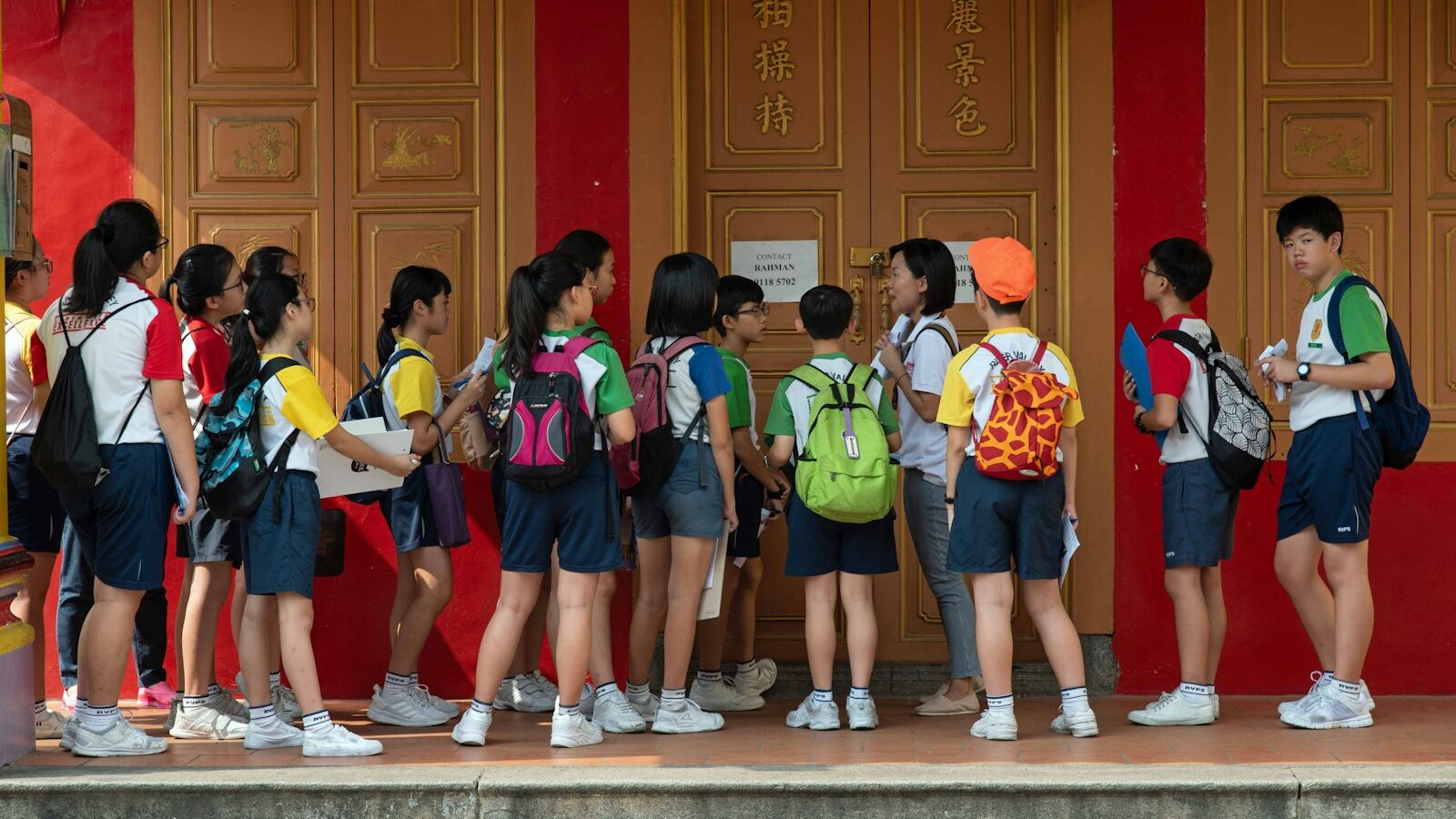
If you have moved here from the mainland, or from anywhere else, one of the first questions on your mind is likely how your child will keep up their Chinese. The good news for families searching for chinese schools singapore is that Mandarin is woven into the national system: nearly every local child studies it as a subject. The less obvious news is that the way Chinese is taught here differs a fair bit from schooling in China, so it helps to understand the system before you choose a path.
This guide walks through how Mandarin is taught in local schools, what Special Assistance Plan (SAP) schools and Higher Chinese are, and the options for topping up your child’s Chinese through tuition, enrichment and weekend classes.
Bilingual education is the foundation
Singapore runs on a bilingual education policy. English is the main language of instruction across almost all local schools, used for maths, science and most subjects. Alongside it, every student learns a “mother tongue” language, which for most Chinese-Singaporean children is Mandarin.
So a typical local pupil spends most of the school day in English and studies Mandarin as one timetabled subject. This is a key difference from a mainland school, where Chinese is the medium for everything. Here, Chinese is a language subject sitting inside an English-medium system. For a child arriving with strong Mandarin and weaker English, the early adjustment is usually about English, not Chinese.
A useful way to think about it: your child will likely find the Chinese class easy at first, and the challenge will be catching up in English. Many mainland families find this reassuring, and a few are surprised the Chinese content feels lighter than back home.
How Mandarin is taught as a mother-tongue subject
Mother tongue is examined from primary school through to the national examinations at the end of secondary school. The curriculum focuses on reading, writing, listening and speaking, and it uses simplified characters and Hanyu Pinyin, which will feel familiar to mainland families.
A few things tend to catch newcomers off guard:
- The workload and pace in Chinese class is generally lighter than a mainland curriculum, because it is one subject among many rather than the whole schooling experience.
- Assessment includes oral and listening components, not just written work, so conversational confidence matters.
- Mother tongue results count towards placement at major transition points, so it is a subject worth keeping strong rather than coasting on.
Because admissions rules, syllabuses and examination formats are reviewed and updated periodically, treat any specific detail you read online as a starting point and confirm the current position with the Ministry of Education (MOE) and directly with the schools you are considering.
SAP schools and Higher Chinese
Two terms come up constantly and are worth knowing.
Special Assistance Plan (SAP) schools are a group of schools that promote a stronger bilingual and bicultural environment. They typically offer Higher Chinese and immerse students more deeply in Chinese language and culture, while still teaching most subjects in English. For a child with a strong Mandarin base, a SAP school can be a natural fit, though places are competitive and entry depends on the admissions criteria in force that year.
Higher Chinese is a more advanced version of the mother-tongue subject, aimed at students who can handle greater depth and a heavier language load. It is offered at selected primary and secondary schools, not everywhere. Taking Higher Chinese can carry advantages at certain admissions stages, and it keeps the language at a level closer to what mainland families may expect.
Eligibility and the benefits attached to Higher Chinese do change, so check the latest MOE guidance and ask the specific school how it runs its programme.
Local school or international school?
Children of mainland families broadly face two routes, and the right one depends on how long you plan to stay and what you want for your child.
Local schools
Going local means full immersion in the bilingual system: English-medium teaching with Mandarin as mother tongue. Your child mixes with Singaporean peers, and the Chinese they learn is formal and examinable. Places in local schools for non-residents are subject to availability and MOE’s admissions framework, so confirm eligibility early.
International schools
Many international schools teach in English and offer Mandarin programmes that range from beginner to near-native tracks. Some run strong Chinese streams; others treat it as a foreign language. If maintaining a high level of Chinese matters to you, look closely at how many hours a week the school devotes to Mandarin and whether it separates fluent speakers from beginners. Do not assume every international school will stretch a child who already speaks Mandarin at home.
Keeping Chinese strong outside school
Whichever route you choose, many families top up their child’s Chinese beyond the classroom. This is where Singapore’s large market of enrichment and tuition comes in.
Options include:
- Mandarin tuition. One-to-one or small-group tutors help with schoolwork, exam technique and composition. Mandarin tuition is widely available and ranges from casual help to intensive exam preparation.
- Chinese enrichment centres. These focus on speaking, reading fluency, character recognition and a love of the language, often through stories, games and speech and drama. Chinese enrichment suits younger children and those you want to keep engaged rather than drilled.
- Weekend and holiday classes. Weekend Mandarin classes, cultural programmes and immersion camps are a lighter-touch way to maintain the language, especially for children in international schools with limited Mandarin hours.
- Home habits. Chinese books, cartoons, family reading and simply speaking Mandarin at home do more heavy lifting than any single class.
Quick tips for newcomer families
- Decide first whether your priority is fitting into the local system or preserving a mainland level of Chinese; the answer steers everything else.
- Confirm your child’s school-placement eligibility with MOE before committing to a neighbourhood or a school.
- If your child’s Mandarin is strong, ask specifically about Higher Chinese and SAP options.
- For international-school families, count the actual weekly Mandarin hours before deciding whether you need outside enrichment.
- Sample a class or two before signing up for a long enrichment or tuition package.
- Keep Mandarin alive at home: it is the cheapest and most effective enrichment there is.
How it differs from schooling in China
The headline difference is medium of instruction. In China, Chinese carries the whole curriculum; in Singapore, English does the heavy lifting and Chinese is one strong subject. Expect a lighter Chinese workload, a heavier emphasis on English overall, and assessment that values spoken and listening skills alongside writing. For most children the transition is smooth, but the balance of effort usually shifts towards building English while maintaining, rather than advancing, Chinese.
Because curricula and admissions evolve, use official sources as your anchor. Verify the current picture with MOE and with the individual schools before you make any decision, and treat online summaries, including this one, as orientation rather than the final word.
Explore more: A guide to schools in Singapore and The best enrichment classes in Singapore