

A chocolate making workshop in Singapore is one of the more satisfying ways to spend a weekend afternoon or a team outing. You get your hands busy, you learn something about where chocolate comes from, and you leave with a box of things you made. Unlike painting or pottery, though, chocolate workshops vary a lot in what you actually do. Some take you through the journey from cacao bean to bar, others focus on truffles and decorating, and others are built for groups.
This guide helps adults pick the right format, know what to expect and ask the right questions before booking.
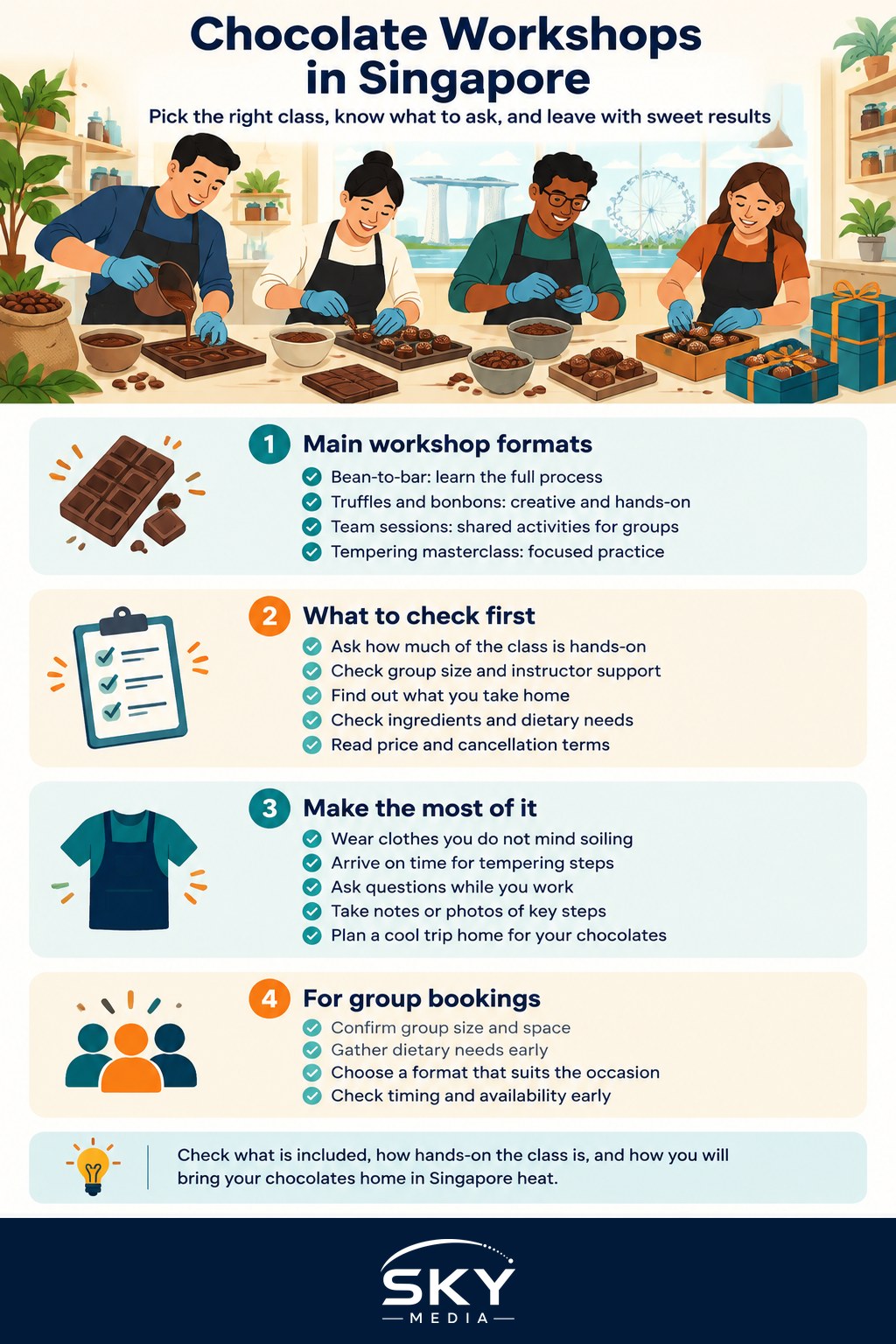
The Three Main Workshop Formats
Most adult chocolate classes fall into one of three styles. Knowing which you want saves you from booking a decorating session when you were hoping to learn the science.
Bean-to-bar workshops
Bean-to-bar classes follow the process that craft chocolate makers use. Depending on the workshop, you may:
- Look at and taste roasted cacao beans and nibs.
- Learn how beans are fermented, dried and roasted at origin.
- See or try winnowing, which separates the shell from the nib.
- Learn how nibs are ground and refined with sugar into chocolate.
- Temper and mould your own bar.
Because grinding and refining take many hours, short classes often use chocolate that has already been refined and focus on tempering, tasting and moulding. If the full process matters to you, ask exactly which steps you will do yourself.
Truffle and bonbon workshops
These are the most common type. You work with ready-made couverture, a high quality chocolate made for melting and coating, to make:
- Ganache, a mix of chocolate and cream, for truffle centres.
- Rolled truffles coated in cocoa powder, nuts or other toppings.
- Moulded bonbons with coloured shells and fillings.
They suit people who want a creative, hands-on session with a pretty result to take home or gift.
Team and group activity sessions
Corporate and group workshops are built around a shared experience. They might include a short talk, a friendly competition, decorating stations or a group tasting. The focus is more on interaction than technique. These are popular for team bonding, birthday celebrations and hen parties.
Comparing the Formats at a Glance
| Format | What you do | Best for | Skill level |
|---|---|---|---|
| Bean-to-bar | Taste beans, learn the process, temper and mould bars | Curious foodies and coffee or wine lovers | Beginner to intermediate |
| Truffles and bonbons | Make ganache, roll and coat truffles, fill moulded shells | Gift makers, couples, creative beginners | Beginner |
| Team activity | Group challenges, decorating, tasting | Office teams, parties, mixed groups | No experience needed |
| Tempering masterclass | Focused practice on melting, cooling and setting chocolate | Home bakers who want to improve | Intermediate |
What to Check Before You Book
Workshop providers in Singapore range from small independent chocolatiers to baking studios and event companies. Rather than chasing a name, compare what each offers:
- Hands-on time. Ask how much of the session is spent actually working with chocolate versus watching a demonstration.
- Class size and ratio. Smaller groups usually mean more help from the instructor, especially when tempering, which is easy to get wrong.
- What you take home. Ask roughly how many pieces or bars you will leave with and whether packaging is provided.
- Ingredients. If you care about origin, ask what chocolate is used and whether it is single-origin.
- Dietary needs. Check for nut handling, dairy-free or halal requirements, and allergen information. Kitchens often handle nuts and milk, so ask about cross-contact if allergies are serious.
- Duration and location. Many studios are in commercial buildings or shophouses. Check how easy the venue is to reach by MRT or bus.
- Price and what it covers. Prices differ widely by format and group size. Ask what is included, such as ingredients, aprons and packaging.
- Cancellation and rescheduling terms. Read these carefully, especially for group bookings.
Getting the Most Out of the Session
A few simple habits make the class more enjoyable:
- Wear comfortable clothes you do not mind getting a little messy. Tie back long hair.
- Arrive on time. Tempering steps are time sensitive, and latecomers can miss key moments.
- Ask questions while you work. Instructors are usually happy to explain why chocolate blooms, why it turns dull or why it seizes when water gets in.
- Take notes or photos of temperatures and steps, so you can repeat them at home.
- Plan the trip home. Singapore’s heat is hard on chocolate. Bring a cooler bag, avoid long walks in the sun and refrigerate your creations soon after if the instructor advises it.
If you catch the bug, our guide to chocolate making at home covers what you need to keep practising in your own kitchen.
Planning a Group or Team Session
Team workshops work best when the organiser sorts out the details early:
- Confirm numbers and space. Ask the provider about the maximum group size and whether they can come to your office or need you to go to them.
- Gather dietary needs in advance. Send a quick form to participants about allergies and dietary requirements.
- Decide on the format. A competition style session energises a team, while a relaxed truffle class suits a farewell or celebration.
- Ask about timing. Weekday afternoons are common for corporate sessions. Check the provider’s availability early, especially around festive periods.
- Agree on the take-home. Gift boxes for each participant make the activity feel complete.
For more ideas in a similar spirit, compare chocolate-making experiences in Singapore with other craft options like perfume-making workshops.
Is a Chocolate Workshop Worth It?
For most adults, the answer depends on what you want out of the day. If you want to understand chocolate the way you might understand coffee or wine, a bean-to-bar class gives you context and tasting skills you will use every time you buy a bar. If you want a fun, social afternoon and gifts to hand out, a truffle or team session delivers. Either way, ask clear questions before booking, check the terms, and you will come away with new skills and something sweet to share.
Further reading: Candle Making Workshops in Singapore for Private Groups