

Singapore is a walking city. Between MRT transfers, park connectors, mall loops and weekend runs, many of us cover a lot of ground on hard surfaces in warm, humid weather. If your feet ache after a long day or your shoes feel flat after a few months, the insert inside your shoe may be part of the problem. Choosing insoles in Singapore can be confusing, though, because shelves mix soft gel pads, sporty arch supports and pricier custom orthotics with very different purposes.
This guide explains the main types of insoles, how to match them to walking or running, how to check fit, and when to get professional advice first. It is general information, not medical advice. If you have ongoing pain, numbness, diabetes or a foot condition, speak to a doctor or podiatrist before changing what you wear.
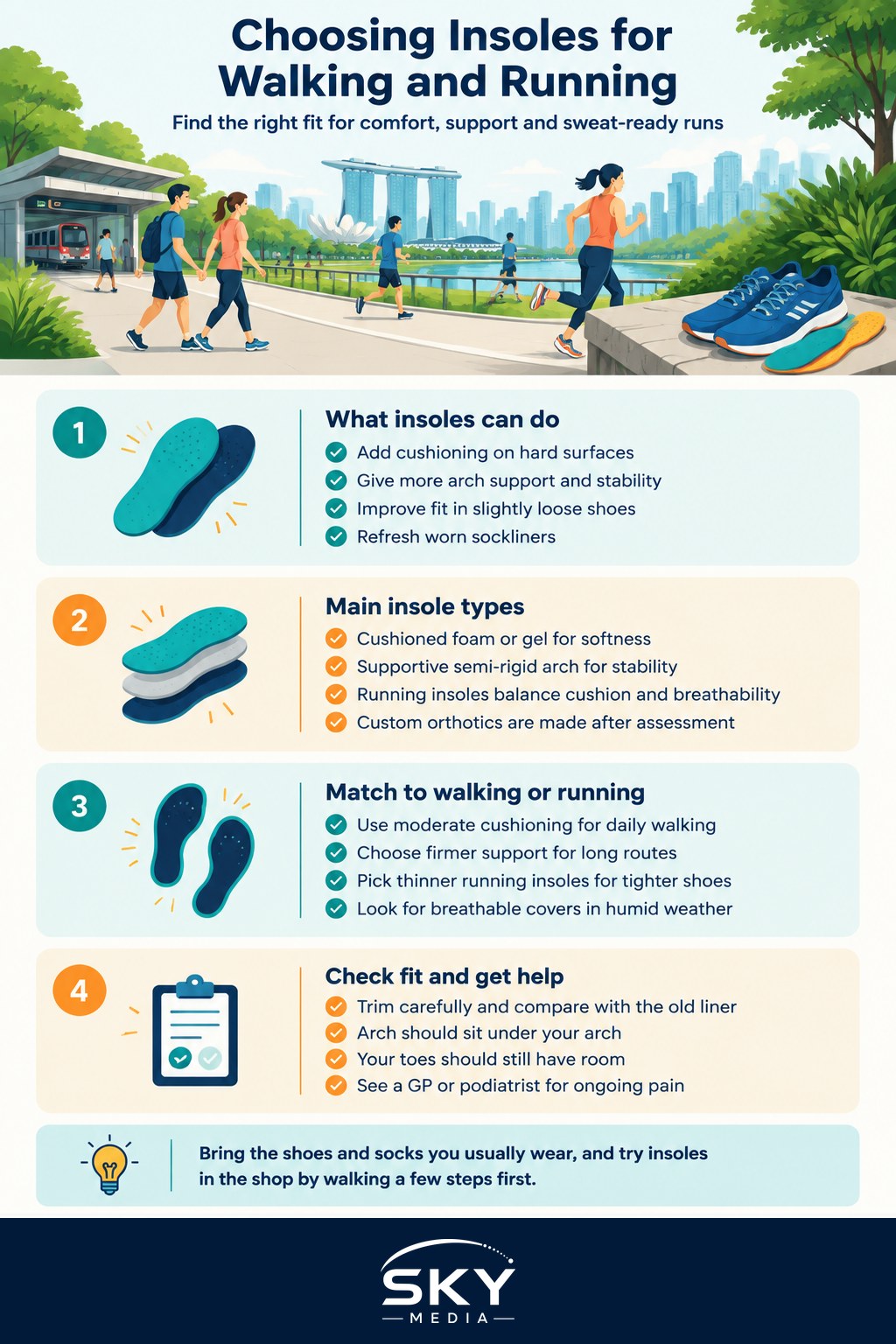
What Insoles Can and Cannot Do
Most shoes come with a thin, removable sockliner. An aftermarket insole replaces it to change how your foot sits in the shoe. Depending on the design, insoles can:
- Add cushioning to soften impact on hard pavements and treadmills.
- Offer more arch support and a deeper heel cup, so the foot feels more stable.
- Improve fit in shoes that feel slightly loose or flat.
- Replace a worn sockliner to refresh comfort in shoes that are otherwise in good condition.
Insoles have limits. They will not fix shoes that are the wrong size or worn out, they cannot cure injuries, and a feature that helps one person may feel uncomfortable for another. Comfort is the main guide for most people, and anything aimed at treating pain is best guided by a professional.
The Main Types of Insoles
Insoles fall into a few broad groups. The table compares them on the points most buyers care about.
| Type | What it does | Best suited to | Things to watch |
|---|---|---|---|
| Cushioned (foam or gel) | Adds softness under the heel and forefoot | Long days on your feet, casual walking | Can compress over time; thick versions may crowd the shoe |
| Supportive (semi-rigid arch) | Firmer arch and deeper heel cup for stability | Regular walkers and runners who want a more supported feel | Takes time to get used to; arch shape must feel right |
| Sport-specific running insoles | Balance of light cushioning, support and breathability | Runners logging regular weekly distance | Check thickness so your running shoes still fit well |
| Thin comfort or fit insoles | Low-profile padding or volume filler | Dress shoes, slim sneakers, slightly loose shoes | Limited support |
| Custom orthotics | Made or prescribed for your feet after assessment | People with specific foot conditions or persistent pain | Usually via a podiatrist; costs and waiting times vary |
Some retailers offer heat-mouldable insoles that shape to your foot after warming. These sit between off-the-shelf and custom options and can be worth trying if standard arch shapes feel off.
Choosing Insoles for Walking
For walking, comfort over long periods matters more than performance.
- Daily commuting and errands: a moderate cushioned insole with light arch support suits most people. It takes the edge off hard floors in MRT stations and malls.
- Long walks on park connectors or trails: look for a supportive insole with a defined heel cup and good grip on the shoe bed, so your foot does not slide on longer routes. Our guide to park connectors and walking in Singapore has ideas for routes to try once you are comfortable.
- Walking for fitness or weight loss: if you are building up distance steadily, a supportive insole can make the extra kilometres more comfortable. See how to start walking for weight loss for building a routine gradually.
- Weighted walking or rucking: carrying a load increases pressure on your feet, so a firmer, durable insole is usually better than a very soft one. Start light and progress slowly.
Choosing Insoles for Running
Running adds repeated impact, so the balance of cushioning, support and weight matters.
- Match the insole to your shoe. Many modern running shoes already have generous midsole cushioning. Adding a very thick insole can make the shoe feel tight and change how it was designed to work. A thinner, supportive running insole is often a better match.
- Think about the surfaces you run on. Pavements, tracks and treadmills feel different. Runners who mix surfaces often prefer moderate cushioning with stable heel support.
- Prioritise breathability. Singapore’s humidity means sweaty feet. Look for perforated or moisture-wicking top covers and remove insoles after runs to air dry.
- Introduce gradually. Wear new insoles on short, easy runs first. A sudden change in support on a long run can lead to soreness.
If you are training for a race or running most days, a running specialty shop or a podiatrist can assess your gait and footwear together, which is more useful than choosing an insole in isolation.
How to Check Fit in the Shop
Bring the shoes you plan to use, and the socks you normally wear, when you buy insoles. Then:
- Remove the existing sockliner. Most aftermarket insoles replace it rather than sit on top.
- Compare lengths. Place the old liner over the new insole. Trim-to-fit insoles usually have guide lines; cut a little at a time.
- Check the arch position. The highest point of the insole’s arch should line up with your arch, not press into the ball of your foot or your heel.
- Test the toe space. There should still be room to wiggle your toes. If the shoe feels tight, choose a thinner insole.
- Walk around. Ask to walk or jog a few steps. You should feel supported, not pushed or pinched.
Many shoes also have pressure points that an insole cannot fix. If your heel slips or the toe box is too narrow, the shoe may simply be the wrong fit.
When to Seek Professional Advice
Off-the-shelf insoles suit many people, but some situations call for a proper assessment. Consider seeing your GP or a podiatrist if you have:
- Persistent heel, arch, knee or hip pain that does not settle with rest.
- Numbness, tingling or reduced feeling in your feet.
- Diabetes or circulation issues, where foot care needs extra attention.
- A previous foot or ankle injury, or a diagnosed foot condition.
- Pain that worsens when you change footwear or insoles.
In Singapore, podiatry services are offered in public hospitals and some polyclinics, typically through a referral, as well as at private clinics. Your doctor can advise on the right pathway, and you can check HealthHub for general information on foot health. Costs, subsidies and referral requirements can change, so confirm the current details with the provider.
Caring for and Replacing Insoles
Insoles wear out like shoes do. A few habits keep them working:
- Take them out to air dry after sweaty walks or runs, away from direct heat.
- Wipe or hand wash them according to the manufacturer’s instructions.
- Rotate between pairs of shoes if you walk or run daily.
- Replace them when the cushioning feels flat, the top cover peels, or the arch no longer feels supportive.
Comfortable feet make it easier to keep moving. For more ways to build activity into everyday life, see our guide to walking more in Singapore.
Frequently Asked Questions
Can I use the same insoles in different pairs of shoes? You can move them between shoes of similar size and shape, but the fit may differ each time. Shoes with different depth or arch design can make the same insole feel off, so test it in each pair and trim only if the insole is designed for it.
How long do insoles usually last? There is no fixed lifespan, since it depends on your weight, how much you walk or run and the materials. Replace them when the cushioning feels flat, the top cover peels or the arch support feels weaker. Daily runners usually need replacements sooner than casual walkers.
Do flat feet need special insoles? Some people with flat feet find a supportive arch more comfortable, but others do not need one at all. Pain is the thing to pay attention to. If you have discomfort, see a doctor or podiatrist rather than guessing which insole to buy.
Will insoles help with sweaty, smelly feet in humid weather? Insoles with breathable or moisture-wicking covers can help, but they will not stop sweat on their own. Remove them after use to air dry, wear breathable socks and rotate shoes so each pair has time to dry fully.
Are custom orthotics worth the cost compared with off-the-shelf insoles? They can be worthwhile if a professional has assessed a specific foot problem or persistent pain. For general comfort on long walks, a good off-the-shelf insole is often enough. Costs vary by provider, so ask a podiatrist about options and what they would suit.